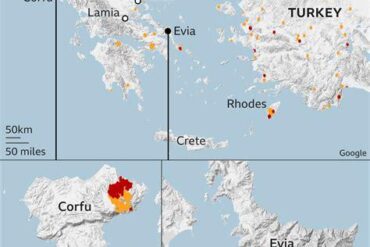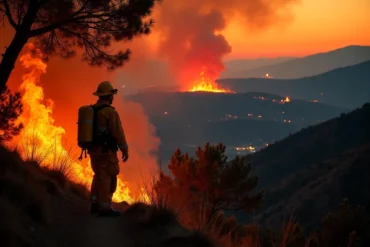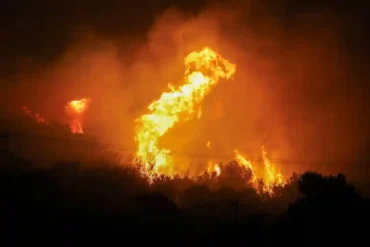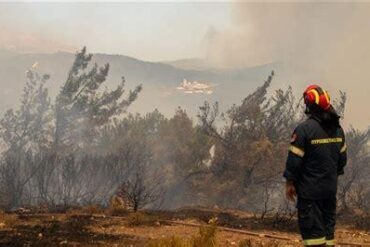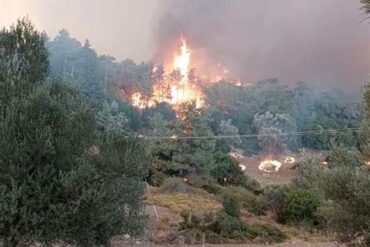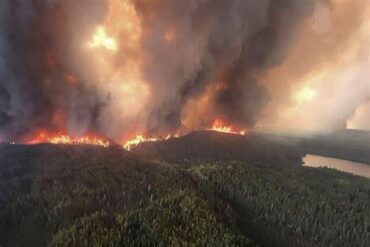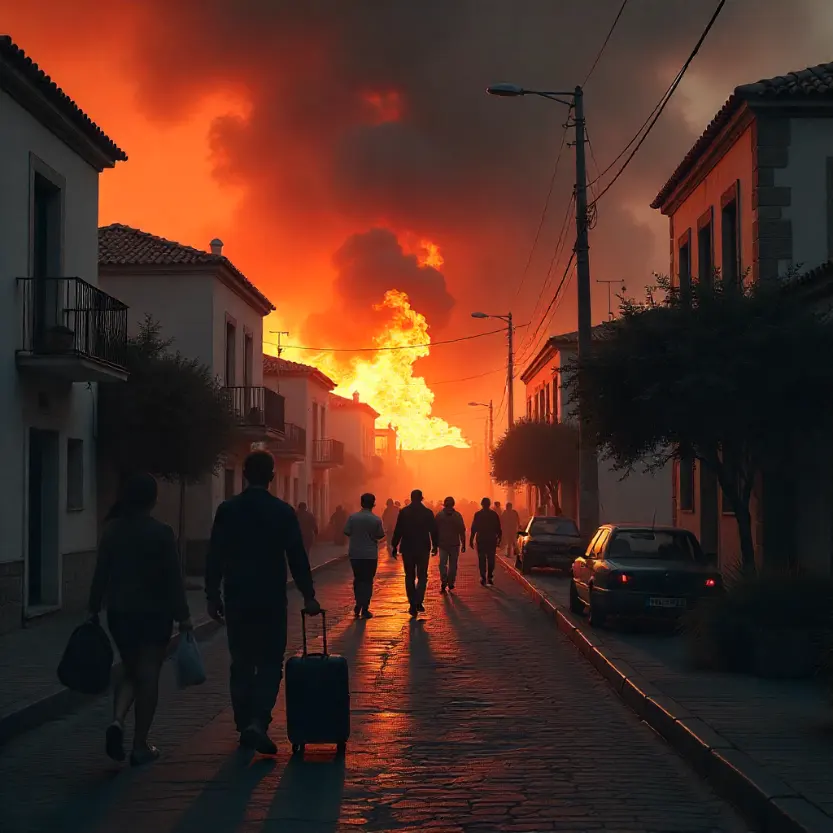
Greece is currently grappling with its most severe wildfire crisis in decades, as devastating blazes have engulfed various regions of the country, stranding countless residents and tourists. Following an oppressive weeklong heatwave with temperatures soaring above 45 degrees Celsius, flames rapidly spread to parts of the Athens region and the islands, including Crete and Evia. Among the most alarming incidents was a massive fire that ravaged the northern suburb of Kryoneri, compelling residents to flee in desperation. The combination of extreme heat and relentless winds has fueled this inferno, prompting officials to scramble for containment strategies. The Greek Fire Service confirmed that a substantial amount of resources has been dedicated to battling the fires, with SMS alerts reaching local residents while helicopters, ground vehicles, and hundreds of firefighters have been deployed in a concerted effort to combat the blaze.
Nearby villages, such as Drosopigi, have suffered catastrophic damage, with explosions echoing from factories housing highly flammable materials. In total, at least 52 wildfires ignited across Greece within a 24-hour span, exacerbated by both wind conditions and the unyielding heat. As of Saturday, firefighting efforts remained ongoing, with teams mobilized to tackle the flames on multiple fronts.
Urgent Evacuations Across Athens and Islands
The wildfire crisis intensified as authorities issued urgent evacuation orders across several regions. Residents of Kryoneri, located approximately 12 miles northeast of Athens, received critical notifications via SMS, urging them to relocate to safer areas. As the fire spread, smoke enveloped surrounding villages, and the ominous sounds of explosions heightened the sense of urgency and fear in the air. Helicopters were deployed to drop water onto the flames, supported by a dedicated team comprising 65 firefighters, 26 vehicles, and two aircraft working tirelessly to control the situation.
On the islands, particularly in Crete and Evia, the danger posed by wildfires escalated dramatically, prompting additional evacuations. In Evia, firefighters, bolstered by six aircraft and seven helicopters, battled the flames with the assistance of 115 ground personnel and 24 fire trucks. Deteriorating wind conditions only compounded concerns, leading several regions, including Triada on Evia, to be placed on high alert for imminent evacuation. The growing number of fires, coupled with worsening weather patterns, has triggered heightened fears of widespread destruction, prompting warnings from the Greek meteorological service that temperatures could continue to rise, potentially reaching an astonishing 44°C.
Impacts on Tourists
As Greek citizens find themselves under immense pressure, the plight of tourists—especially those in Athens and on the islands—has also become a significant concern. Many travelers have unwittingly found themselves caught amid the chaos of the fires, as evacuation orders have been enforced in areas housing hotels and resorts. While a majority of tourists complied with evacuation guidelines and sought refuge in safer locations, others voiced their frustrations regarding the lack of immediate information and updates from local authorities.
The local tourist industry, which attracts millions of visitors each year, has faced considerable disruption due to the wildfires. However, Greece’s emergency evacuation crews have worked diligently to assist travelers in affected areas. Efforts have been made to evacuate tourists from islands like Crete, where the fires have threatened popular tourist destinations. Local authorities are collaborating closely with the tourism sector to safely transfer visitors to designated evacuation points, while the Greek government has appealed for international assistance to manage the rapidly evolving crisis.
Government and Firefighter Response
In the face of these raging fires, Greece’s government and emergency services are leading the charge to control the disaster. The Greek Fire Service has mobilized resources from across the country, deploying specialized firefighting teams, aircraft, and additional personnel. Prime Minister Kyriakos Mitsotakis has publicly expressed his unwavering support for the emergency teams and committed to doing everything within the government’s power to ensure the safety of both residents and tourists.
Local municipal authorities have also joined forces with the Fire Service, mobilizing their resources to assist with evacuation efforts and provide aid to those affected. In a coordinated response, the Greek Army has been called in to help evacuate individuals in particularly perilous areas. To date, over 1,000 people have been evacuated from various regions, with more expected to follow in the coming days.
Looking Ahead: The Battle Against Nature
The ongoing wildfires serve as a stark reminder of the increasing frequency and intensity of natural disasters fueled by climate change. Greece, already considered a wildfire hotspot, faces a formidable challenge as wildfires are predicted to become more prevalent during the hot and dry summer months. Experts warn that similar outbreaks will likely continue to impact the Mediterranean region in the years ahead. For Greece, the current fires act as a wake-up call, underscoring the urgent need to bolster efforts in mitigating risks and developing resilient infrastructure to better withstand future disasters.
Firefighting teams and emergency responders are relentlessly working to minimize damage and save lives, but the future of wildfire management in Greece demands continuous vigilance and adaptation. As both tourists and locals flee the flames, the significance of community cooperation and preparedness for natural disasters becomes increasingly evident. Local governments, businesses, and residents must unite not only to respond to the present crisis but also to gear up for the inevitable challenges posed by future wildfires.
Conclusion: A City and Its People, Resilient in the Face of Adversity
As the Greek community confronts the fury of nature, the indomitable human spirit and character of the Greek people shine through. Amidst the encroaching flames, narratives of resilience emerge, highlighting how communities are affected by the wildfires while showcasing solidarity and hope. Despite the immense damage inflicted, Greece can rely on the combined efforts of firefighters and the bravery of local residents to rise from the ashes and rebuild.
At this moment, the focus remains on safety and rescue. The Greek government, fire brigades, and emergency services are striving to contain the inferno, but ultimately, it will be the strength and resolve of the Greek people that will prevail, guiding the nation back to recovery.