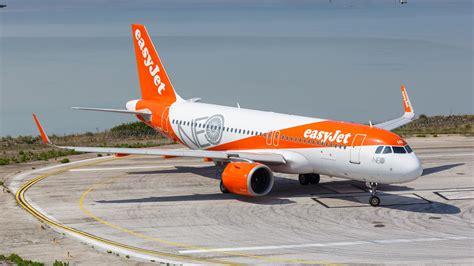
We view easyJet’s decision to anchor its future on a 290-aircraft Airbus A320neo family backlog as a defining moment in the carrier’s long-term cost structure. The European low-cost airline already operates more than 350 Airbus narrowbody aircraft, but this new wave of deliveries creates a pipeline almost equal to its entire existing fleet. It is a rare position of strength in a market where delivery slots are scarce, environmental pressures are tightening, and fuel prices remain volatile.
The entire order serves a dual purpose: replacing aging Airbus A319 and A320ceo airframes while gently upgauging the fleet. This modernized backbone ensures that easyJet can simultaneously expand seat capacity and lower per-seat operating costs—a fundamental requirement in an environment where secondary cost layers, such as noise charges and environmental taxes, continue to rise.
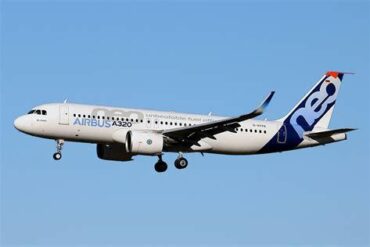
These aircraft are powered by CFM LEAP-1A engines, paired with refined aerodynamics and signature Airbus sharklets. The combination delivers dramatically lower fuel burn, up to 50% lower noise footprints, and substantially improved carbon performance. Across busy European airports where easyJet dominates, from London Gatwick to Amsterdam to Paris, this shift protects the carrier’s margins and supports its ambition to remain one of the most cost-efficient operators in the region.
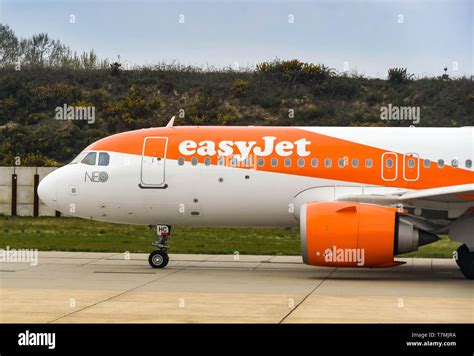
A Transformative Order Book That Reinforces Market Power
The scale of easyJet’s backlog—125 Airbus A320neos and 165 Airbus A321neos—supports industry-leading flexibility. With a fleet currently spanning 82 A319s, 180 A320ceos, roughly 70 A320neos, and 19 A321neos, the airline holds one of the most coherent and operationally efficient single-aisle configurations in the world. The ability to grow without jeopardizing fleet commonality is central to maintaining the cost base that underpins the carrier’s commercial model.
More importantly, this order book arrives at a moment when rivals face significant headwinds. Airbus delivery slots are sold out for years, engine reliability issues weigh on several operators, and environmental compliance costs continue to escalate. easyJet, however, secured its future deliveries early, guaranteeing a steady stream of modern aircraft throughout the early 2030s and well into the late 2030s.
CEO Kenton Jarvis emphasized an impressive performance benchmark: an Airbus A320neo can fly London–Paris while burning less fuel than an A319, despite offering 19% more seats. The implications for a low-cost carrier are profound, as this creates a powerful downward push on unit costs even before factoring in the advantages of upgauging and noise reduction.
Why Upgauging Multiplies Cost Savings Across Every Flight
EasyJet’s methodical shift toward larger aircraft—especially the Airbus A321neo—represents a structural improvement in its operating economics. The airline’s older Airbus A319 seats around 156 passengers, while the Airbus A320neo family typically carries 180–186 passengers. The A321neo extends that capacity to roughly 235 passengers, an enormous leap for an airline dependent on slot-restricted airports.
This matters because airport charges, air traffic control fees, crew costs, and turnaround expenses do not scale proportionally with seat count. A single movement by a 235-seat Airbus A321neo costs nearly the same as a movement by a smaller A319, yet revenue potential increases dramatically. For airports like London Gatwick, where obtaining additional slots borders on impossible, upgauging becomes the only realistic way to expand capacity.
Jarvis summarized the formula cleanly: when an aircraft carries more passengers, spreads fixed costs over a wider base, and burns less fuel per seat than the model it replaces, its economic value is difficult to overstate. Every additional seat sold contributes directly to profit resilience, even in a high-fuel-price, high-regulation environment.
Fuel Efficiency, Noise Reduction, And Environmental Advantages
The Airbus A320neo family delivers a compelling environmental and economic profile. The latest engines and aerodynamic enhancements reduce fuel burn sharply, shrinking carbon intensity, lowering exposure to volatile energy markets, and supporting compliance with increasingly strict European emissions legislation. For a volume airline like easyJet, every percentage point of fuel savings produces enormous annual impacts.
Noise performance is equally significant. The A320neo family generates around 50% less noise than previous-generation models. Airports such as London Gatwick and London Luton enforce strict night-time rules and noise-sensitive slot controls. Operating quieter aircraft not only reduces charges but also strengthens easyJet’s political footing as airports debate expansion projects, runway usage, and long-term noise mitigation policies.
The environmental benefits also strengthen easyJet’s public positioning. As sustainable aviation fuel (SAF) requirements rise through the late 2020s and 2030s, the airline’s commitment to highly efficient engines mitigates cost shocks that could otherwise hit fares hard.
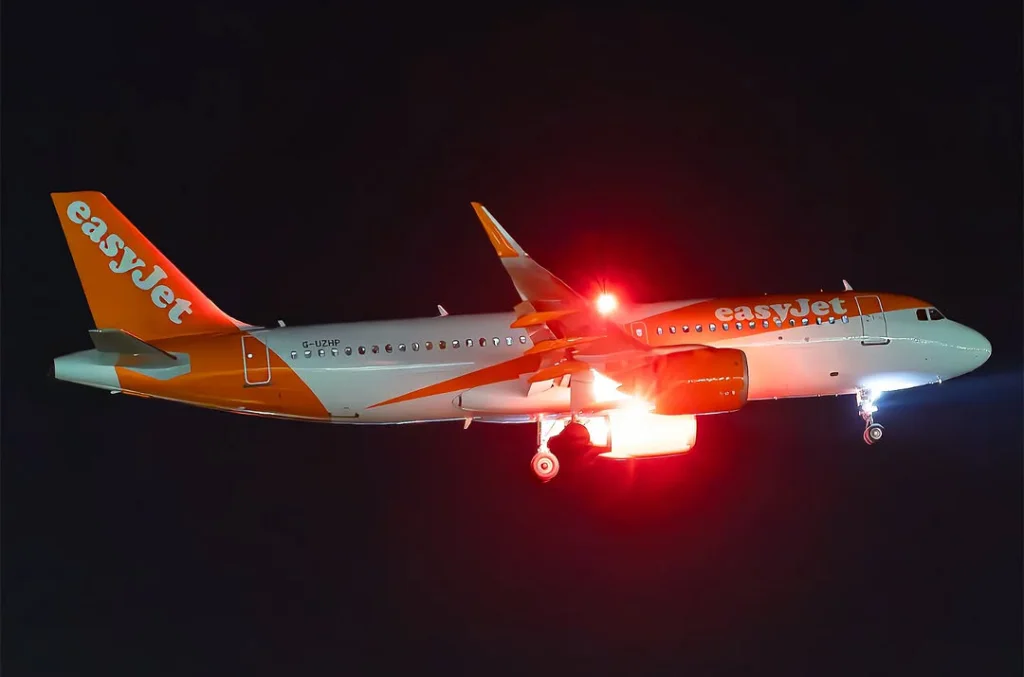
Lower Maintenance Costs And Enhanced Fleet Reliability
Beyond fuel efficiency, the Airbus A320neo family offers meaningful maintenance savings. Airbus estimates roughly a 5% reduction in airframe maintenance expenses compared to older A320 models. Cash operating costs per seat can be up to 14% lower thanks to the combination of newer systems, improved time-on-wing performance, and greater reliability.
easyJet reinforced these savings by selecting the CFM LEAP-1A engine across its most recent 157-aircraft order, backed by a long-term service agreement designed to deliver predictable overhaul costs and maximize uptime. Because the airline flies an all-Airbus fleet, cockpit and parts commonality simplifies training, logistics, and inventory management. Pilots can transition seamlessly from CEO to NEO aircraft, maintenance teams work on a single family of systems, and operational disruption recovery is faster.
As older A319s and early-build A320ceos retire, unplanned maintenance events are expected to fall, improving dispatch reliability and supporting the tight, fast-turnaround schedule that defines the low-fare model.
A Growth Pipeline Built To Navigate Market Uncertainty
The airline’s 290-aircraft A320neo backlog does more than modernize the fleet; it gives management unparalleled strategic latitude. Deliveries staged through the 2030s ensure growth even while Airbus grapples with record-breaking demand. The order book also unlocks new routes and potential network shifts. Jarvis has already suggested that an eventual move into London Heathrow would only be feasible with higher-capacity aircraft like the A321neo, which multiplies seat output per slot.
Pricing power becomes an outcome of smart fleet planning. When the airline can operate quieter, more efficient, higher-capacity aircraft, it gains more room to absorb unpredictable cost shocks while still offering competitive fares across Europe’s hyper-competitive low-cost market.
Conclusion: A Future Defined By Scale, Efficiency, And Strategic Control
We view easyJet’s commitment to the Airbus A320neo family as a disciplined and forward-looking strategy. These aircraft combine higher seating capacity, dramatically improved fuel and noise performance, and a leaner cost base. For a low-margin airline operating in one of the world’s most competitive markets, this is not simply a fleet refresh—it’s a structural shift in financial efficiency.
The 290-aircraft order book gives easyJet insulation from supply-chain volatility, stability as environmental regulations intensify, and a competitive advantage as rivals fight engine issues or struggle to secure new aircraft. Through upgauging, modernization, and payload efficiency, the airline strengthens its ability to sustain low fares without compromising profitability.
In a market shaped by constrained airports, rising environmental costs, and intense competition, the Airbus A320neo family gives easyJet the most valuable asset any airline can hold: long-term cost control paired with growth capacity.