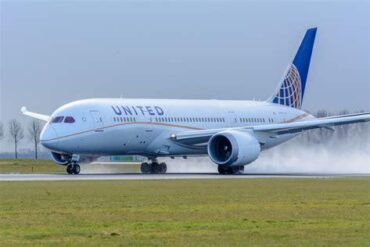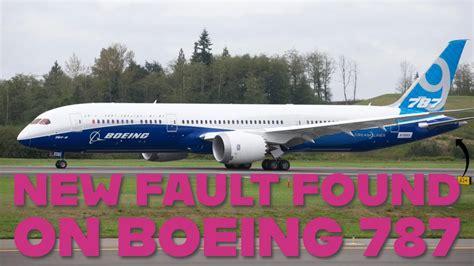
In the annals of modern aviation, the Boeing 787 Dreamliner stands out as a symbol of innovation, efficiency, and ambition. Designed to revolutionize long-haul travel with its advanced composite airframe and fuel-efficient engines, the Dreamliner quickly became a favorite among airlines and passengers alike. Yet, beneath its elegant curves and cutting-edge systems, a serious engineering flaw once threatened its future: the lithium-ion battery fires of early 2013. These incidents not only grounded the global fleet but forced Boeing into one of the most scrutinized technical recoveries in recent aerospace history.
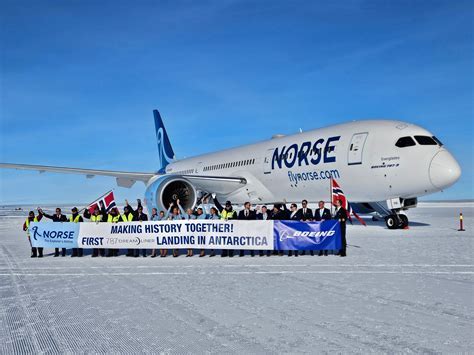
The Birth of a Revolution: Boeing’s Vision for the Dreamliner
When Boeing initiated design work on the 787 in the early 2000s, the aim was bold and clear — create a widebody aircraft that would burn 20% less fuel than its predecessors, such as the Boeing 767. Achieving this demanded radical innovation. Boeing opted for carbon-fiber reinforced polymer composites for 50% of the airframe, unprecedented in commercial aviation. To propel the aircraft efficiently, customers could select either the General Electric GEnx or Rolls-Royce Trent 1000 engines, both high-bypass turbofans engineered for long-range economy.
The Dreamliner entered commercial service in late 2011 with launch customer All Nippon Airways (ANA). Orders surged, and production accelerated. However, as with any ambitious technological leap, hidden dangers loomed — none more so than the novel battery system at the heart of its auxiliary power architecture.
The First Alarm: Japan Airlines Flight JL-008
Trouble surfaced on January 7, 2013, at Boston Logan International Airport. A Japan Airlines 787, tail number JA829J, had just completed a transpacific flight from Narita. As the cabin emptied, flames and smoke erupted from the rear electronics bay. Emergency responders pinpointed the source: the lithium-ion battery powering the Auxiliary Power Unit (APU).
The fire, later identified as the result of thermal runaway in a single battery cell, did not cause injuries. But the implications were grave. Thermal runaway, an uncontrollable rise in temperature due to internal short circuits, has the potential to ignite fires and trigger explosions. The aircraft’s safety record, pristine until then, was now under severe scrutiny.
Déjà Vu in the Skies: ANA NH-692
Just nine days later, disaster nearly struck again. All Nippon Airways Flight NH-692, operating a domestic leg from Yamaguchi Ube to Tokyo Haneda, was forced to make an emergency landing at Takamatsu Airport. Pilots detected smoke and a burning odor, and swiftly executed a full evacuation. The culprit: another lithium-ion battery, this time located in the forward electronics bay.
This second near-catastrophe eliminated any possibility that the Boston incident was an anomaly. The FAA and aviation authorities worldwide swiftly grounded the entire 787 fleet — 50 aircraft across multiple countries — marking the first such action since the McDonnell Douglas DC-10 grounding in 1979.
Investigations Reveal the Flawed Battery Design
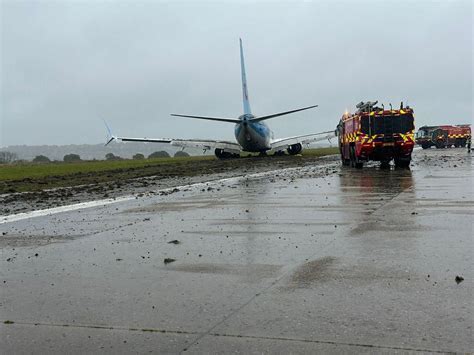
With international pressure mounting, the National Transportation Safety Board (NTSB), Federal Aviation Administration (FAA), and Japanese regulators launched parallel investigations. Their findings would cast a harsh light on both Boeing and its battery supplier, GS Yuasa.
The NTSB’s technical analysis revealed that the batteries lacked sufficient safeguards to prevent one failing cell from triggering a catastrophic chain reaction. In both incidents, an internal short led to rapid overheating, followed by propagation to adjacent cells, culminating in fire and smoke. Notably, the NTSB challenged Boeing’s risk assessment, which had estimated such a failure rate as less than 1 in 10 million flight hours. Reality had delivered two failures in under 100,000 hours.
Further compounding the issue, GS Yuasa’s manufacturing process showed lapses in quality control. Investigators cited inadequate welding, impurities, and insufficient testing, all of which contributed to the potential for internal shorts.
Engineering Redemption: Boeing’s Battery System Overhaul
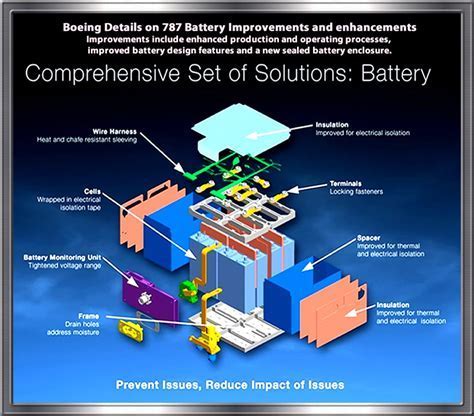
Faced with a crisis that could tarnish the Dreamliner’s future, Boeing embarked on a sweeping redesign of the aircraft’s electrical power system. Rather than abandoning lithium-ion chemistry, which offered significant weight savings, the company invested millions into making the battery safer through a robust containment and management strategy.
Key Modifications to the Battery System:
- Stainless-Steel Containment Box: Boeing engineered a fire-resistant enclosure to isolate the battery from the rest of the aircraft, capable of withstanding and containing thermal runaway events.
- Dedicated Venting System: In the event of overheating, toxic gases and smoke would be automatically vented overboard, away from passengers and critical avionics.
- Internal Battery Redesign: Greater physical separation between cells, enhanced insulation, and redesigned cell casings were introduced to stop propagation of thermal failure.
- Battery Health Monitoring Software: Sophisticated algorithms now track voltage, temperature, and charging rates, providing early warnings of anomalies. This allows flight crews or ground systems to isolate or deactivate suspect batteries preemptively.
FAA Approval and the Road to Redemption
After months of ground testing, simulations, and lab experiments, Boeing submitted its redesigned battery system to the FAA in early 2013. Engineers conducted extensive real-world stress tests, deliberately inducing thermal failures inside the containment box to demonstrate its effectiveness.
In April 2013, the FAA approved Boeing’s modifications, deeming them compliant with airworthiness standards. The aircraft was cleared to return to service, and one by one, Dreamliners resumed flying. Though the process had taken only a few months, the reputation recovery would take far longer.
Yet the incident marked a pivotal moment for both Boeing and the industry. It set a new benchmark for risk tolerance in battery-powered systems, and sparked further research into alternative energy storage solutions for aviation.
Long-Term Impact and Lessons Learned
Boeing’s success in resolving the 787 battery crisis has had a lasting effect on aerospace engineering practices. Lithium-ion batteries remain in use, but with heightened scrutiny, tighter manufacturing standards, and more advanced monitoring systems. The incident reshaped how manufacturers model risk, simulate failures, and validate emerging technologies.
Furthermore, Boeing’s handling of the situation — from initial denial to rapid corrective action — became a case study in corporate crisis management. Despite the severity of the situation, the 787 program eventually emerged stronger. Today, more than 1,100 Dreamliners are in active service, with over 2,100 orders placed globally. Operators like ANA, United Airlines, American Airlines, and Qatar Airways continue to depend on the aircraft for long-haul efficiency.
Conclusion: A Modern Aviation Crisis Averted
The Boeing 787 Dreamliner battery crisis was a defining moment not only for Boeing but for modern aerospace. It revealed the dangers of overreliance on risk models in the face of novel technologies and highlighted the importance of systemic redundancy and design foresight.
By engineering a comprehensive battery redesign — instead of simply replacing components — Boeing restored confidence in the Dreamliner and demonstrated the depth of its technical capabilities. The lessons learned continue to ripple through the aviation world, shaping the next generation of aircraft with safety, innovation, and accountability as guiding principles.
The Dreamliner flies on — a testament to how even major setbacks can fuel greater resilience and progress in aviation engineering.