Flying around the world has long been a symbol of technological triumph and human ambition. From the early days of propeller-driven aircraft to the supersonic marvels of the 20th century, circumnavigating the planet has fascinated adventurers, aviators, and scientists alike. As we assess how long it truly takes to fly around the Earth today, the answer depends on the aircraft type, speed, and flight logistics, not just the Earth’s circumference. Let us explore the varying durations, from commercial jets to hypersonic research planes, and what it truly means to orbit the globe by air.
Earth’s Circumference: The Benchmark for Flight Time
To understand how long it takes to fly around Earth, we must begin with its dimensions. The equatorial circumference of Earth is approximately 40,070 kilometers (24,898 miles). This figure becomes our baseline when calculating flight durations, though real-world air routes often deviate due to weather, airspace restrictions, and refueling needs.
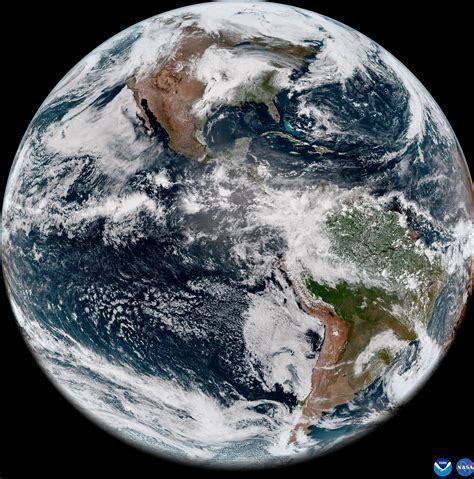
Earth is not a perfect sphere; it’s slightly flattened at the poles. This means flights that do not follow the equator may cover slightly less distance, though commercial flights often prioritize air corridors over geometric purity.
Commercial Aviation: The 42-Hour Threshold
Modern commercial passenger jets, such as the Boeing 787 Dreamliner or Airbus A350, typically cruise between 925–965 km/h (575–600 mph). Theoretically, if one were to board a jet flying nonstop at that speed, they would circumnavigate the planet in just under 42 hours. However, such a journey is purely hypothetical.
In practice, flying around the world involves:
-
Multiple layovers for refueling and crew changes
-
Air traffic control compliance
-
Passenger rest and safety protocols
Despite these limitations, global commercial routes like the “Round-the-World” fare by major airline alliances can cover a full circumnavigation in about 3–5 days with efficient planning.
Supersonic Possibilities: Breaking the 24-Hour Barrier
To fly around the world in under 24 hours, a plane must exceed a speed of 1,670 km/h (1,038 mph). This is well above the cruising speed of commercial airliners and requires a supersonic or hypersonic aircraft.
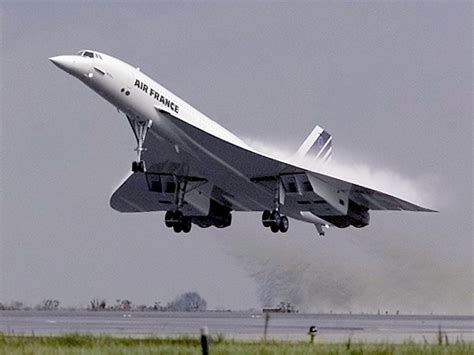
The Concorde, one of the few supersonic passenger jets ever built, completed a full circumnavigation in 31 hours and 27 minutes in 1995. Though impressive, it was not capable of breaking the 24-hour barrier due to limited range and the need for frequent refueling.
To push past this limit, one would need a jet-powered experimental aircraft. The NASA X-43, an uncrewed hypersonic test vehicle, achieved speeds of Mach 9.3 (11,484 km/h or 7,136 mph). At such speeds, the Earth could be circled in just 3.5 hours. However, the X-43 was a one-time experimental vehicle, not a viable solution for manned flight.
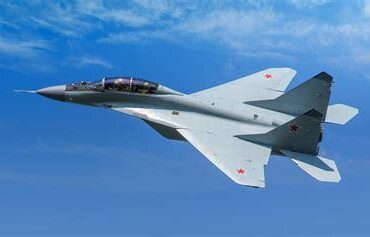
The MiG-25 “Foxbat”, a Soviet-designed reconnaissance and interceptor aircraft, is the fastest manned jet in service today, capable of Mach 3.2 (approximately 3,900 km/h or 2,423 mph). At this speed, a nonstop circumnavigation could take just over 10 hours—still only theoretical due to the Foxbat’s range limitations and immense fuel consumption.
Space Flight Perspective: Orbital Speeds
While not “flying” in the conventional sense, spacecraft like the International Space Station (ISS) orbit Earth in approximately 90 minutes. Moving at over 28,000 km/h (17,500 mph), astronauts aboard the ISS witness 16 sunrises and sunsets per day, circling Earth about 16 times every 24 hours.
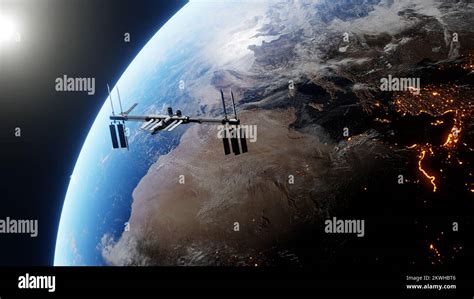
Such orbital speeds render the ISS the fastest mode of Earth circumnavigation, though it’s worth noting that space travel exists in a different context than atmospheric aviation.
Historic Circumnavigation Flights
Flying around the world is not merely a question of speed—it’s a historical and logistical feat. Many notable attempts have marked milestones in aviation history.
-
In 1924, the U.S. Army Air Service completed the first aerial circumnavigation using four Douglas World Cruisers, taking 175 days.
-
In 1995, the Concorde set a record commercial circumnavigation time of 31 hours and 27 minutes.
-
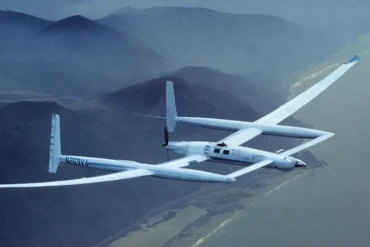
In 2005, adventurer Steve Fossett completed a solo nonstop circumnavigation in the Virgin Atlantic GlobalFlyer, a specially designed jet, in 67 hours.
These journeys reflect a balance of engineering excellence, logistical planning, and piloting skill. Each success has built toward our current understanding of rapid global travel.
Fuel, Speed, and Range Constraints
The reality of flying around the world is bound by fuel limitations, engine efficiency, and environmental conditions. Even supersonic and hypersonic aircraft must consider heat shielding, material stress at extreme velocities, and safe landing protocols.
Furthermore, fuel efficiency declines at higher speeds, especially above Mach 2. Most military-grade aircraft require aerial refueling to remain airborne during long-haul missions, which makes sustained supersonic circumnavigation virtually impossible without extensive logistical support.
Global aviation authorities such as the ICAO (International Civil Aviation Organization) enforce strict regulations that limit the practicality of high-speed, continuous global flight.
Theoretical Extremes: Speed of Light
At the speed of light (300,000 km/sec), you could theoretically circle Earth seven times in one second. While this concept remains purely theoretical and beyond current technological capabilities, it underscores the gap between aviation and relativistic physics.
If one could fly at this speed, it would take 0.14 seconds to complete one circumnavigation. However, such velocities exist only in the realm of particle physics and electromagnetic waves, not human travel.
Tourism, Technology, and the Future
Emerging technologies such as space tourism vehicles, suborbital flight systems, and scramjet-powered aircraft may soon reduce flight times drastically. Companies like SpaceX and Blue Origin are exploring point-to-point suborbital travel that could make any two points on Earth accessible in under one hour.
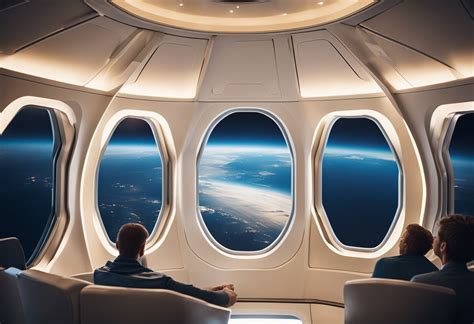
This revolution in transportation would rely on vertical take-off and hypersonic gliding, blending principles of rocketry and aviation. While regulatory, safety, and financial barriers remain, these advances could redefine global mobility.
Summary: Timeframes at a Glance
To put everything into perspective:
-
Commercial jets: ~42 hours (nonstop theoretical)
-
Concorde (supersonic): 31.5 hours
-
MiG-25 Foxbat: ~10 hours (theoretical)
-
NASA X-43 (hypersonic): ~3.5 hours (uncrewed)
-
International Space Station: 90 minutes
-
Speed of light: 0.14 seconds
Though aviation hasn’t yet made sub-4-hour world travel a reality for civilians, every new breakthrough brings us closer to that dream.
Frequently Asked Questions
How fast would I need to travel to fly around the Earth in 24 hours?
To circle the Earth’s equator (40,070 km) in 24 hours, you would need to fly at a constant speed of 1,670 km/h (1,038 mph). This is faster than commercial airliners and requires a supersonic aircraft.
Has anyone ever flown around the world nonstop?
Yes. Steve Fossett completed a nonstop solo circumnavigation in 2005 using the specially designed GlobalFlyer, taking 67 hours. It was a fuel-optimized mission with no stops, setting a record for endurance aviation.
Can commercial airlines fly around the world in one flight?
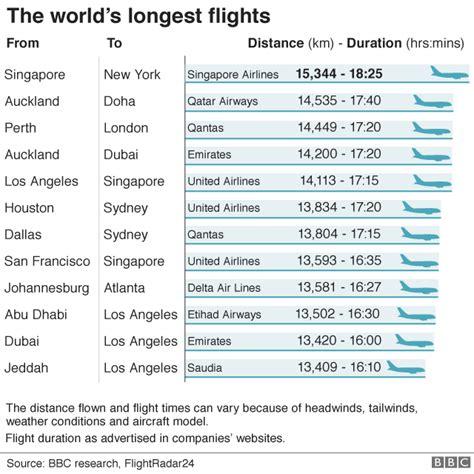
Currently, no commercial airline operates a single flight around the world. Limitations in fuel capacity, air traffic permissions, and passenger comfort make such routes impractical. However, multi-leg RTW tickets enable global travel across various flights.