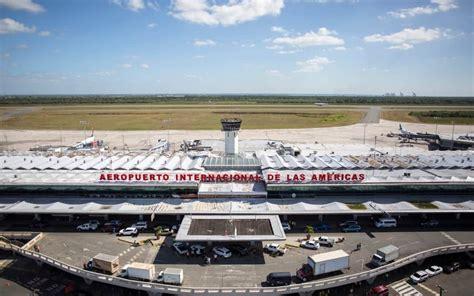
Las Américas International Airport (IATA: SDQ, ICAO: MDSD), situated in Punta Caucedo, serves as the primary international gateway for Santo Domingo, the capital of the Dominican Republic. Strategically located between Boca Chica and Santo Domingo, this vital transportation hub has emerged as the second-busiest airport in the nation and a key player in Caribbean aviation.
Operated by Aeropuertos Dominicanos Siglo XXI (AERODOM) under a 25-year build-operate-transfer (BOT) concession, the airport functions as a central node for Arajet and Sky High Dominicana, two of the region’s prominent carriers. With over 5.5 million passengers processed in 2024 and handling 43,258 aircraft operations, Las Américas also boasts the title of the busiest cargo hub in Central America and the Caribbean, moving 355 million lbs of cargo in 2019 alone.
A Legacy Rooted in Dominican Aviation History
Las Américas International Airport first opened its doors in 1959, then designated as the official airport of Ciudad Trujillo, which would later return to its original name, Santo Domingo. The airport’s official name was updated in 2002 to honor political figure José Francisco Peña Gómez, but its local identity — AILA or “El Aeropuerto” — remains strong.
International air connections began taking root as early as 1953, when Chicago and Southern Air Lines introduced a weekly Lockheed Constellation service connecting Memphis, Port-au-Prince, and Ciudad Trujillo. Delta Air Lines, after merging with Chicago and Southern, continued operations via General Andrews Airport, offering regular Convair 340 flights to San Juan and Port-au-Prince. Shortly thereafter, Pan American World Airways (Pan Am) elevated the airport’s profile with Douglas DC-6 flights to major destinations like New York City and Miami.
By 1960, Dominicana de Aviación, the national carrier, was conducting nonstop flights to Miami and San Juan using Douglas DC-4s and Curtiss C-46s. The jet age reached Las Américas by the mid-1960s, with Pan Am’s Boeing 707s launching services to Caribbean, North, and South American cities, while Brazil’s VARIG extended its reach to New York and Miami with Caravelle and Convair 990 aircraft.
Expanding Horizons Through the Jet Age and Beyond
By 1976, Las Américas had become a vibrant hub, with services from global heavyweights:
- American Airlines flew Boeing 707 and 747 aircraft from New York.
- Dominicana de Aviación operated a mix of 707s, 727s, DC-10s, and even 747s to New York, Miami, and San Juan.
- Eastern Airlines, Pan Am, and ALM Antillean Airlines expanded connectivity across the Americas.
- Aerovías Quisqueyana, a local airline, offered transatlantic service to Madrid and Rome via Boeing 707s.
The 1990s brought a surge of transatlantic operations. Notable European carriers such as Air France, Alitalia, Condor, Iberia, LTU, Martinair, and TAP Air Portugal connected Santo Domingo to major European cities using widebody aircraft like the Boeing 747, MD-11, and Airbus A310. Simultaneously, South American destinations like Bogotá and Lima were served by ACES Colombia, Copa Airlines, and Iberia.
U.S. carriers, including American, Continental, and TWA, expanded their operations from key cities like New York, Miami, Boston, Orlando, and Newark, supported by aircraft such as the McDonnell Douglas DC-10, Airbus A300, and Lockheed L-1011.
Modernization and Infrastructure Overhaul
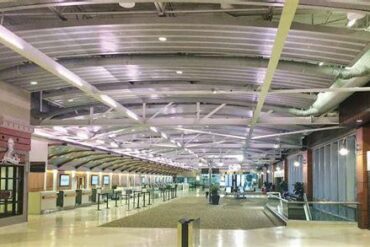
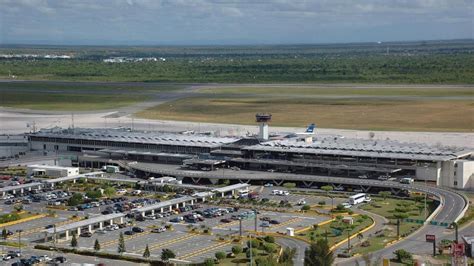
In line with the growing demand for both passenger and cargo traffic, Las Américas underwent extensive modernization. A 2007 terminal expansion introduced a new facility capable of simultaneously handling four Boeing 747s, featuring boarding bridges, climate control systems, and comprehensive maintenance zones.
Today, the airport hosts two main concourses:
- Concourse A: Gates A2 through A6.
- Concourse B: Gates B1 through B4 and a remote stand (P8).
Terminal B features a premium Copa Club, co-managed by United Airlines, and an exclusive Private Lounge catering to frequent and business travelers.

A new expansion project began in June 2025, with an investment of US$250 million. Slated for completion by the end of 2028, this terminal will boost passenger capacity significantly, aligning with rising travel demands in the Caribbean corridor.
The airport is accessible via an expanded expressway, crossing the Ozama River through a new suspension bridge, seamlessly integrating with Santo Domingo’s elevated freeway system. A scenic coastal route via Av. George Washington adds both function and visual delight, making transit to the city an experience in itself.
The Runway: Backbone of Caribbean Air Travel
Las Américas International Airport operates a single north–south asphalt runway (17/35), measuring 3,355 meters (11,001 feet) in length — the largest in the Dominican Republic. This enables accommodation of the largest commercial aircraft, including the Boeing 747 and Antonov An-225. The latter famously landed here during relief missions following the 2010 Haiti earthquake.
A comprehensive runway renovation was completed in June 2008, during which the main taxiway temporarily served as an active runway. This foresight ensured uninterrupted airport operations during vital infrastructure upgrades.
A Dynamic Hub for Airlines and Cargo
Las Américas supports a robust mix of passenger and cargo airlines, reinforcing its status as a major Caribbean connector.
Passenger carriers include:
- Arajet: Operating routes to Aruba, Bogotá, Boston, Buenos Aires, Cancún, Lima, Medellín, Newark, San José, San Juan, and St. Maarten.
- American Airlines, Delta Air Lines, JetBlue, and United Airlines: Major U.S. carriers with comprehensive service to North American cities.
- European airlines like Air Europa, Iberia, Condor, and World2Fly: Connecting Santo Domingo to Madrid and Frankfurt.
- Caribbean-focused carriers like InterCaribbean Airways, Sky High Dominicana, and Sunrise Airways provide regional connectivity.
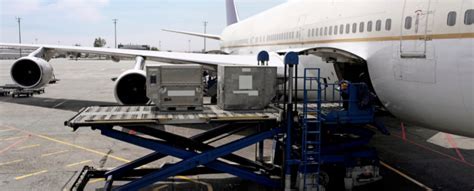
For cargo, the airport’s capabilities are just as impressive. Carriers such as Amerijet International, FedEx Express, and UPS Airlines operate regular freight services to Miami, Louisville, Barbados, and Punta Cana.
Dominance in Regional Air Traffic
The airport’s strategic location has secured its position among the top 10 busiest Caribbean airports. In 2024, the most heavily trafficked routes included:
- New York–JFK – 989,045 passengers
- Miami – 598,292
- Madrid–Barajas – 519,536
- Newark – 465,558
- Panama City–Tocumen – 406,955
- San Juan, Puerto Rico – 291,536
- Bogotá – 286,614
- Fort Lauderdale – 281,953
- Orlando – 214,744
- Boston – 205,217
These routes illustrate the airport’s crucial role in bridging the Caribbean with North America, Europe, and Latin America, effectively positioning Las Américas as a multinational travel hub.
Safety and Legacy Events
While the airport boasts an impressive track record, its history includes two tragic accidents:
- On February 15, 1970, a Dominicana de Aviación DC-9 crashed en route to San Juan, killing all 102 people on board.
- On January 30, 1975, a LANSA DC-3 (HI-222) crashed during takeoff to Port-au-Prince, resulting in one fatality among 30 passengers.
These incidents serve as somber reminders of aviation’s evolving safety standards and the continuous improvements in airport infrastructure and flight operations.
Conclusion: A Rising Giant in Caribbean Aviation
Las Américas International Airport stands today as a powerful symbol of progress, infrastructure excellence, and global connectivity in the Caribbean basin. With an ever-expanding portfolio of international routes, modern terminals, and cargo leadership, it continues to fuel economic development, tourism growth, and logistics efficiency for the Dominican Republic.
As construction of the new terminal continues, Las Américas is preparing to welcome a new era of global travelers, further solidifying its place among the elite international airports of the Caribbean.