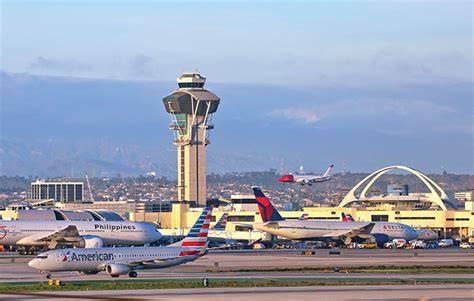
Los Angeles International Airport experienced a striking shift in its financial and operational profile during 2025. Passenger traffic fell 3.76%, declining from 76.59 million travelers in 2024 to approximately 73.71 million in 2025. That represented a reduction of nearly 2.88 million passengers across one of the world’s most important aviation gateways. Yet despite the decline in traffic, Los Angeles World Airports (LAWA), the airport’s operator, moved toward an estimated $2.34 billion in operating revenue for fiscal year 2026, up substantially from roughly $2.05 billion in fiscal year 2025.
At first glance, falling passenger numbers and rising airport revenue appear difficult to reconcile. Airports traditionally benefit from busy terminals, full aircraft, strong parking demand, and robust concession spending. LAX’s 2025 performance demonstrates that passenger volume is only one part of the financial equation. Through higher aeronautical charges, terminal rents, and a cost-recovery model designed around the expenses of operating a major airport, LAWA was able to increase its financial yield even while fewer people passed through its terminals.
The result is an important development for both Los Angeles International Airport and the airlines that depend on it. Carriers faced softer domestic demand and reduced capacity, but many of their underlying financial obligations at LAX remained firmly in place. This created an unusual environment in which the airport could strengthen its revenue position while airlines had to absorb higher costs per passenger.
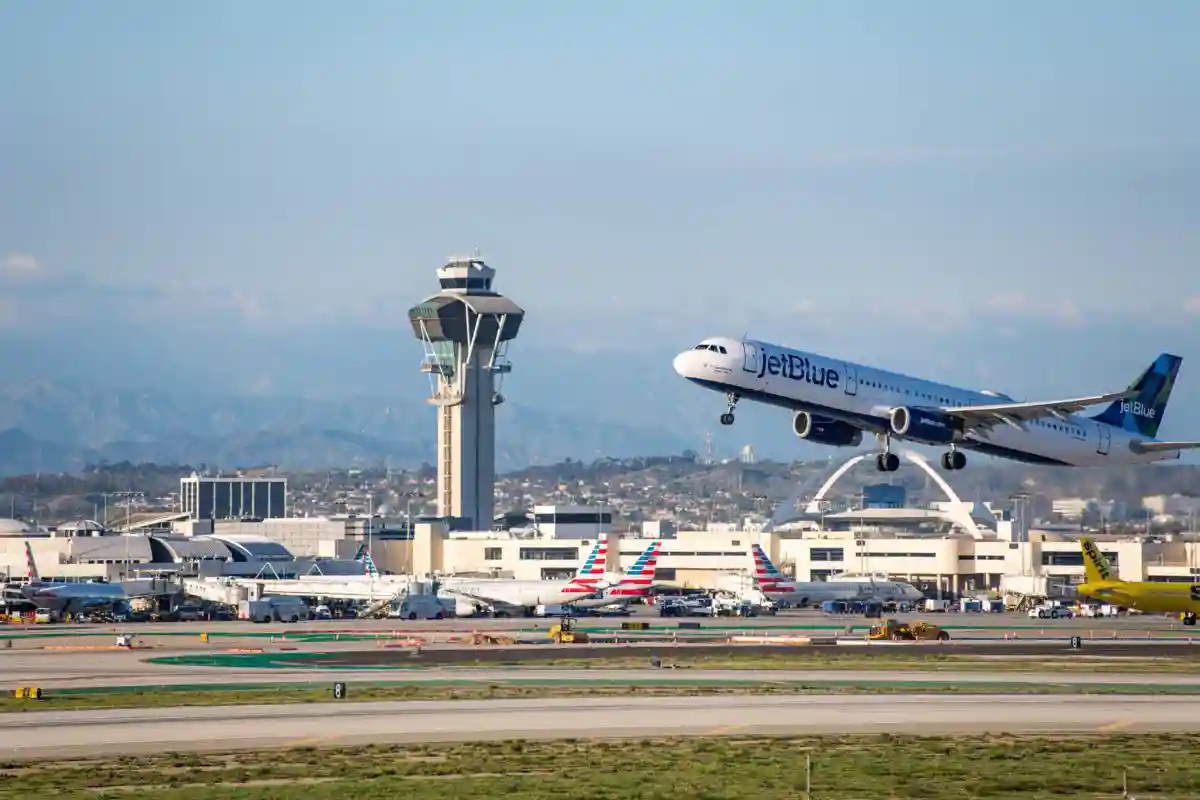
LAX Passenger Traffic Fell Nearly 2.9 Million in 2025
The headline passenger numbers reveal how significant the downturn was. LAX processed about 73.71 million passengers in 2025, compared with 76.59 million during the previous year. The decline of approximately 2.88 million travelers translated into a 3.76% annual reduction, placing passenger activity well below the level recorded in 2024.
The decline was not evenly distributed between domestic and international markets. Domestic passenger traffic fell nearly 5% to 50.11 million travelers, making the domestic market the principal source of LAX’s overall contraction. International traffic proved considerably more resilient, declining only 1.63% to approximately 23.60 million passengers.
That difference matters because LAX occupies a distinctive position within the US airport system. It is not simply a large domestic connecting hub. Its importance comes from its enormous network of international and long-haul services, particularly across the Pacific. Airlines can therefore reduce lower-yield domestic flying without necessarily abandoning the airport’s strategic international role.
The traffic decline also occurred against a backdrop of airline capacity adjustments. Carriers increasingly evaluated routes according to profitability rather than simply maintaining historical schedules. For LAX, that meant some domestic frequencies could be reduced while important international services remained protected.
Higher Aeronautical Fees Changed LAX’s Revenue Equation
The most important explanation for the airport’s stronger financial performance was the increase in aeronautical revenue and airfield landing fees. According to the reference data, LAWA implemented an increase of approximately 19% in aviation revenues and landing fees.
This change fundamentally altered the relationship between passenger traffic and airport income. Instead of depending overwhelmingly on growing passenger numbers to generate additional revenue, LAX could recover more of its fixed operating costs directly from airlines.
Airports have enormous expenses that do not disappear when passenger numbers decline. Runways must remain operational. Terminals require maintenance. Security infrastructure must function. Lighting, utilities, airfield systems, roads, employees, and other facilities continue to generate costs regardless of whether passenger traffic rises or falls.
The compensatory cost-recovery model used at LAX is designed around this reality. LAWA establishes the costs associated with operating its facilities and then uses landing charges and terminal rates to recover those expenses from airline tenants. When traffic decreases while the underlying cost base remains relatively stable, the financial burden assigned to each passenger can rise.
For airlines, that creates a challenging calculation. Cutting flights can reduce variable expenses, but the savings do not necessarily eliminate fixed airport obligations. A carrier may therefore find that operating fewer flights does not produce a proportional reduction in its cost exposure at LAX.
Delta, United and American Remained LAX’s Biggest Players
Despite the overall decline in traffic, LAX’s competitive airline structure remained relatively stable. Unlike highly concentrated hubs such as Atlanta or Dallas/Fort Worth, Los Angeles is characterized by intense competition among multiple major airlines.
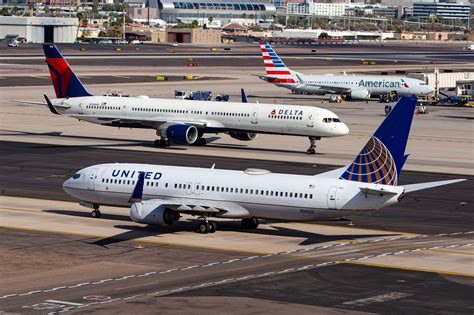
Delta Air Lines remained the airport’s largest carrier in 2025, handling approximately 13.92 million passengers and capturing an estimated 18.9% share of total traffic. United Airlines followed with approximately 11.87 million passengers, representing 16.1% of the market.
American Airlines ranked third, carrying about 11.31 million passengers and holding a 15.3% share. Southwest Airlines accounted for approximately 6.19 million passengers, or 8.4%, while Alaska Airlines handled about 4.88 million passengers, giving it a 6.6% share.
This distribution is significant because the traffic reduction was not simply the consequence of one major carrier collapsing at the airport. Instead, domestic capacity adjustments were distributed across several airlines.
LAX therefore remained a highly competitive market even during a period of weaker passenger demand. The airport’s role as a major international gateway also gave the largest network carriers strong incentives to maintain substantial operations.
LAX Recorded More Than 580,000 Aircraft Movements
Passenger figures provide only one measure of airport activity. During 2025, LAX recorded approximately 580,996 aircraft movements, including 546,465 commercial operations.
Aircraft movements declined alongside passenger traffic, but the scale of activity remained enormous. Operating an airport with hundreds of thousands of annual movements requires a substantial infrastructure and financial base, which helps explain why LAWA’s revenue model cannot depend solely on passenger spending.
Cargo activity also weakened. Air freight volume declined by approximately 4.58% to 2.29 million tons, or around 2.08 million metric tons. The reduction reflected the broader softness affecting portions of LAX’s aviation activity.
Yet cargo, passenger traffic, and aircraft movements do not necessarily move in perfect synchronization with airport revenue. LAX’s financial system is structured around recovering the cost of its infrastructure from airlines and other airport users, allowing revenue to remain comparatively resilient when traffic conditions become less favorable.
Why Airlines Cannot Easily Walk Away From LAX
Higher landing fees and terminal charges would normally create a strong incentive for airlines to move operations elsewhere. Southern California, however, provides only a partial escape route.
The Los Angeles basin contains several airports, including Ontario International Airport, Hollywood Burbank Airport, and Long Beach Airport. These facilities serve valuable local markets, but none provides the same combination of international connectivity, premium long-haul demand, airline presence, and global recognition as LAX.
That distinction is particularly important for legacy carriers.
Delta, United, and American can reduce marginal domestic flying, but they cannot easily abandon LAX without damaging their broader Southern California networks. For United, LAX remains an important West Coast gateway. Delta has built a substantial presence at the airport, while American also depends on Los Angeles for long-haul and premium traffic.
International flying can also justify higher airport costs because long-haul services may generate greater revenue per departure and provide access to high-value business and premium passengers.
As a result, LAX possesses significant pricing power. Airlines may complain about rising costs, but the strategic value of maintaining an established position at the airport can outweigh the disadvantages of higher fees.
Low-Cost Airlines Face a Different Calculation
The economics become more complicated for low-cost and ultra-low-cost airlines. Their business models often depend on keeping airport costs under tight control while generating revenue from relatively price-sensitive passengers.
A higher cost per enplaned passenger can therefore have a larger effect on a low-fare airline’s economics than on a carrier operating a substantial premium international network.
This helps explain why carriers such as Frontier Airlines have greater flexibility to reduce non-essential domestic services at LAX. If a route cannot generate sufficient yields to cover airport charges, aircraft costs, crew expenses, and other operating costs, the airline can shift capacity toward another airport where the economics are more favorable.
Ontario International Airport provides one alternative. The airport handled approximately 7.11 million passengers in 2025, benefiting from continued demand in the Inland Empire. However, its passenger base remains only a fraction of LAX’s scale.
Burbank handled about 6.22 million passengers after declining approximately 5%, while Long Beach processed around 3.8 million after an 8% decline. These airports can absorb point-to-point demand, but they cannot replicate LAX’s global network.
LAX’s $5.5 Billion Infrastructure Program Adds Financial Pressure
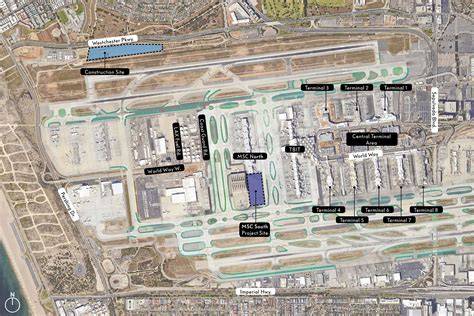
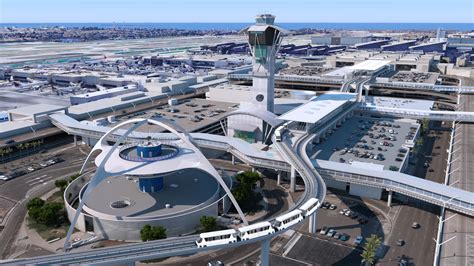
The airport’s rising revenue must also be viewed against the enormous cost of modernizing LAX. At the center of this investment program is the approximately $5.5 billion Landside Access Modernization Program, which includes an automated people mover designed to transform how passengers reach the terminals.
The driverless electric train is planned to cover approximately 2.25 miles, with six stations connecting airport terminals with parking facilities, a consolidated rental car center, and broader regional transportation connections.
The project is intended to solve one of LAX’s most persistent problems: congestion. For decades, passengers arriving at the central terminal area have faced crowded roadways, slow vehicle movements, and complicated transfers between parking, rental cars, public transportation, and airline terminals.
A successful people mover would therefore provide more than a convenience upgrade. It could fundamentally improve the airport’s operating efficiency and reduce pressure on the famously congested terminal loop.
However, the project’s history has been far from straightforward.
The LAX People Mover Has Become a Major Financial Test
The automated people mover was originally expected to open in 2023, but repeated delays pushed its expected opening toward late 2026. Contractual disagreements, system integration problems, design changes, and utility-related issues contributed to the prolonged schedule.
The disputes involving LAWA and the LINXS developer consortium also produced substantial financial consequences. The reference material cites more than $880 million in dispute-related settlement payments, with total project commitments exceeding $4.9 billion over the project’s 25-year contract lifecycle.
That creates a difficult equation for airport management. LAX must continue servicing debt and maintaining existing infrastructure while the new transportation system remains unavailable to passengers.
Temporary transportation arrangements, including shuttle buses, have consequently remained necessary for longer than initially expected. These additional operating requirements reduce some of the efficiency gains that the modernization program was intended to deliver.
The timing is particularly important. Los Angeles is preparing for major international events, including the 2028 Summer Olympic Games, while the city is also preparing to host the 2027 Super Bowl. LAX will face intense scrutiny as millions of additional visitors arrive in Southern California.
Revenue Growth Does Not Mean Every Part of LAX Is Thriving
The jump toward $2.34 billion in operating revenue should not be interpreted as evidence that every component of LAX’s business performed strongly.
Passenger-dependent activities such as restaurants, retail, duty-free shopping, parking, and other concessions are naturally sensitive to terminal foot traffic. When nearly three million passengers disappear from annual traffic, these businesses can experience weaker demand.
Aeronautical charges are different.
Landing fees and terminal leases provide a more predictable financial foundation because they are linked to the airport’s cost structure rather than solely to the number of passengers purchasing meals, parking spaces, or retail products.
This distinction explains why LAX could simultaneously experience lower passenger numbers and stronger operating revenue. The airport was effectively increasing the financial yield associated with its infrastructure even as the amount of traffic using that infrastructure declined.
For airlines, however, this means the opposite trend. A passenger decline can cause the airport’s cost per passenger to rise, particularly when fixed charges are distributed across fewer travelers.
LAX Remains Too Important for Airlines to Ignore
The central lesson from LAX’s 2025 results is that airport economics and airline economics do not always move in the same direction.
LAWA has an obligation to maintain an enormous infrastructure network and meet its debt obligations. Its cost-recovery system provides a mechanism for doing so even during periods of softer traffic.
Airlines, meanwhile, must decide whether each route and aircraft deployment generates enough revenue to justify the costs. The result can be fewer flights, lower domestic capacity, and greater pressure on weaker routes without necessarily reducing the airport’s underlying financial strength.
LAX’s international importance provides another layer of protection. Los Angeles is one of the most significant US gateways to Asia and the Pacific, while its connections to Europe, Latin America, and other international markets make it difficult for major network carriers to substitute another Southern California airport.
That strategic position gives LAX a powerful advantage when negotiating the economics of airport access.
What LAX’s 2025 Numbers Reveal About the Future
The combination of 3.76% fewer passengers and projected $2.34 billion revenue offers a revealing picture of how major airports are evolving. Passenger growth remains important, but financial sustainability increasingly depends on infrastructure investment, cost recovery, airline agreements, and long-term capital planning.
For LAX, the immediate challenge is turning higher revenue into visible improvements for passengers and airlines. A stronger balance sheet is valuable, but travelers ultimately judge the airport by the experience it provides: terminal access, road congestion, security processing, gate facilities, transportation connections, and operational reliability.
The automated people mover will be particularly important in that respect. If it enters service successfully and performs as intended, it could finally provide the transportation infrastructure needed to support LAX’s enormous scale.
The stakes are high because the airport is approaching a period in which global attention on Los Angeles will increase sharply. The 2028 Olympics will place enormous pressure on Southern California’s transportation network, and LAX will be one of the first points of contact for many international visitors.
For airlines, the future will involve an uncomfortable trade-off. Operating at LAX is expensive, but leaving is even harder for carriers that rely on its international passenger base and premium demand.
For LAWA, the challenge is equally clear: higher fees can protect revenue, but the airport must demonstrate that those fees are translating into reliable infrastructure and better operations.
LAX’s 2025 performance therefore represents more than a simple decline in passenger numbers. It reveals a broader transformation in airport economics, where 73.71 million passengers can generate more financial strength than 76.59 million did the year before when pricing, cost recovery, and infrastructure strategy change.
That makes LAX an especially important case study for the future of major US airports. Traffic can fall, airline schedules can shrink, and passengers can become less numerous, yet an airport’s financial machinery can continue expanding. The real test now is whether Los Angeles can convert that financial resilience into the modern, efficient gateway it needs before the world’s attention arrives in 2027 and 2028.