Flying used to mean disappearance. Once the cabin doors closed and the aircraft pushed back, the digital world was left behind at the gate. Emails waited, messages stalled, and productivity paused somewhere between takeoff and landing. That long-standing reality is now fading fast, replaced by a new expectation that connectivity should follow passengers everywhere, including at thirty-five thousand feet.
For years, in-flight Wi-Fi existed more as a courtesy than a capability. Passengers tolerated slow speeds, intermittent connections, and inflated prices because there was no alternative. The idea of streaming a film, joining a video call, or uploading large files mid-flight felt unrealistic. Connectivity was a novelty, not an extension of daily digital life.
That expectation has shifted dramatically in the 2020s. The arrival of Starlink in commercial aviation has reframed what in-flight internet can be, transforming it from a compromised service into a high-performance utility. As more airlines integrate this satellite network, the question is no longer whether passengers can stay connected, but whether they would ever accept going offline again.
From Patchy Signals to Always-On Skies
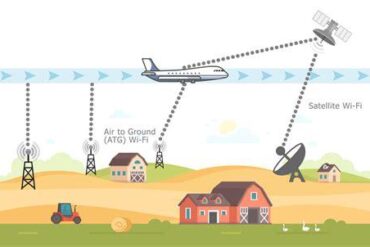
The fundamental limitation of earlier in-flight Wi-Fi systems was bandwidth. Traditional air-to-ground networks and geostationary satellites struggled to deliver consistent speeds across thousands of moving aircraft. Congestion, latency, and coverage gaps were unavoidable, especially on long-haul or oceanic routes where connectivity mattered most.
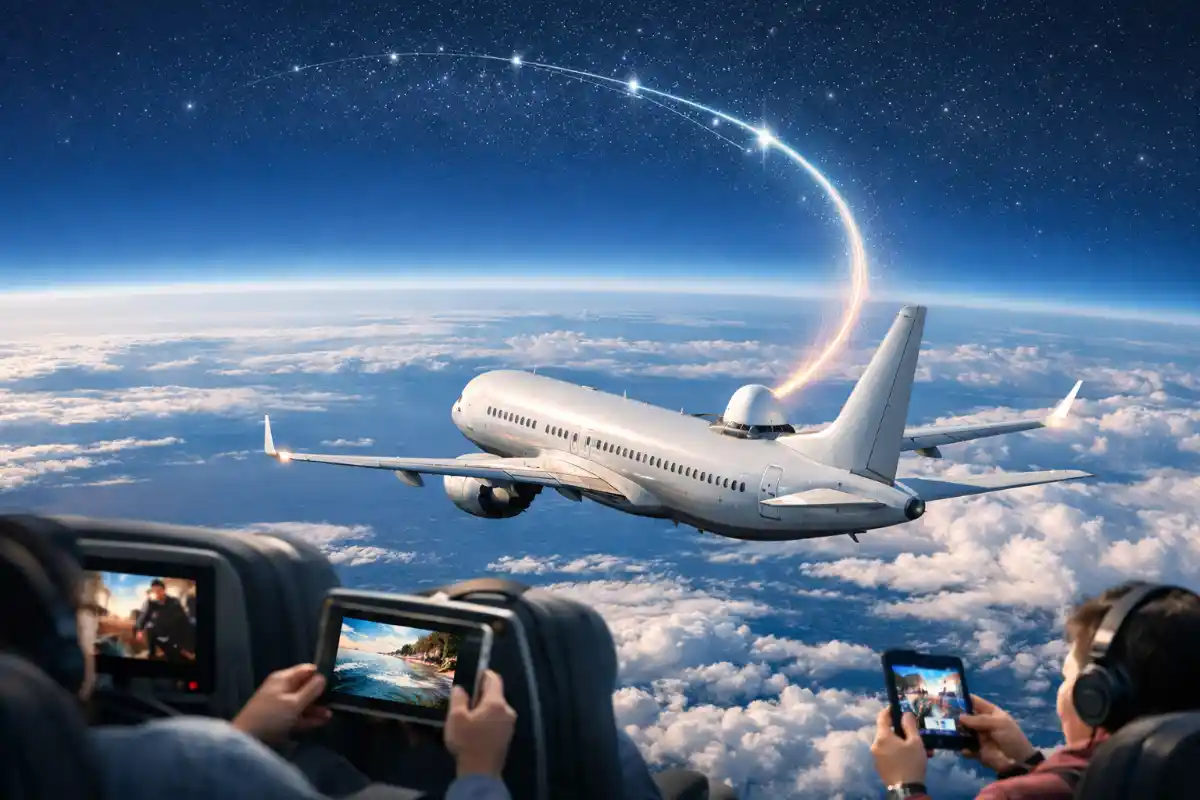
Starlink changes this equation by relying on a dense constellation of low Earth orbit satellites. By orbiting closer to the planet, these satellites drastically reduce latency while delivering significantly higher throughput. The result is an internet experience that feels familiar, responsive, and stable, even during cruise.
Passengers now browse, stream, and communicate in real time. Video platforms load instantly, cloud services function normally, and collaboration tools perform without compromise. This shift is not incremental; it is transformational, aligning the in-flight experience with the digital standards people expect on the ground.

Productivity Takes Off at Thirty-Five Thousand Feet
High-speed connectivity has redefined how travelers use their time onboard. Business passengers are no longer constrained to offline work or delayed communication. Video conferences, shared documents, and live presentations are now practical realities during flight, effectively extending the workday into the air.
This capability is more than convenience; it reshapes travel economics. Time spent flying becomes usable time, reducing the productivity cost of long journeys. Airlines that enable this shift position themselves as partners in efficiency rather than obstacles to it.
Even leisure travelers feel the impact. Streaming personal content, staying connected with family, or managing digital entertainment preferences makes flying feel less isolating and more personal. The cabin becomes an extension of everyday life rather than a disconnected bubble.
Airlines Embracing a New Connectivity Standard
Early adopters recognized the strategic value of Starlink before it became an industry talking point. European carrier airBaltic was among the first to deploy the system in 2023 across its Airbus A220 fleet. By offering fast, free connectivity without login barriers, the airline demonstrated how seamless internet access could enhance passenger satisfaction without operational complexity.
Major global carriers soon followed. Qatar Airways pushed the boundaries further, famously hosting an online gaming competition onboard a Starlink-equipped aircraft. The event was less a novelty than a statement, showcasing confidence in the system’s stability and performance under real-world conditions.
These deployments signal a broader shift. Connectivity is no longer an optional add-on or revenue stream; it is becoming a core component of the onboard experience, shaping brand perception and customer loyalty.
Certification Across Aircraft Types Accelerates Adoption
One of the defining challenges of any aviation technology is certification. Starlink’s rapid expansion across aircraft platforms highlights both industry demand and regulatory confidence. As of late 2025, the system is certified on a wide range of Airbus and Boeing aircraft, including the A220, A320 family, A330, A350, and multiple variants of the Boeing 737, 777, and 787.
This breadth matters. Certification across narrow-body and wide-body fleets allows airlines to standardize connectivity offerings, reducing fragmentation and simplifying passenger expectations. A traveler boarding a short-haul flight can reasonably expect the same quality of internet as on an intercontinental journey.
Further certifications are already underway, extending coverage to additional long-haul aircraft and even ultra-large platforms. Each approval expands the network effect, accelerating adoption and normalizing high-speed connectivity as an industry baseline.

Rethinking In-Flight Entertainment Systems
As connectivity improves, airlines are reassessing the role of traditional seat-back screens. For some operators, especially on short-haul routes, streaming content directly to personal devices reduces weight, maintenance costs, and cabin complexity. Starlink’s bandwidth makes this approach viable without sacrificing quality.
However, the shift is not universal. Long-haul flights, premium cabins, and competitive markets still rely on embedded screens as part of a differentiated service offering. The future is hybrid, shaped by aircraft type, route length, and brand strategy rather than a single technological directive.
What remains consistent is the central role of connectivity. Whether content is delivered through a screen or a smartphone, the network behind it determines quality, reliability, and passenger satisfaction.
Why Starlink Represents a Structural Shift
Starlink’s impact goes beyond speed. Its relatively low installation costs, simplified hardware, and scalable architecture lower barriers for airlines to offer free connectivity. This economic shift changes how airlines think about digital services, moving from monetization toward experience enhancement.
Passengers no longer weigh whether internet access is worth the price. They simply expect it to work. Airlines that meet this expectation strengthen trust, while those that lag risk appearing outdated in an increasingly connected world.
The Future of Flying Is Fully Connected
The 2020s are redefining air travel, and connectivity sits at the center of that transformation. Starlink has accelerated a trend that was already underway, but its performance and scalability have pushed the industry past a tipping point. Being offline is no longer an accepted part of flying.
As certifications expand and adoption grows, high-speed in-flight internet will feel less like innovation and more like infrastructure. The skies are no longer a digital dead zone. They are becoming one of the most connected spaces travelers experience, and that shift is reshaping aviation from the inside out.