A380 Starlink Debut Signals a New Era of Aviation Connectivity
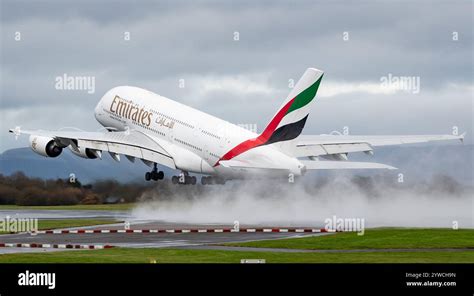
Emirates has taken a decisive step into the future of aviation by equipping its first Airbus A380, registered A6-EEA, with Starlink WiFi, marking the world’s first deployment of this advanced satellite system on the iconic double-decker aircraft. The installation, completed at Cornwall Airport Newquay (NQY) in the United Kingdom, introduces a new benchmark for onboard internet performance—one that aligns more closely with ground-based broadband than traditional in-flight offerings.
This development is more than a routine upgrade. It represents a strategic shift in how airlines approach passenger expectations in an increasingly connected world. For years, inflight WiFi has been synonymous with slow speeds and frustrating interruptions. Emirates’ move challenges that narrative by delivering a seamless digital experience at 35,000 feet, especially critical for long-haul passengers who rely on connectivity for both productivity and entertainment.
The choice of aircraft is no coincidence. The Airbus A380, already synonymous with luxury and scale, now becomes a testbed for next-generation connectivity solutions. By integrating Starlink into its flagship aircraft, Emirates reinforces its commitment to innovation while setting a new standard competitors will be forced to match.
Inside the Technology: How Starlink Transforms In-Flight Internet
At the core of this transformation lies Starlink’s low Earth orbit (LEO) satellite constellation, a network that dramatically reduces latency compared to traditional geostationary satellites. Positioned closer to Earth, these satellites enable faster data transmission, making real-time applications—like video conferencing and live streaming—not only possible but practical onboard.
The upgraded A380 is capable of delivering internet speeds exceeding 2 Gbps, a figure that dwarfs legacy systems. This immense bandwidth allows hundreds of passengers to simultaneously access high-demand services without noticeable degradation in performance. Streaming high-definition video, participating in virtual meetings, and even cloud-based gaming become viable at cruising altitude.
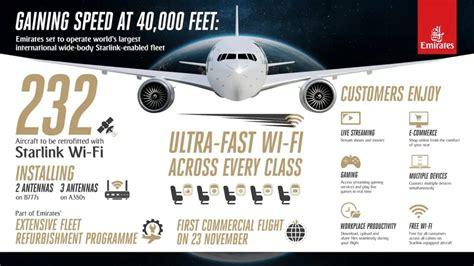
However, achieving this level of performance on an aircraft designed decades ago required significant engineering ingenuity. The installation involved integrating multiple antennas across the aircraft’s fuselage and deploying an extensive network of cabin access points. Ensuring consistent coverage across both decks—while managing interference and structural constraints—posed a unique technical challenge that engineers successfully overcame.
Cornwall Airport Newquay: An Unlikely Hub for Aerospace Innovation
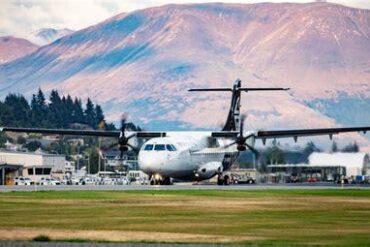
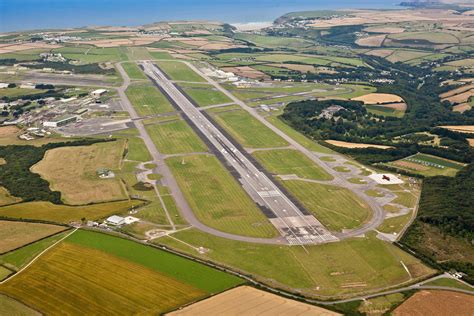
The transformation of A6-EEA unfolded at Cornwall Airport Newquay, a location better known for its regional operations than handling the world’s largest passenger aircraft. Yet its 9,003-foot runway and robust infrastructure—rooted in its history as RAF St Mawgan—made it uniquely suited for such a complex project.
The airport’s relatively low traffic levels provided an ideal environment for extensive modification work, allowing engineers the time and space required to complete the installation without operational pressure. Today, the site’s dual role as Spaceport Cornwall further underscores its growing importance in cutting-edge aerospace activities.
The arrival of the A380 on April 2 generated considerable local attention, highlighting both the aircraft’s immense scale and the rarity of such operations at Newquay. It was a visual reminder that even legacy aviation hubs can play a role in shaping the industry’s future.
Why Emirates Is Betting Big on Starlink Connectivity
As the largest operator of the Airbus A380, Emirates is uniquely positioned to scale this innovation across a significant portion of its fleet. With over 100 A380s in service and millions of passengers traveling annually on long-haul routes, the airline has both the incentive and the infrastructure to lead this transformation.
Passenger expectations have evolved rapidly, particularly among premium travelers who demand uninterrupted connectivity. For business passengers, the ability to remain productive mid-flight is no longer a luxury—it’s an expectation. Leisure travelers, meanwhile, increasingly expect the same streaming and social media experiences they enjoy on the ground.
By introducing free, high-speed WiFi, Emirates is not only enhancing passenger satisfaction but also differentiating itself in a highly competitive market. The move signals a broader industry trend where connectivity becomes a core component of the travel experience rather than an optional add-on.
Scaling Connectivity on the World’s Largest Passenger Aircraft
The Airbus A380 presents unique challenges for connectivity due to its sheer size and passenger capacity, often exceeding 500 travelers per flight. Maintaining consistent internet performance across such a vast cabin requires careful network design and robust infrastructure.
Engineers addressed this by installing a distributed system of access points, ensuring even signal coverage across both decks. The aircraft’s structure, including its thick fuselage and complex internal layout, demanded precise placement of hardware to avoid signal degradation.
This successful implementation demonstrates that high-capacity satellite connectivity can scale to even the largest commercial aircraft, a milestone that could accelerate adoption across other widebody fleets. It also proves that older aircraft platforms can be effectively modernized, extending their relevance in an increasingly digital aviation landscape.
Starlink’s Expanding Role in Global Aviation
For Starlink, aviation represents a rapidly growing frontier. Originally developed for residential and remote connectivity, the network has expanded to include maritime and now aviation applications. Its ability to deliver low-latency, high-bandwidth internet globally makes it particularly attractive for airlines operating long-haul routes over oceans and remote regions.
While several carriers have begun introducing Starlink on smaller aircraft, the A380 installation marks a significant leap in scale and complexity. Success here sends a clear signal to the industry: the limitations of traditional inflight connectivity are rapidly disappearing.
As more airlines adopt the technology, passenger expectations will shift accordingly. The concept of being “offline” during a flight may soon feel as outdated as paper boarding passes.
A Defining Moment for the Future of Air Travel
The integration of Starlink into Emirates’ A380 fleet represents more than a technological upgrade—it signals a broader transformation in how airlines define the passenger experience. Connectivity is no longer an afterthought; it is becoming as essential as seat comfort and in-flight entertainment.
With additional A380s scheduled for similar upgrades throughout 2026, Emirates is positioning itself at the forefront of this evolution. The combination of advanced satellite technology, engineering innovation, and strategic foresight places the airline in a leadership role as the industry adapts to new digital expectations.
In an era where staying connected is integral to daily life, Emirates’ Starlink-enabled A380 offers a compelling vision of the future—one where the boundaries between ground and sky continue to dissolve, and passengers remain seamlessly connected wherever they fly.