For decades, John F. Kennedy International Airport served as the beating heart of American international aviation. Long before JetBlue, Delta Air Lines, and a multitude of global carriers filled the airport’s gates, one airline defined JFK’s identity: Pan American World Airways. Its blue globe logo, iconic Clippers, and ambitious worldwide route network transformed New York into the center of global air travel during the second half of the twentieth century.
Today, however, nearly every physical trace of Pan Am has disappeared from the airport it once dominated. The legendary Worldport terminal is gone. Pan Am aircraft have long since been retired or scrapped. Former operational facilities have been repurposed, rebuilt, or erased entirely. Yet one final structure has continued to stand quietly on the airfield, surviving long after the airline itself vanished.
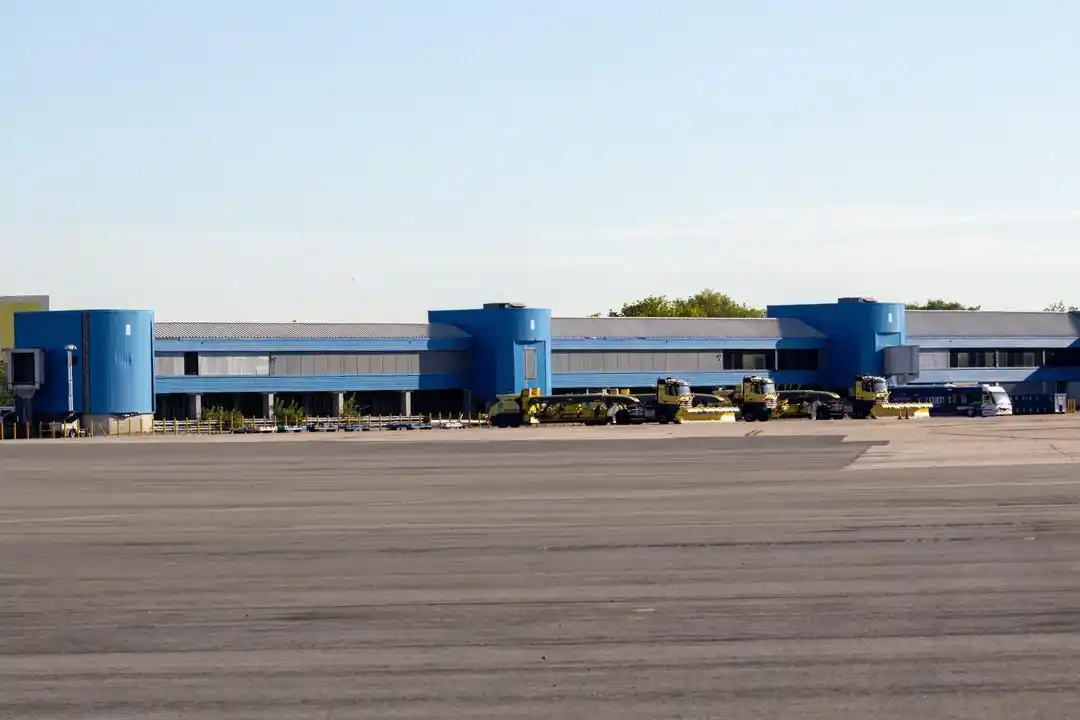
That building is Hangar 17, the last surviving Pan Am-era facility at JFK Airport. After decades of abandonment, historical significance, and unexpected roles in some of America’s most important moments, the hangar is now approaching the end of its existence. As JFK undergoes one of the largest airport redevelopment projects in its history, the final remaining Pan Am structure is scheduled for demolition, closing the last physical chapter of the airline’s presence at New York’s primary international gateway.
The loss of Hangar 17 represents more than the demolition of an aging airport building. It marks the symbolic conclusion of an era that helped define global aviation.
After all, few airlines left a legacy as influential as Pan Am.
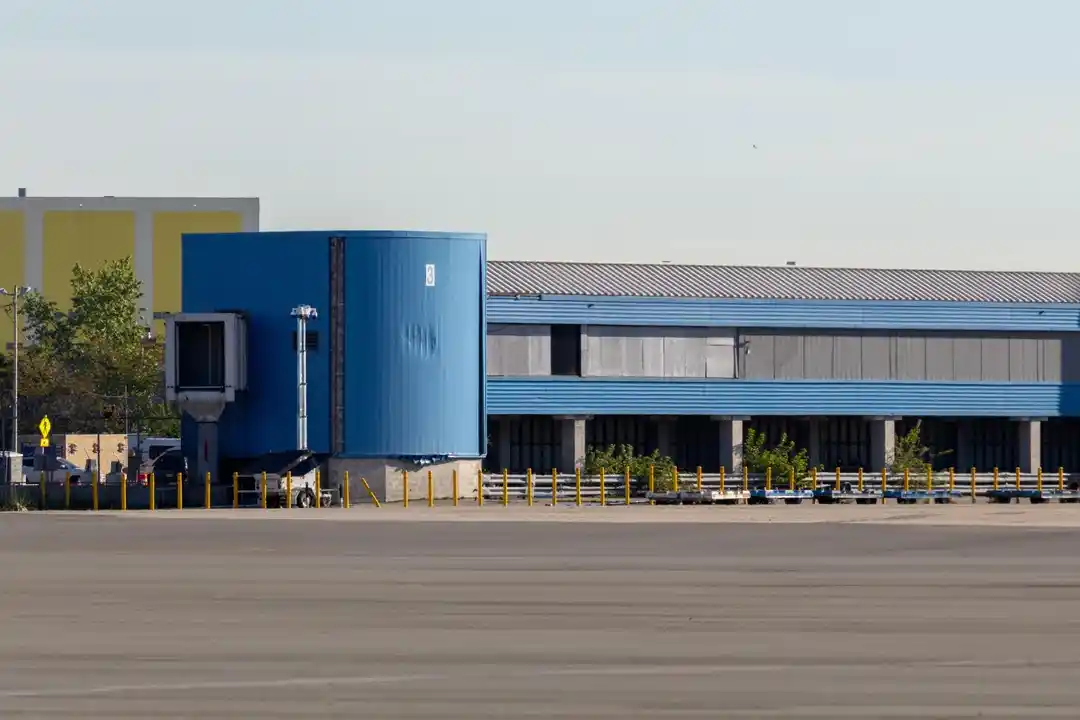
Hangar 17: The Last Physical Reminder of Pan Am at JFK
When Pan American World Airways operated from JFK, the carrier maintained a massive infrastructure network supporting thousands of employees, international flights, and a fleet that connected the United States with destinations across the globe.
Among these facilities was Hangar 17, a large maintenance building located away from the passenger terminals. The hangar formed part of Pan Am’s extensive technical operation, supporting aircraft maintenance and servicing requirements during the airline’s most successful decades.
As Pan Am expanded during the jet age, JFK became its most important hub. The airport was filled with Boeing 707s, Boeing 747s, and other aircraft carrying the famous Pan Am branding. Maintaining such a vast operation required substantial engineering capabilities, and Hangar 17 played a supporting role in keeping aircraft flying.
When Pan Am collapsed and entered liquidation in 1991, many expected the hangar to disappear alongside the airline. Instead, the facility found a second life when Tower Air took control of the building and established its headquarters there.
Although ownership changed, traces of Pan Am remained visible. The hangar retained much of its original design language and appearance, creating a unique visual connection between two very different chapters of JFK history.
Tower Air itself eventually succumbed to financial difficulties, shutting down operations in 2000. Once again, Hangar 17 became vacant.
Unlike many airport structures that are quickly redeveloped, the hangar entered an unusual period of survival that would unexpectedly give it a place in American history.
An Unexpected Role After September 11
The events of September 11, 2001, transformed New York City and the aviation industry forever. In the aftermath of the attacks, authorities needed secure facilities capable of storing and preserving thousands of recovered artifacts from the World Trade Center site.
Hangar 17 became one of those locations.
The building was converted into a storage and preservation facility housing approximately 2,500 artifacts connected to the attacks. These included structural debris, damaged emergency vehicles, recovered objects, and historical evidence destined for future memorials and museums.
For nearly fifteen years, the hangar served a solemn purpose unlike anything envisioned during its Pan Am years.
Inside the massive structure rested pieces of history that documented one of the most significant events of the modern era. Preservation teams worked carefully to catalog, protect, and eventually transfer these artifacts to institutions and memorial projects around the country.
This chapter gave Hangar 17 a significance extending far beyond aviation history. The building became connected not only to Pan Am’s legacy but also to the collective memory of a nation.
By the mid-2010s, the stored artifacts had largely been relocated. The hangar was closed once again and returned to a state of inactivity.
Despite standing unused, it remained one of JFK’s most recognizable forgotten structures.
Why JFK Airport Is Finally Removing Hangar 17
The primary reason for the demolition is straightforward: JFK Airport is being rebuilt for the future.
The Port Authority of New York and New Jersey is overseeing a multi-billion-dollar modernization program designed to transform the airport into a world-class international gateway capable of handling future passenger growth and airline requirements.
The redevelopment involves extensive construction projects affecting terminals, roadways, cargo facilities, maintenance areas, and operational infrastructure.
Within this larger transformation, Hangar 17 no longer serves an operational purpose.
Airport planners view the building as occupying valuable real estate that can be used more effectively through modern facilities designed around contemporary airline needs. The airport’s long-term strategy focuses on improving efficiency, increasing capacity, and creating better access for ground operations.
Rather than preserving underutilized legacy structures, JFK is prioritizing infrastructure that supports twenty-first-century aviation.
As a result, Hangar 17 has reached the end of its functional lifespan.
The building will be demolished alongside other aging facilities as the airport reorganizes maintenance and cargo operations into more efficient layouts.
For aviation historians, the decision is bittersweet. Yet from an operational perspective, the rationale is difficult to challenge. Airports operate under intense space constraints, and every acre must justify its existence.
In the eyes of airport planners, nostalgia cannot compete with modernization requirements.
The Massive Transformation of JFK Airport
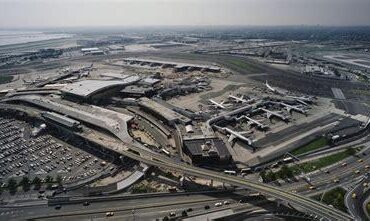
The demolition of Hangar 17 is occurring amid the most significant redevelopment initiative JFK has experienced in decades.
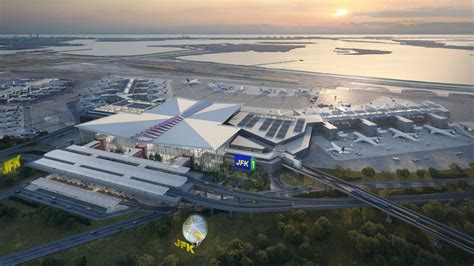
At the center of the project is the construction of the new Terminal One, which is set to become the largest international terminal in the United States.
The first phase of the terminal is scheduled to open in 2026 and will include fourteen gates along with new arrivals and departures facilities. Upon full completion in 2030, the terminal will feature twenty-three gates, including twenty-two capable of accommodating widebody aircraft.
The new complex is rising on land previously occupied by several older airport structures, including portions of the original Terminal One site and areas once occupied by Terminal Two.
Its scale reflects JFK’s continuing role as one of North America’s most important international gateways.
Meanwhile, construction is also progressing on Terminal Six, another major component of the airport’s modernization strategy.
The terminal will connect directly with JetBlue’s Terminal Five, creating seamless passenger transfers and improving operational flexibility. Although smaller than the new Terminal One, Terminal Six will accommodate a diverse mix of domestic and international airlines.
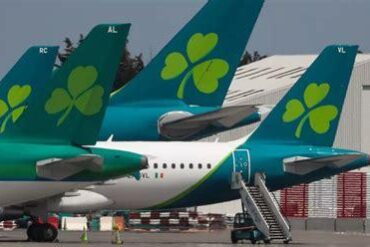
Among the carriers expected to operate there are Lufthansa, Cathay Pacific, SWISS, Aer Lingus, Icelandair, Avianca, All Nippon Airways, Condor, Brussels Airlines, and JetBlue.
Together, these projects are fundamentally reshaping JFK’s physical landscape.
The Rise and Fall of the Legendary Pan Am Worldport
While Hangar 17 represents the final surviving Pan Am structure at JFK, the airline’s most famous facility was undoubtedly the Worldport.
Originally opened in 1960 as the Pan Am Terminal, the building became an architectural icon almost immediately. Its distinctive flying-saucer-style roof projected futuristic optimism and perfectly reflected the excitement surrounding the emerging jet age.
The terminal gained even greater significance in 1971 when it was expanded to accommodate the revolutionary Boeing 747.
At the time, the enlarged facility became the largest airport terminal in the world.
For millions of travelers, Worldport served as the gateway to international adventure. Passengers departing for Europe, Asia, Africa, and South America experienced a level of glamour that became synonymous with Pan Am itself.
When Pan Am collapsed in 1991, Delta Air Lines inherited many of the carrier’s assets, including the lease for Worldport.
Renamed Terminal Three, the building continued serving international passengers for more than two decades.
However, aviation requirements changed dramatically over the years. The aging structure became increasingly inefficient compared with newer facilities.
Delta ultimately shifted its operations into an expanded Terminal Four, leaving Worldport without a future.
Its final flight departed on May 23, 2013, when a Delta Boeing 747-400 left for Tel Aviv.
Soon afterward, demolition crews arrived.
Despite preservation campaigns and widespread public interest, one of aviation’s most famous terminals disappeared from the New York skyline.
Today, the new Terminal One is being built across much of the same land.
JFK’s Long History of Terminal Demolitions
The disappearance of Pan Am facilities is part of a broader pattern at JFK Airport.
Since opening in the mid-twentieth century, the airport has continuously reinvented itself through cycles of construction and demolition.
Many of JFK’s original terminals were designed specifically for individual airlines. As the airline industry consolidated and evolved, those dedicated facilities gradually became obsolete.
The original International Arrivals Building gave way to Terminal Four. The first Terminal One disappeared and was replaced with a newer version. Terminal Two closed after Delta consolidated operations. Terminal Nine was demolished years ago after serving multiple airlines throughout its history.
Even Terminal Seven, long associated with British Airways, is scheduled for removal as redevelopment continues.
This process highlights a reality often overlooked by aviation enthusiasts. Airports are living infrastructure systems rather than static monuments.
Buildings that once appeared permanent eventually reach the end of their usefulness.
JFK’s evolution reflects changing aircraft technology, passenger expectations, security requirements, and airline business models.
In that context, Hangar 17’s survival into the mid-2020s is actually remarkable.
The TWA Hotel Becomes JFK’s Last Great Aviation Landmark
Although Pan Am’s final structure is disappearing, another iconic relic continues to thrive nearby.
The former TWA Flight Center, designed by Eero Saarinen, remains one of the most celebrated examples of airport architecture ever created.
Unlike Worldport, the building received landmark protection and escaped demolition.
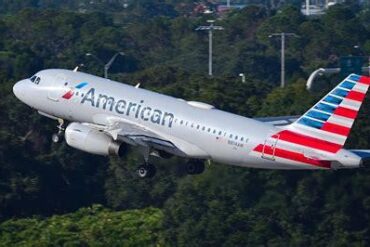
Following years of uncertainty after Trans World Airlines merged with American Airlines, developers transformed the structure into the TWA Hotel, which opened in 2019.
The project preserved the terminal’s dramatic mid-century modern architecture while adapting it for contemporary use.
Today, visitors can explore restored public spaces, dine beneath the famous sweeping concrete curves, and experience a rare glimpse into aviation’s golden age.
Guest rooms occupy newly constructed wings positioned alongside the historic headhouse, while original passageways connect the old and new sections of the complex.
The hotel even features a cocktail lounge housed inside a preserved Lockheed Constellation-derived aircraft, creating one of the most unique hospitality experiences anywhere in the world.
As JFK modernizes around it, the TWA Hotel remains a tangible connection to the airport’s past.
The End of Pan Am’s Physical Legacy at JFK
When demolition crews eventually arrive at Hangar 17, they will erase the last surviving Pan Am structure from New York-JFK Airport.
For younger travelers, the building may appear to be little more than an aging hangar occupying valuable airport land. For aviation historians, however, its significance runs much deeper.
Hangar 17 connected multiple eras of American history. It supported the operations of the nation’s most iconic international airline. It housed the headquarters of Tower Air. It preserved thousands of September 11 artifacts. And it survived long after nearly every other Pan Am landmark disappeared.
Its demolition closes a chapter that began during the golden age of international aviation.
As JFK enters a new era defined by cutting-edge terminals, expanded international capacity, and modern infrastructure, the airport will continue evolving to meet future demands. Yet with the loss of Hangar 17, one final physical link to Pan American World Airways will vanish forever.
The airline that once symbolized America’s global reach will remain alive through photographs, memories, museums, and aviation history books—but no longer through any surviving building at the airport it once called home.