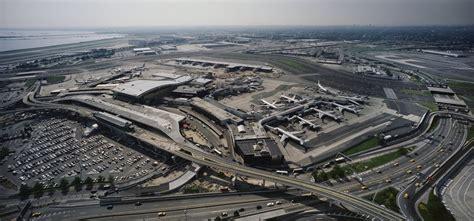
New York’s skies are a choreography of aluminum and intention. Jets arc over the Atlantic, descend over tidal marshes, and funnel into a metropolitan airspace that handles more travelers than most countries manage in a year. In this dense aerial neighborhood, the question of what is the busiest airport in New York is not a trivia prompt; it shapes itineraries, delay risk, lounge access, route availability, and the very texture of arriving in America’s most kinetic city. The answer is not abstract. John F. Kennedy International Airport (JFK) holds the crown, and it does so not merely by raw headcount but by strategic gravity—an international gateway whose connective tissue binds continents to the Northeast Corridor.
The New York airport system—JFK, Newark Liberty International Airport (EWR), and LaGuardia Airport (LGA)—moves more than 140 million passengers annually. The system behaves like a three-body problem in physics: each airport pulls traffic according to geography, airline hub strategy, runway geometry, and regulatory constraint. JFK anchors the constellation with the heaviest international flow. Newark balances transatlantic demand for travelers west of the Hudson while carrying the connective burden of a major carrier hub. LaGuardia compresses time for domestic business flyers who prize proximity to Manhattan. The busiest title emerges from this dance of incentives and limits, and in 2025–2026 data, JFK stays in front.
Density explains the mood of the place. The New York TRACON (Terminal Radar Approach Control) airspace is a knot of intersecting arrival streams and slot controls designed to prevent the kind of gridlock that would ripple across the Eastern Seaboard. The Federal Aviation Administration meters takeoffs and landings; airlines juggle schedules against runway maintenance windows; weather pinches the system from above. When JFK leads in passengers, it is doing so in a box with rigid walls. The result is a peculiar form of bigness: not the sprawling, single-carrier megahub of the American interior, but a pluralist bazaar of airlines, alliances, languages, and cabin classes.
JFK’s lead matters because it is a promise to travelers. It promises the most nonstop international destinations in the region, the deepest bench of premium cabins for transatlantic business traffic, and the broadest menu of alliances for onward connections. That promise has weight. Airlines stack widebody capacity here because the market rewards density; passengers choose JFK because the routes exist. The feedback loop keeps the airport busiest in the New York orbit even as construction temporarily narrows its gates.
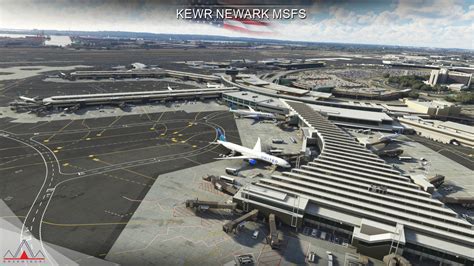
The numbers make the argument concrete. In 2025, the Port Authority of New York and New Jersey recorded JFK as the system’s volume leader, with Newark settling below and LaGuardia trailing as the compact domestic specialist. The absolute totals fluctuate with staffing and runway work, but the hierarchy persists. What looks like a narrow margin on paper becomes decisive in lived experience. JFK’s volume is not just more people; it is more long-haul bodies arriving in widebodies that occupy gates longer, load more cargo, and pull in more connecting traffic. Each international arrival is a small city of logistics.
Connectivity explains the stickiness of the crown. More than 90 airlines link JFK to every inhabited continent. This breadth is not decorative; it is structural. It allows corporate travel managers to standardize routes, enables immigrant communities to maintain direct ties to home, and gives cargo operators belly space on passenger jets that would not exist in a domestic-only profile. Newark’s hub function is formidable, but it is shaped by a single dominant network logic. LaGuardia’s perimeter rule—limiting most flights to a 1,500-mile radius—keeps it fast and domestic, but structurally prevents it from competing for the busiest title in passenger totals.
The busiest airport is also the loudest laboratory of airline strategy. In 2026 schedules, the weight of American Airlines, Delta Air Lines, and United Airlines expresses itself in sheer frequency across the New York region, with JFK drawing a disproportionate share of premium long-haul flying. Frequency is power in a slot-constrained world. Airlines fight for minute slices of runway time because each slice buys market share, loyalty-program gravity, and lounge traffic that locks in high-yield travelers. The “lounge war” at JFK is a tell. When carriers spend real money on premium ground space, they are signaling that the airport is where revenue is defended.
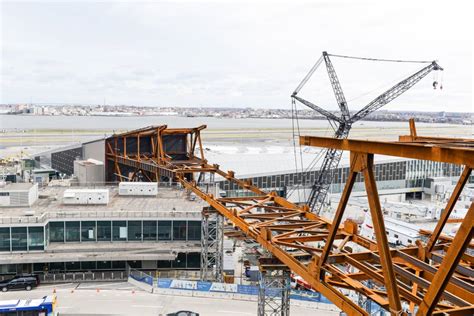
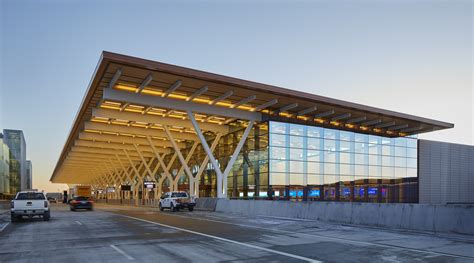
Infrastructure complicates the story in productive ways. JFK’s $19 billion redevelopment is the largest airport rebuild in North America, a rolling transformation that trades temporary pain for long-term throughput. New Terminal 1 and Terminal 6 are designed for next-generation widebodies and higher passenger densities without sacrificing dwell comfort. During construction, gates go dark and curbs move, creating short-term dips in throughput and longer taxi times. The busiest airport title, then, is earned while running a marathon with a boot on one foot. The fact that JFK keeps its lead during peak construction is evidence of structural dominance rather than temporary luck.
Contrast sharpens understanding. LaGuardia’s $8 billion modernization has already completed, and the result is a beautiful, efficient domestic portal that finally matches the city’s ambition. Its scale, however, is fixed by geography. With 680 acres to JFK’s nearly 5,000, LaGuardia’s ceiling is low by design. Newark’s physical footprint is larger, but its operational stress—amplified by air traffic control staffing challenges and the complexity of its approach corridors—limits how much additional volume can be absorbed without cascading delays. In this geometry of constraints, JFK has the elbow room to absorb growth once construction phases unlock new gates.
Airspace regulation is the invisible hand shaping all of this. Slot management in the Northeast is not an abstract policy; it is the thermostat of congestion. The FAA’s caps on hourly movements prevent total meltdown but freeze growth into a zero-sum game. When one carrier adds a flight, another must cede a slot. This reality favors airports that can wring more passengers from each movement. JFK’s long-haul bias means more seats per landing, which quietly compounds its lead in passenger totals even when movement counts look similar across the region. The busiest airport is the one that extracts the most humanity per permitted minute of runway time.
The psychological dimension of “busiest” is worth lingering on. Travelers experience bigness as friction: longer security queues, fuller lounges, tighter curbside choreography. Yet bigness also manifests as choice. At JFK, choice shows up as multiple daily nonstops to major European capitals, late-night departures to the Middle East, dawn arrivals from East Asia. Choice compresses risk. When weather scrambles schedules, the airport with the densest web of alternatives gives stranded passengers more ways out. The busiest airport becomes, paradoxically, the most resilient to individual disruptions because it has more paths to reroute demand.
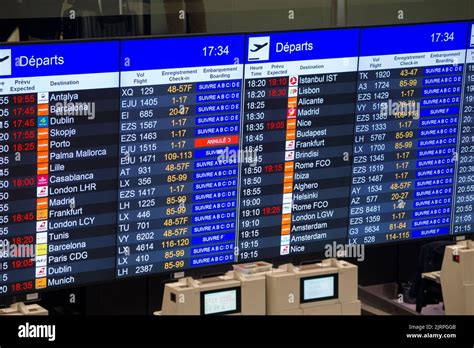
Global context reframes the crown. JFK does not outmuscle interior megahubs like Atlanta in raw domestic seat counts, nor does it match the daily aircraft movement tempo of Chicago O’Hare. It does something different. It concentrates global diversity in a narrow coastal aperture. In an international comparison, Dubai International Airport’s sprint toward 100 million passengers sets a benchmark for scale, and London Heathrow’s slot choreography shows what density looks like under severe constraints. JFK’s claim to importance rests on being the United States’ most cosmopolitan gateway, a place where the map of the world is legible on the departure board.
Risk lives inside the crown. The New York corridor’s Achilles’ heel is staffing in the N90 airspace and the domino effect of weather on interdependent hubs. When controllers are thin, even blue-sky days can carry baked-in delay risk. Slot waivers allow airlines to trim schedules without penalty, which can stabilize operations but reduce consumer choice. Construction detours add ground-side friction that erodes the perceived benefit of new terminals. The busiest airport, in other words, is always one weather system away from reminding everyone that complexity has a price.
There is a practical upside to understanding the hierarchy. Passengers who value international nonstop breadth and alliance choice gravitate to JFK and accept the density tax. Travelers who prioritize west-of-Hudson access and a single-carrier network logic often prefer Newark, trading some route breadth for hub coherence. Those who prize speed to Manhattan choose LaGuardia and live within the perimeter rule. The busiest title does not make JFK the “best” for every trip. It makes it the most powerful node in the region’s network, and power is situationally useful.
The future leans toward reinforcement of the crown. As JFK’s new terminals come online with gates sized for next-generation widebodies, the airport’s ability to absorb long-haul growth will increase without adding runway movements. This is how growth happens in a capped system: bigger planes, better gate choreography, tighter turns, smarter baggage flows. Airlines will continue to stack premium capacity where premium demand lives. New York is a magnet for that demand. The busiest airport will remain the one that best translates global appetite into local throughput.
A city’s airport hierarchy is a mirror of its economy. Finance, culture, immigration, and tourism all bend flight schedules toward New York, and JFK is where those vectors intersect most thickly. The title of busiest airport in New York is less about bragging rights than about gravitational pull. JFK pulls routes, pulls aircraft, pulls people. It is not always pleasant to move through gravity wells. They are dense. They are noisy. They are alive.