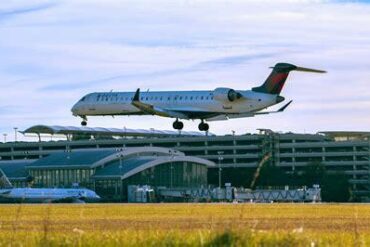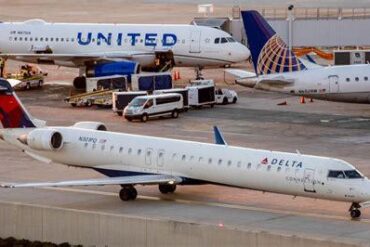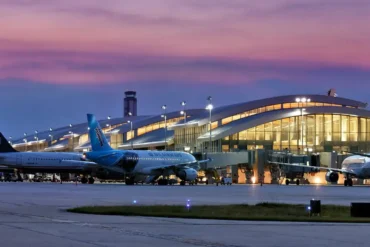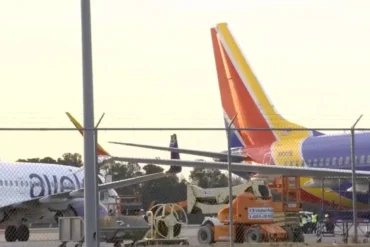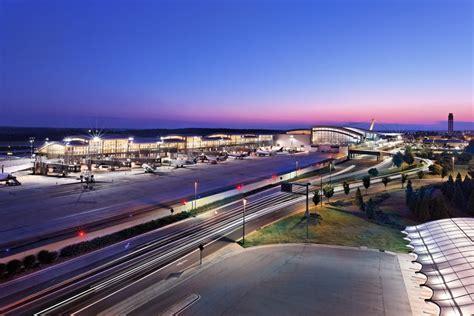
Strategically located just minutes from downtown Raleigh and the Research Triangle Park, RDU is governed by the RDU Airport Authority, a board representing Wake and Durham counties alongside the cities of Raleigh and Durham. As a focus city for Delta Air Lines and an operating base for Avelo Airlines and Endeavor Air, RDU combines the strengths of both major legacy carriers and agile low-cost operators to offer seamless travel options.
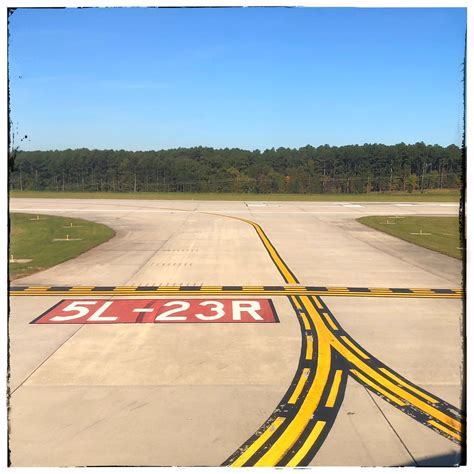
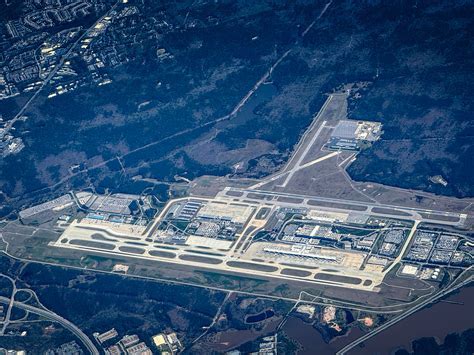
The airport’s airfield features three active runways: 05L/23R (10,000 ft concrete), 05R/23L (7,500 ft asphalt), and 14/32 (3,570 ft asphalt). A new 05L/23R runway, stretching 10,639 ft, broke ground on October 11, 2023, and is slated for completion within five years, further enhancing capacity and safety.
Overview of RDU’s Terminal Infrastructure
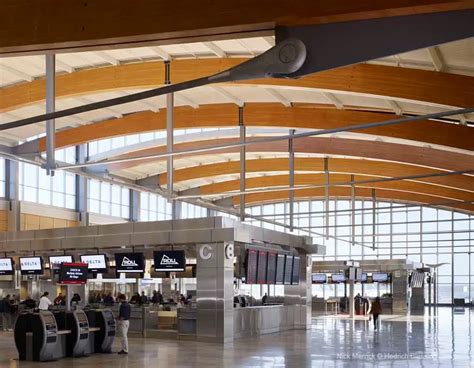
RDU comprises two physically separate terminals with a total of 45 gates. Terminal 1 houses Gates A1–A9 and caters to airlines such as Alaska, Avelo, Breeze, Southwest, Spirit, and Sun Country. Passengers transfer between terminals via a shuttle bus or moving walkway through covered parking decks, as there is no direct airside connection.
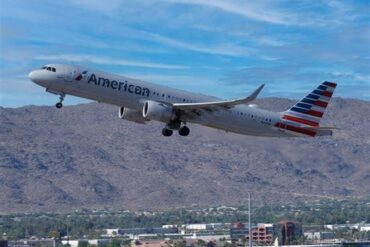
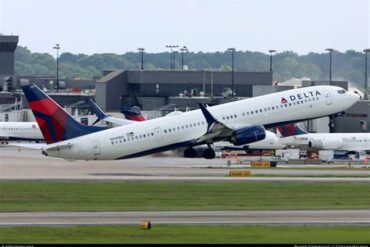
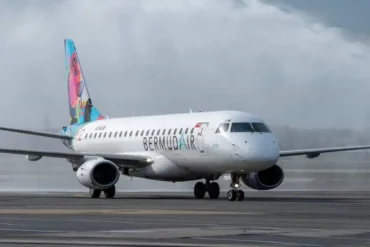
Terminal 2, the larger facility with Concourses C and D (Gates C21–C25 and D1–D15), is the hub for international arrivals and departures. All non–precleared international flights are processed here at gates C21, C23, C24, and C25. Major carriers operating out of Terminal 2 include Aeroméxico, Air Canada, Air France, American Airlines, BermudAir, Copa Airlines, Delta, Frontier, Icelandair, JetBlue, Lufthansa, WestJet, and United.
Within Terminal 2, passengers enjoy access to premium lounges: the American Admirals Club, Delta Sky Club, United Club, and the USO of North Carolina. These facilities provide comfortable seating, complimentary refreshments, and business amenities, underscoring RDU’s commitment to an elevated travel experience.
Runways and Airfield Operations
The airport’s runways are meticulously designed to handle diverse aircraft types and weather conditions. Runway 05L/23R, originally 10,000 ft long, supports wide-body international flights and heavy cargo operations. Runway 05R/23L at 7,500 ft accommodates most narrow-body jets, while Runway 14/32 serves regional and general aviation traffic.
Air traffic control at RDU manages nearly 600 daily operations, balancing arrivals, departures, training flights, and general aviation. Advanced ground radar systems and precision instrument landing systems (ILS) facilitate safe landings even during periods of low visibility, which historically have contributed to incidents such as the 1975 Eastern Flight 576 wind-shear event.
Historical Evolution and Early Foundations
The roots of RDU trace back to 1929 with the opening of Raleigh Municipal Airport. Rapid growth led to the North Carolina General Assembly chartering the Raleigh–Durham Aeronautical Authority in 1939. On May 1, 1943, the modern airport commenced operations, featuring three 4,500 ft runways built from surplus military barracks materials. Carriers like Eastern Air Lines, Capital Airlines (1946), and Piedmont Airlines (1948) laid the foundation for post–World War II passenger service.
The jet age arrived in 1965 with Eastern 727s, and by 1957, the Official Airline Guide listed 36 daily departures. Delta Air Lines joined in 1970, further diversifying route options. Throughout the 1970s, Piedmont connected RDU to cities across North Carolina and the mid-Atlantic, while United, Eastern, and Delta operated key trunk routes to hubs such as Atlanta, Newark, and Chicago.
The American Airlines Hub Era (1987–1995)
In June 1987, American Airlines inaugurated a major hub at RDU, constructing a dedicated terminal between 1985 and 1987. At its peak, American operated 211 daily departures to 64 destinations, including the first nonstop to Paris–Orly in 1988 and Caribbean routes commencing in 1989 (Bermuda, Cancún, St. Croix, St. Thomas).
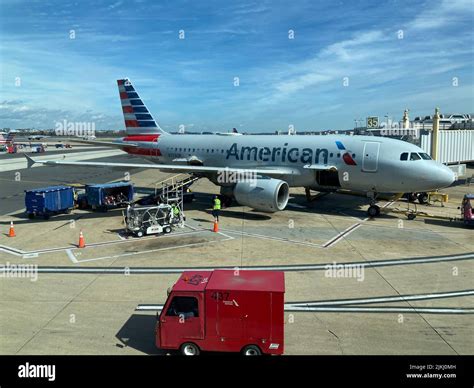
Despite the hub’s extensive network, fierce competition from Delta in Atlanta, USAir in Charlotte, and emerging hubs in Memphis and Greensboro strained profitability. American began scaling back in 1993, transferring its Paris service to London–Gatwick (grounded by a corporate commitment from GlaxoSmithKline) before closing the hub in June 1995.
Transition to Midway and the Emergence of International Service
Following American’s exit, Midway Airlines assumed hub operations from 1995 to 2003, serving key Northeast and Florida markets. Midway subleased gates from AA to retire bond obligations but succumbed to post-9/11 downturns and filed for bankruptcy in 2003.
International connectivity expanded with Air Canada launching Toronto service in 1996, followed by brief routes to Grand Cayman, Nassau, and Saint Maarten. By 2008, American shifted its London flights to Heathrow, and in 2016, Delta reintroduced Paris service to Charles de Gaulle. The COVID-19 pandemic temporarily suspended all international flights in 2020, but recovery was swift: 2022 saw AA–Heathrow, Delta–Paris, and Icelandair–Reykjavík; 2023 brought Air France Paris; 2024 added Mexico City (Aeroméxico), Panama City (Copa), and Frankfurt (Lufthansa); and 2025 features major expansions to Toronto, Vancouver, Montego Bay, Punta Cana, Bermuda, and Calgary.
Recent Developments and Terminal Modernization
In response to growing passenger volumes, RDU undertook a comprehensive Terminal 2 rebuild between 2008 and 2011, designed by Fentress Architects. The modernized concourses feature expanded check-in areas, enhanced security processing, improved concessions, and a light-filled central atrium.
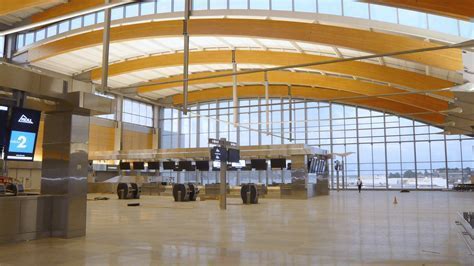
By 2010, traffic rebounded from the 2008–2009 downturn, handling 2.7 million passengers in the first four months alone. Legacy carriers and low-cost airlines introduced new routes, and in 2018, Delta designated RDU as a focus city, solidifying its commitment to the market even amid global uncertainties.
February 15, 2023, marked the opening of Avelo Airlines’ operating base, featuring two aircraft and approximately 90 employees. This facility supports Avelo’s rapid growth across leisure destinations. In spring 2025, Endeavor Air inaugurated a crew base with 130–170 employees, reinforcing RDU’s status as a regional employment hub.
Vision 2040 Master Plan: Charting the Future
The Vision 2040 Master Plan, adopted in 2017, outlines transformative projects to meet forecasted demand. Key initiatives include:
- A consolidated rental car facility to streamline ground transportation.
- An on‑site airport hotel offering convenience for connecting passengers and crew.
- Expansion of parking garages and surface lots to accommodate growing vehicle traffic.
- Terminal expansions to add up to 15 new gates across both terminals.
- Taxiway improvements to reduce runway crossing delays and enhance safety.
- Replacement and lengthening of runways, notably the new 05L/23R (10,639 ft), authorized by the FAA on September 5, 2023, with construction underway since October 2023.
- Upgrades to the Customs and Border Protection facility to handle increased international passenger volumes.
Facilities & Passenger Experience
Beyond its runways and terminals, RDU offers a suite of amenities designed to elevate the traveler’s journey. Free Wi‑Fi, charging stations at every gate, and an array of local and national dining options—including Southern-style barbecue, craft breweries, and grab‑and‑go markets—cater to diverse tastes.
Families benefit from dedicated children’s play areas, while business travelers can utilize the airport’s meeting rooms and workstations. Retail shops feature North Carolina artisans, regional souvenirs, and luxury brands, ensuring an engaging retail environment.
Airlines, Destinations, and Route Statistics
RDU serves over 80 destinations, including 14 international cities across 10 countries. As of March 2025, Delta maintains the largest market share, while Breeze Airways offers flights to 29 unique cities.
Top domestic routes (April 2024–March 2025) by passenger volume include:
- Atlanta (687,890)
- Charlotte (511,740)
- Orlando (345,440)
- Dallas/Fort Worth (325,260)
- New York–LaGuardia (325,210)
Leading international routes in 2024:
- London–Heathrow (138,064)
- Paris–CDG (127,212)
- Toronto–Pearson (92,935)
- Reykjavík–Keflavík (77,727)
- Frankfurt (53,876)
Cargo Operations and Maintenance Facilities
RDU’s cargo network comprises two dedicated areas: the North Cargo zone, primarily serving FedEx Express and UPS Airlines, and the South Cargo area, utilized by commercial carriers for belly freight. Together, these facilities manage over 200 million pounds of air cargo annually, supporting regional supply chains and just-in-time manufacturing.
In 2019, Endeavor Air established a line maintenance base at RDU. While the facility lacks a full-service hangar, it performs daily inspections and minor repairs to ensure operational readiness for delta connection aircraft.
Accidents & Safety Record
RDU’s safety record reflects the challenges of aviation history:
- 1953: USAF Douglas C‑47 crash in rain and low visibility; 3 fatalities.
- 1975: Eastern Flight 576 wind‑shear accident on Runway 23; 8 injuries.
- 1986: Rifle fire into United Flight 1502; 1 passenger wounded.
- 1988: AVAir Flight 3378 crash near Cary; 12 fatalities.
- 1994: Flagship Airlines Flight 3379 crash; 15 fatalities.
- 2000: Twin Otter fog accident; 1 crew fatality.
- 2019: Piper PA‑32 crash in Umstead State Park; 2 fatalities.
- 2022: CASA C‑212 Aviocar emergency landing; co‑pilot fatality.
- 2024: Socata TBM 850 runway excursion; 2 injuries.
Continuous investments in runway instrumentation, weather monitoring, and crew training underscore RDU’s unwavering commitment to safety.
Conclusion: RDU’s Role in North Carolina’s Future
As North Carolina’s Research Triangle continues to expand, RDU remains a vital catalyst for business, tourism, and global connectivity. With strategic investments under the Vision 2040 Master Plan, ongoing partnerships with legacy and low-cost carriers, and a steadfast focus on passenger experience, Raleigh–Durham International Airport is poised to meet the demands of tomorrow’s travelers while preserving its legacy as a regional transportation leader.