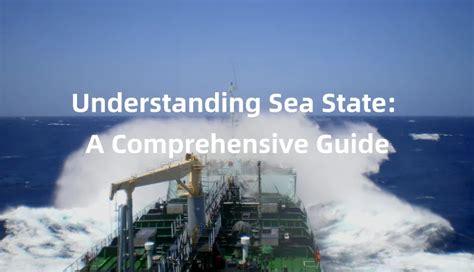
The term Sea State refers to the overall condition of the ocean’s surface. It mainly consists of two key factors: wave height and swell. Wave height is influenced by local wind strength, leading to what we call ‘wind sea.’ Swell, on the other hand, describes a slow, regular movement of the sea in rolling waves that don’t break, gradually losing energy as they travel from their distant origins.
In aviation, sea state is crucial, especially for seaplanes and flying boats. However, it also matters for land-based aircraft during controlled ditching. For helicopters operating over water, floatation devices are often installed. These devices help keep the aircraft upright to aid occupant evacuation, up to a certain sea state limit.
Wave height and swell wavelength can be estimated by trained observers, but modern technology relies more on instruments such as buoys or satellite remote sensing. Buoy measurements need to average over a time frame longer than the individual wave period but shorter than the period during which wind and swell conditions vary significantly. Typically, automatic equipment records measurements based on intervals of one hundred to one thousand wave periods.
The Royal Navy developed scales for both wave height and swell wavelength in the 1920s, known as the Douglas Sea Scale. Later, the World Meteorological Organization (WMO) adopted only the ‘wind sea’ table from this scale, now called the WMO Sea State Code:
-
Code 0: No wave – Calm (Glassy)
-
Code 1: 0 – 0.10 m – Calm (Rippled)
-
Code 2: 0.10 – 0.50 m – Smooth (Wavelets)
-
Code 3: 0.50 – 1.25 m – Slight
-
Code 4: 1.25 – 2.50 m – Moderate
-
Code 5: 2.50 – 4.00 m – Rough
-
Code 6: 4.00 – 6.00 m – Very Rough
-
Code 7: 6.00 – 9.00 m – High
-
Code 8: 9.00 – 14.00 m – Very High
-
Code 9: 14.00+ m – Phenomenal
The use of Sea State Codes in aviation mainly applies to helicopter operations over the sea. Occasionally, large fixed-wing aircraft may also need to ditch in open waters. Understanding the Sea State Code helps pilots gauge the current surface conditions. Helicopter pilots face a higher likelihood of needing to ditch compared to fixed-wing pilots. Their Quick Reference Handbook (QRH) includes numerous drills that require immediate landing if specific malfunction warnings arise, even over water. Therefore, commercial helicopters often have floatation equipment. However, due to their high center of gravity, they may struggle to stay upright in rough sea states. Additionally, knowing the prevailing sea state is vital for safely evacuating occupants from a ditched helicopter or one that has experienced a survivable uncontrolled water impact before it capsizes.