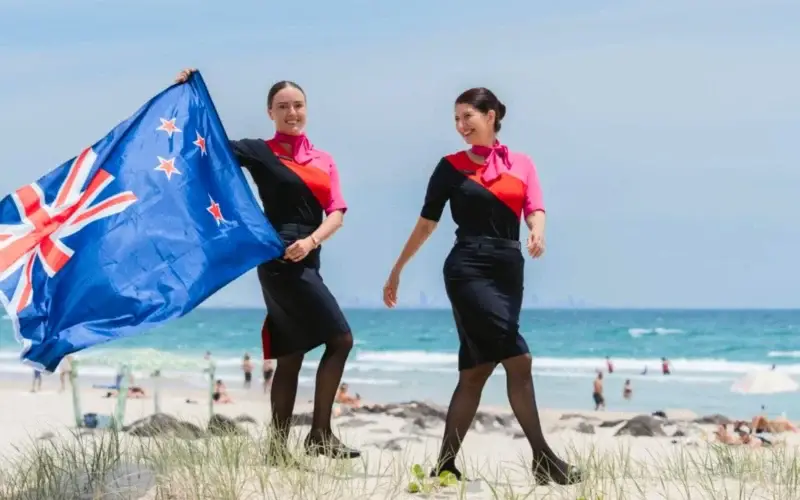
Qantas has chosen Singapore, Asia’s most formidable aviation crossroads, as the location for its first-ever overseas cabin crew base—a move that reshapes the airline’s international operating model and signals a deeper strategic alignment with one of the world’s most efficient global hubs. Scheduled to open in September 2026, the Singapore base is not a symbolic expansion. It is a structural shift designed to increase operational resilience, improve crew logistics, and consolidate the airline’s long-term ambitions across Europe and Southeast Asia.
For decades, Qantas has centered its identity on Australia, with international operations radiating outward from Sydney, Melbourne, Brisbane, and Perth. Yet Singapore has quietly functioned as the airline’s most critical international waypoint. Today, it stands as the largest destination in the Qantas network outside Australia, served by up to 50 weekly flights connecting five major Australian cities. From narrowbody Boeing 737-800 services linking Darwin to Singapore, to double-decker Airbus A380 operations from Sydney, the scale and variety of aircraft underscore how integral the route has become.
The decision to establish a local crew base formalizes what traffic data has long suggested: Singapore is no longer just a stopover. It is a strategic anchor.
Why Singapore Changi Airport Is the Ideal Overseas Crew Base
Singapore’s aviation infrastructure is arguably the most efficient in Asia. Singapore Changi Airport (SIN) combines high passenger throughput, rapid turnaround capabilities, and world-class crew facilities within a geographically compact layout. For Qantas, this translates into shorter ground times, streamlined crew transitions, and quicker operational recovery during disruptions.
Operational efficiency is the primary driver behind the new base. By positioning cabin crew locally in Singapore, Qantas reduces reliance on long-haul positioning flights from Australia when roster changes occur. In cases of weather delays, technical diversions, or crew sickness, having standby personnel in Singapore allows faster redeployment. The airline gains agility across its long-haul network—particularly on routes linking Australia to the United Kingdom via Singapore.
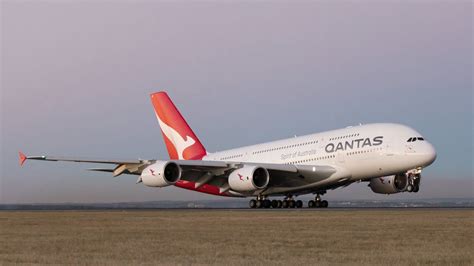
Singapore also serves as a bridge between hemispheres. Qantas’ flagship Sydney–Singapore–London Heathrow A380 services depend heavily on coordinated crew rotations. A locally based team enhances flexibility across both legs of that ultra-long-haul operation, preserving schedule reliability on one of the airline’s most prestigious corridors.
A Calculated Workforce Expansion With Regional Depth
The Singapore base will initially recruit 120 cabin crew members within its first year, expanding to approximately 650 staff over five years. Eligibility is limited to Singapore citizens and permanent residents, reinforcing a localized workforce strategy. This targeted recruitment is not accidental; it taps into an experienced talent pool, including former Jetstar Asia crew members affected by the low-cost carrier’s closure.
Around 50 Singapore-based crew have already been offered positions, signaling a deliberate consolidation under the premium Qantas brand. Rather than dispersing operational responsibilities across multiple subsidiaries, the airline is unifying its Singapore presence under a single, full-service identity.
This expansion aligns with Qantas’ broader hiring plans, which aim to add more than 8,500 employees globally by the end of the decade. The Singapore base is not an isolated experiment. It is part of a coordinated workforce transformation spanning new domestic routes, international expansions, and additional crew bases, including a forthcoming Jetstar operation in Perth.
Fleet Deployment and Premium Capacity Surge in Singapore
Singapore’s elevation within the Qantas network is also visible in fleet assignments. Later this year, the airline will double its Airbus A380 deployment to Sydney, increasing premium seat capacity across 13 weekly services by nearly 20%. Such an expansion reflects sustained high demand for premium cabins between Australia and Singapore, particularly among corporate travelers and long-haul transfer passengers.
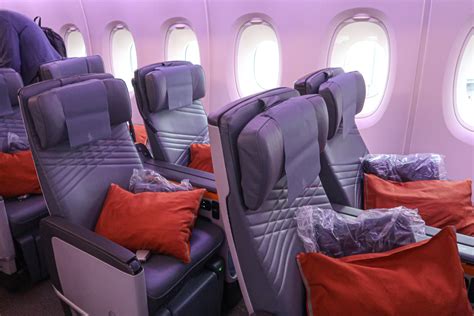
The A380 remains Qantas’ flagship aircraft, optimized for long-haul comfort and high-yield travelers. By concentrating these aircraft on Singapore routes, the airline leverages SIN as both a destination and a premium transfer hub. The local crew base supports these widebody operations with on-the-ground staffing continuity.
Simultaneously, Qantas’ versatile Airbus A321XLR is preparing to open new international links, including daily Brisbane–Manila services from October 25. Domestically, the same aircraft will reinforce transcontinental routes between Brisbane and Perth. These deployments reflect a network philosophy built around flexibility—deploying aircraft types strategically while anchoring major long-haul flows through Singapore.
Financial Momentum Strengthens the Strategic Shift
The announcement of the Singapore crew base follows a strong financial performance. Qantas reported a 5% increase in profit before tax to $1.46 billion, driven largely by domestic operations and loyalty program growth. This profitability provides the capital foundation necessary to invest in overseas infrastructure and workforce expansion.
In aviation, crew bases represent long-term commitments. They require housing logistics, regulatory compliance, training facilities, and contractual frameworks. Establishing one outside the home country indicates confidence not only in passenger demand but also in long-term route sustainability.
Singapore offers regulatory stability, a highly skilled workforce, and a business environment conducive to multinational operations. For Qantas, these factors reduce operational uncertainty and align with its evolving Asia-Pacific strategy.
Singapore’s Role in Qantas’ Global Network Evolution
Beyond Australia–UK traffic, Singapore supports emerging transpacific and long-haul ambitions. Qantas recently confirmed it will become the first airline to operate scheduled non-stop flights between Australia and Las Vegas, using the Boeing 787-9. While this route does not directly involve Singapore, the broader fleet optimization enabled by the Singapore base indirectly supports such expansions.
By stabilizing crew operations at one of its busiest international nodes, Qantas frees resources and scheduling flexibility elsewhere. The airline can reassign aircraft more dynamically, adjust frequencies, and respond to seasonal demand fluctuations without straining Australian-based crew rotations.
Singapore’s geographic position amplifies this flexibility. Situated within reach of Southeast Asia, India, and Europe, it offers Qantas a launchpad for future connectivity strategies. As global aviation rebounds and travel patterns shift, having a robust operational footprint in Asia provides insulation against regional market volatility.
A Strategic Realignment, Not a Symbolic Gesture
Qantas’ decision to establish its first overseas cabin crew base in Singapore represents a pragmatic recalibration of its network architecture. The airline is not abandoning its Australian core. Instead, it is acknowledging that its international growth hinges on operational strength in Asia’s premier aviation hub.
The move strengthens reliability on high-yield routes, deepens engagement with Singapore’s aviation ecosystem, and integrates workforce planning with fleet modernization. In doing so, Qantas transforms Singapore from a major destination into a structural pillar of its global network.
For an airline defined by long-haul ambition and premium positioning, anchoring operations in Asia’s megahub is less a leap than a logical progression. Singapore has long been central to Qantas’ story. From 2026 onward, it will officially become part of its operational backbone.