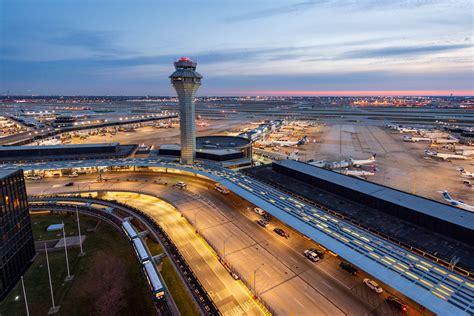
Chicago O’Hare International Airport (ORD) stands at the forefront of American aviation as the most connected hub in the United States, a distinction recognized by the 2025 OAG Megahubs Index. On its busiest day this year, the airport offered a staggering 76,244 potential connections to 214 domestic destinations, outpacing all other US airports. In total, O’Hare connects to 297 cities worldwide, underlining its strategic importance in global and domestic travel.
O’Hare’s preeminence is deeply rooted in its strategic geographic location, serving as the perfect midpoint between the East and West Coasts. This central positioning allows airlines to structure efficient routing networks that maximize aircraft utilization and passenger connectivity. The airport functions as a dual hub for United Airlines and American Airlines, and also serves as an operational base for Spirit Airlines and Frontier Airlines. United, in particular, operates nearly half of all flights at O’Hare, feeding an extensive matrix of connecting itineraries unmatched by any other hub in the country.

Record-Breaking Passenger Traffic and Operational Scale
The scale of O’Hare’s operations is monumental. In August 2025 alone, over 8 million passengers passed through its terminals, and in July, the airport recorded its busiest month ever with 8.26 million flyers. Overall, it handles over 100 million passengers annually, a testament to its enduring relevance and demand. With 201 gates across four terminals and an expansive layout covering 7,627 square acres, O’Hare’s infrastructure is built to support this massive flow of traffic. It offers over 1,040 daily flights to more than 171 cities within the United States, alongside approximately 113 direct international flights to 65 global destinations.
Strategic Investment and Political Support Driving Growth
Chicago O’Hare’s status as the top megahub is no accident—it is the result of sustained, strategic investment by the City of Chicago and its airline partners. According to Commissioner Michael McMurray of the Chicago Department of Aviation, O’Hare’s modernization projects and terminal upgrades are part of a broader vision to build infrastructure that keeps the city globally competitive. The airport’s growth is central to the city’s economic development, providing vital connections for both people and commerce.
Mayor Brandon Johnson echoed this sentiment, highlighting that the airport’s unmatched connectivity is a “competitive advantage” for Chicago. The ability to offer more choices to passengers and opportunities to airlines consolidates O’Hare’s position as a premier global gateway. These deliberate efforts to strengthen connectivity continue to bear fruit, with O’Hare maintaining its top spot in the US and climbing to seventh place globally.

A Tale of Two Hubs: O’Hare vs. Atlanta Hartsfield-Jackson
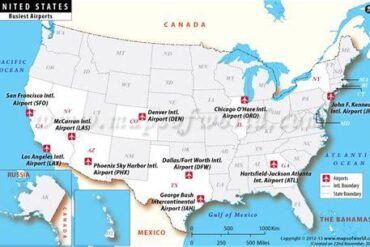
In the long-standing rivalry between Chicago O’Hare and Atlanta Hartsfield-Jackson, the distinction is increasingly clear: while Atlanta may be the busiest airport by seat capacity, O’Hare reigns supreme in connectivity. On July 18, 2025, Atlanta logged 54,533 potential domestic connections compared to O’Hare’s 76,244. Although Delta dominates Atlanta with a commanding 79% share of all flights, O’Hare’s more diversified airline presence fosters greater flexibility and more competitive routing options. This balance of carriers, combined with a more even distribution of flights, enhances O’Hare’s ability to serve as a true transfer point.
Moreover, while Atlanta added eight destinations in 2025, O’Hare added 15 new destinations and saw a 17% increase in total connections, cementing its momentum in the global aviation hierarchy. Despite challenges such as seasonal delays, O’Hare’s commitment to efficiency and innovation is evident. In 2025, it achieved a significant milestone by becoming 100% carbon-free, leading the charge for sustainable aviation in the United States.
Global Rankings and the Future of O’Hare
Globally, O’Hare’s climb to the seventh most connected airport in the world reflects not just strong domestic performance, but its rising influence on the international stage. While London Heathrow continues to dominate as the world’s most connected hub, O’Hare’s growth trajectory is impressive—especially considering it moved up two positions from the previous year. With connections to major international cities like Delhi, Tokyo, and Istanbul, it bridges continents with remarkable efficiency.
Over the past decade, O’Hare experienced a 32% drop in overall connections yet saw a 16% rise in destinations, a shift indicating a strategic expansion into more diverse and far-reaching routes. This evolution ensures that O’Hare is not only a dominant domestic hub but also a significant player in shaping the future of transcontinental travel.

The Hub of Tomorrow
Looking ahead, Chicago O’Hare is positioned to continue leading America’s aviation narrative. Its connectivity, fueled by robust airline partnerships, geographical advantage, and municipal investment, makes it indispensable to the travel ecosystem. Even as global hubs in Europe and Asia expand their networks, O’Hare’s growth reflects a broader resurgence in US airport infrastructure and competitiveness.
In the competition among megahubs, Chicago O’Hare is not merely keeping pace—it is setting the standard. Whether for business travelers, tourists, or international connectors, O’Hare offers unmatched choice, reach, and reliability. It is the beating heart of US air travel, and its dominance in connectivity is only set to deepen in the years to come.