Phoenix Sky Harbor International Airport (PHX), a bustling hub in the heart of the American Southwest, stands as a testament to phenomenal growth and aviation advancement. For many travelers navigating its modern facilities, a curious question often arises: why are the active passenger terminals numbered 3 and 4, and what became of Terminals 1 and 2? The answer lies in a rich history of expansion, demolition, and adaptation, reflecting Phoenix’s own trajectory from a desert town to a sprawling metropolis. This is the story of Sky Harbor’s remarkable growth from 1959 to the present, unraveling the mystery of its vanished terminals and charting its course into the future.
The narrative of Sky Harbor’s numbered terminals begins not in 1959, but a little earlier, with the advent of more organized commercial air travel in post-war America. The airport itself has roots stretching back to 1928, but it was the City of Phoenix’s purchase in 1935 that set the stage for its eventual prominence. As air travel began to capture the public imagination and necessity, the existing facilities soon proved inadequate for the burgeoning demand.
The Original Gateway: The Story of Sky Harbor’s First Terminal
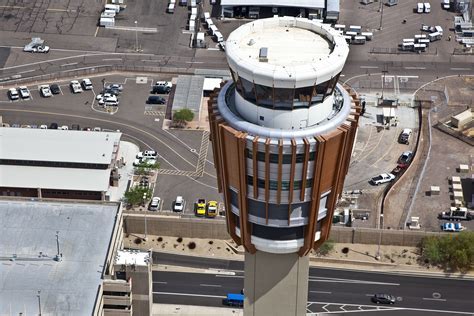
The original Terminal 1 at Sky Harbor was a product of its time, opening its doors to passengers in 1952. This facility was a significant step forward, designed to handle the propeller-driven aircraft that dominated the skies. It was a symbol of Phoenix’s growing connectivity and ambition. For many early air travelers to and from Phoenix, Terminal 1 was their first impression of the Valley of the Sun. It served its purpose dutifully for years, witnessing the dawn of the jet age and the increasing pace of air travel. However, as aircraft grew larger and passenger volumes swelled, its limitations became apparent. The structure, built for a different era of aviation, eventually outlived its usefulness as a primary passenger facility. After being supplanted by newer, more spacious terminals, the original Terminal 1 was demolished in 1990 to make way for expanded parking and other airport infrastructure. It’s worth noting a peculiar footnote in its history: at one point after its decommissioning as a passenger terminal, the building was briefly repurposed to house low-offender prisoners, a decision that sparked considerable debate about the logic and security of such a facility at an active airport. This controversial chapter was short-lived. While some contemporary references might mention a “Terminal 1” for private aircraft, freight, or military operations, these are distinct facilities and should not be confused with the original passenger terminal that bore this number. The historic control tower from this era, however, found a new life; it was carefully moved and preserved, now standing at the Cutter Aviation facility on the south side of the airfield, a silent reminder of Sky Harbor’s early days.
Mid-Century Modern Marvel: The Rise and Fall of Terminal 2
As the 1950s gave way to the 1960s, the jet age was truly taking flight, bringing with it a need for airport facilities that could accommodate larger, faster aircraft and a rapidly growing number of passengers. In response, Phoenix Sky Harbor unveiled Terminal 2 in 1962. This new terminal was a leap forward in design and capacity. It embodied the optimistic, forward-looking spirit of mid-century modern architecture, a style that many still recall with fondness. Travelers often described Terminal 2 as a “groovy little terminal,” a place with a unique charm and a more intimate scale compared to the sprawling complexes of today. For years, it was a beloved part of the Sky Harbor experience, known for being less congested than its successors. Many passengers appreciated the convenience, with parking often available right across the street, allowing for a swift journey from curb to gate – sometimes in as little as ten minutes. Airlines like Alaska Airlines operated out of Terminal 2 for a significant period, and for many, it was their primary point of contact with Sky Harbor.
Perhaps the most iconic feature of Terminal 2 was “The Phoenix,” a magnificent 75-foot-wide mural by the French-born artist Paul Coze. This vibrant artwork, depicting the mythical bird rising from flames, became synonymous with the terminal and a cherished piece of public art. It greeted and bid farewell to millions of travelers, cementing itself in the collective memory of Phoenix. As Sky Harbor continued its relentless expansion, however, Terminal 2, like its predecessor, eventually faced obsolescence. Despite its charm and historical significance, its capacity and design couldn’t keep pace with the demands of 21st-century air travel. The decision was made to decommission and demolish Terminal 2, a process completed in 2020. While the structure itself is gone, a significant part of its legacy was thankfully preserved. The Paul Coze mural was painstakingly removed, restored, and relocated. It now graces a prominent wall in the Sky Harbor Rental Car Center, allowing new generations to appreciate its beauty and historical importance. The demolition of Terminal 2 was met with a wave of nostalgia from those who remembered its unique atmosphere and easier pace, a testament to the memories created within its walls.
Entering a New Era: The Arrival of Terminal 3 (John S. McCain III Terminal)
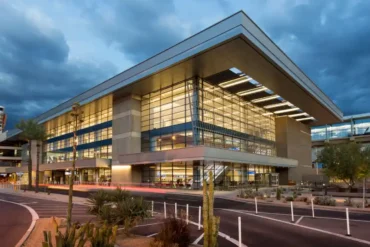
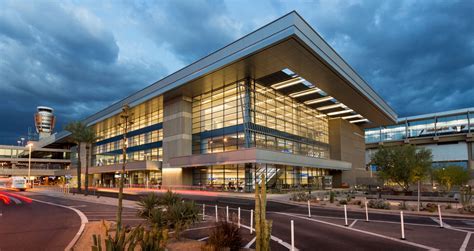
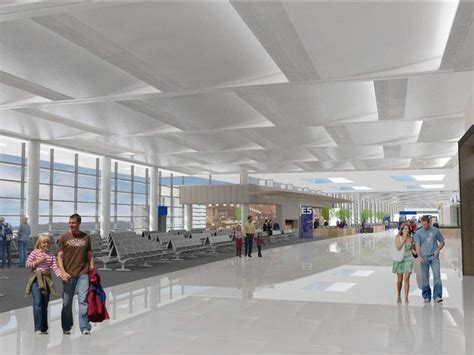
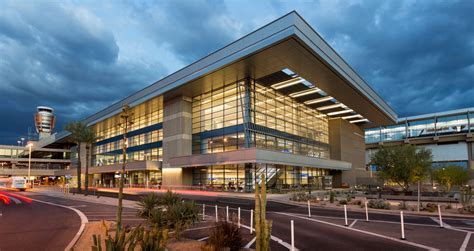
The insatiable demand for air travel through Phoenix continued unabated into the 1970s. To address this, Terminal 3 was opened in 1979. Initially, it represented a significant increase in capacity and modernity over Terminal 2. It was designed to handle the larger jets and greater passenger flows that were becoming the norm. For many years, Terminal 3 served as a workhorse, accommodating a diverse range of airlines and passengers. However, as aviation technology and passenger expectations evolved, Terminal 3 itself began to show its age. Recognizing the need for a substantial upgrade, the City of Phoenix embarked on a massive $590 million modernization project for Terminal 3, which was completed in phases, culminating in 2020. This comprehensive overhaul transformed it into a state-of-the-art facility, featuring a new South Concourse, a consolidated security checkpoint, expanded ticketing counters, new shops and restaurants, and an overall brighter, more spacious environment. The north concourse was also completely redeveloped. Today, the modernized Terminal 3, officially named the John S. McCain III Terminal in honor of the late Arizona senator, serves as a primary facility for airlines such as Delta Air Lines and United Airlines. Its transformation reflects Sky Harbor’s commitment to providing a world-class passenger experience.
The Main Hub: Terminal 4 – Barry M. Goldwater Terminal
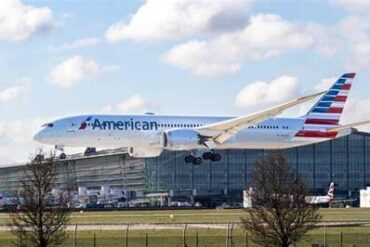
By the late 1980s, it was clear that even with Terminal 3, Sky Harbor needed a much larger, more capable facility to handle its role as a major connecting hub and a gateway for international travel. This led to the planning and construction of Terminal 4, which opened with great fanfare in 1990. Its unveiling was a landmark event for Phoenix, with some recalling the public opening feeling like stepping into “a new city in Star Wars,” a glimpse of the future of air travel. Terminal 4 was, and remains, Sky Harbor’s largest and busiest terminal. It was designed with a focus on efficiency and passenger volume, featuring multiple concourses and a vast array of gates. Named the Barry M. Goldwater Terminal, in honor of the influential Arizona senator and former presidential candidate, Terminal 4 quickly became the airport’s principal international gateway, equipped with U.S. Customs and Border Protection facilities. It serves as a major hub for Southwest Airlines and American Airlines, two of the largest carriers in the United States. Over the years, Terminal 4 has undergone its own expansions and enhancements to keep pace with growth. A notable recent addition was a new eight-gate concourse on the southwest side of the terminal, primarily for Southwest Airlines, which opened in 2022, further boosting its capacity and improving passenger flow. Its design, while vast, is often praised for its relatively straightforward navigation once past security.
The Lingering Question: Why Not Renumber to Terminals 1 and 2?
With the original Terminals 1 and 2 no longer in passenger use (one demolished, the other repurposed and then demolished), a logical question frequently posed by travelers and locals alike is: why not renumber the existing Terminals 3 and 4 to become Terminals 1 and 2? While seemingly straightforward, the decision to retain the existing numbering is rooted in practical and logistical considerations. Renaming airport terminals is a far more complex undertaking than simply changing a few signs. It would necessitate a massive overhaul of interconnected systems. This includes updating countless pieces of physical signage throughout the airport complex and on approach roads, reprogramming airline reservation systems globally, revising pilot and air traffic control documentation, updating online mapping services, and reprinting millions of brochures, airport maps, and operational manuals. The cost associated with such a widespread change would be substantial, running into many millions of dollars. Furthermore, there’s the human factor. Regular travelers, airport employees, and local residents have become accustomed to the current numbering scheme over decades. A renumbering could introduce a period of significant confusion, potentially leading to missed flights and logistical headaches. While the official names – John S. McCain III Terminal (T3) and Barry M. Goldwater Terminal (T4) – offer a more formal designation, the numerical identifiers are crucial for brevity and clarity in airline operations, ticketing, and day-to-day passenger guidance. Ultimately, the operational disruption and financial outlay are deemed to outweigh the aesthetic or numerical neatness of renumbering, so Terminals 3 and 4 they remain.
Beyond the Terminals: Sky Harbor’s Comprehensive Infrastructure Growth
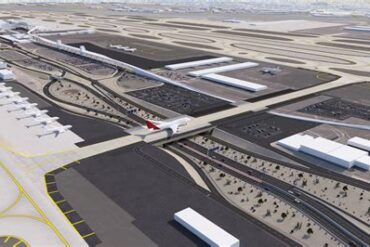
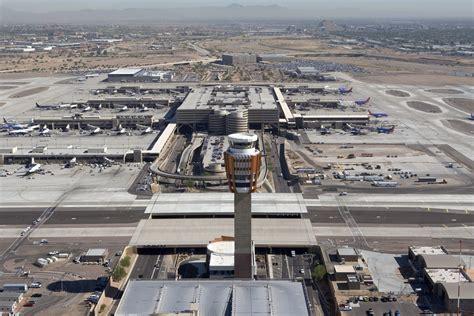
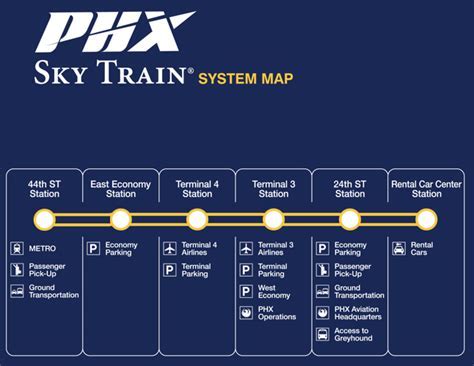
Sky Harbor’s evolution extends far beyond its passenger terminals. The entire airport ecosystem has undergone continuous development to support its role as one of the nation’s busiest airports. Early airport layouts, for instance, featured a crosswind runway, a common feature when aircraft were more susceptible to wind conditions. As aviation technology advanced, Sky Harbor transitioned to its current, highly efficient parallel runway system, capable of handling simultaneous arrivals and departures. A critical development in recent decades has been the PHX Sky Train®. This automated people mover system, opened in phases starting in 2013, has revolutionized how passengers access the airport and move between facilities. It connects Terminals 3 and 4, the East Economy Parking area, the 44th Street PHX Sky Train® Station (which provides a direct link to Valley Metro Rail), and the expansive Rental Car Center. This latter facility, a massive consolidated hub for numerous rental agencies, is a significant improvement over previous scattered rental car operations.
The airport also boasts substantial cargo operations, with dedicated West and South cargo complexes handling vast amounts of freight vital to the regional economy. For private and corporate aviation, Fixed-Base Operators (FBOs) like Cutter Aviation and Jackson Jet Center provide essential services. Adding to the airport’s diverse operational landscape is the Goldwater Air National Guard Base on the south side of the field, home to the 161st Air Refueling Wing. The Phoenix Police Department also maintains an aviation unit with facilities at the airport, utilizing, for a time, the old FBO building west of the former Terminal 2 garage. This multifaceted infrastructure underscores Sky Harbor’s importance not just for commercial passengers but for cargo, general aviation, and military functions.
The Passenger Experience: Navigational Nuances and Acclaim
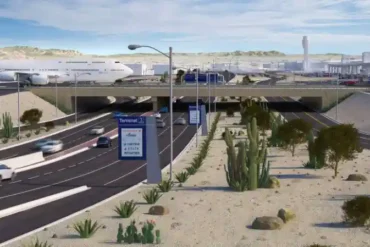
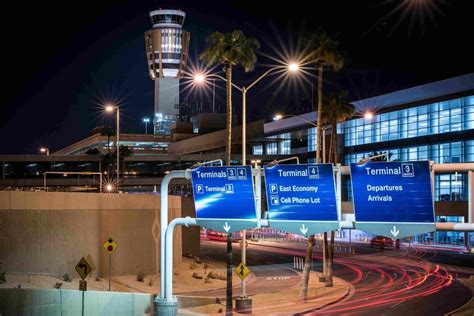
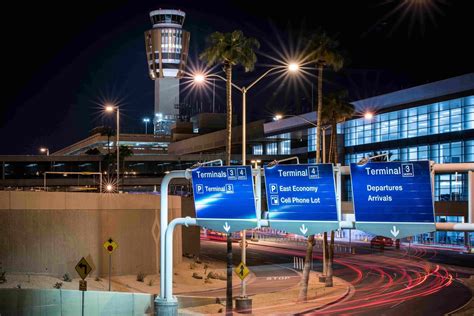
The experience of navigating Phoenix Sky Harbor often elicits a range of opinions. For drivers approaching the terminals, particularly for pick-ups and drop-offs, the roadway signage has sometimes been a source of frustration and confusion, with some signs reportedly obscured by overpasses or complex interchanges. This is a common challenge for large, evolving airports with multi-level roadways. However, once inside the terminals, many travelers find Sky Harbor to be surprisingly easy to navigate, especially compared to other major airports like LAX or Denver International Airport. Security screening efficiency, particularly in Terminal 4 with its multiple checkpoints for the same gates, often receives positive mentions, though Terminal 3’s consolidated checkpoint can experience morning rushes. The airport’s central location within the Phoenix metropolitan area is almost universally praised, offering convenient access from various parts of the Valley. Many frequent flyers rank Sky Harbor highly, appreciating its relatively smooth operations and amenities. It consistently performs well in passenger satisfaction surveys, a testament to ongoing efforts to improve the travel experience.
Charting the Future: Sky Harbor’s Comprehensive Asset Management Plan (CAMP)
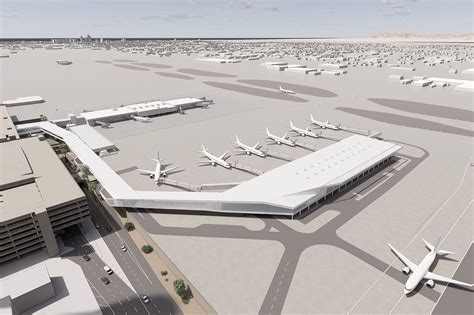
Phoenix Sky Harbor is not an airport content to rest on its laurels. It operates with a forward-looking vision, guided by its Comprehensive Asset Management Plan (CAMP). This long-range plan outlines future development and modernization projects designed to enhance capacity, efficiency, and the overall passenger experience for decades to come. Key elements of the CAMP include further expansion and refinement of existing terminals. For instance, there are plans for a westward extension of Terminal 3’s South Concourse, designed to parallel the PHX Sky Train® alignment, adding more gates and passenger amenities. A more ambitious long-term vision includes the potential development of a new West Terminal, which could become the new home for Southwest Airlines, allowing for a significant reconfiguration of Terminal 4. This would likely see Terminal 4 primarily dedicated to American Airlines and other international carriers requiring customs and border protection facilities, with concourses potentially reworked to provide more space per passenger. While an earlier idea for a pedestrian bridge connecting Terminals 3 and 4 post-security was discussed, the efficiency of the PHX Sky Train® and evolving plans for post-security walkways within expanded terminal footprints have largely superseded this specific concept. The overarching goal of these future developments is to ensure Sky Harbor can comfortably accommodate projected growth in passenger traffic and maintain its status as a premier global gateway.
Sky Harbor: An Ever-Evolving Desert Jewel
The story of Phoenix Sky Harbor International Airport’s growth from 1959 to the present is a dynamic narrative of adaptation and ambition. The “missing” Terminals 1 and 2 are not truly missing; rather, they are integral chapters in the airport’s history, representing earlier eras of air travel that paved the way for the modern facilities we see today. Their legacies live on, in preserved artifacts like the Paul Coze mural and the old control tower, and in the memories of those who passed through their halls. From the modest beginnings of Terminal 1 to the bustling, technologically advanced operations of Terminals 3 and 4, and looking ahead to future expansions, Sky Harbor has consistently evolved to meet the needs of a rapidly growing city and a changing aviation landscape. Its aptly chosen name, Sky Harbor, continues to resonate, signifying a safe haven and a vital port connecting Phoenix and Arizona to the nation and the world. It remains a critical engine for economic development and a proud symbol of the region’s dynamism.