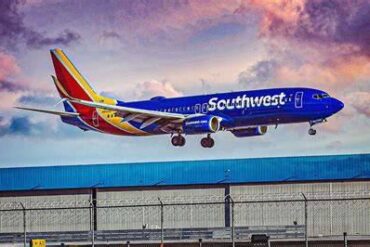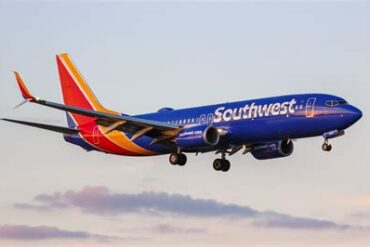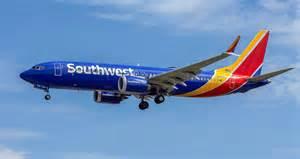
Southwest Airlines built its reputation on high-frequency domestic flying, rapid aircraft turnarounds, and an expansive route map that reaches deep into the American travel market. While the airline is often associated with busy cross-country services linking cities like Phoenix, Las Vegas, Denver, and Orlando, some of its most fascinating operations barely spend enough time airborne for passengers to finish a drink. This summer, Southwest is operating three scheduled routes measuring less than 100 miles, creating a unique corner of its network where takeoff and landing happen in remarkably quick succession.
These ultra-short flights reveal a different side of the airline’s operational strategy. They are not simply novelty routes added for convenience. Instead, they serve critical regional connectivity needs, feed larger hubs, and maintain competitive positioning in strategically important markets. According to June 2026 scheduling data from aviation analytics company Cirium, Southwest will operate routes linking Denver and Colorado Springs, Chicago and Milwaukee, and Hawaii’s Kona and Kahului airports.
Despite their limited distance, these flights still rely on the same Boeing 737 aircraft used on much longer journeys across the United States. That means passengers can find themselves boarding a full-sized narrowbody jet for trips shorter than many daily commutes.
Denver To Colorado Springs: Southwest’s Shortest Flight Of The Summer
The shortest Southwest Airlines route operating this summer connects Denver International Airport (DEN) with Colorado Springs Airport (COS). Measuring just 72 miles, the service is so short that the aircraft spends a significant portion of the journey climbing and descending rather than cruising.
Denver has become the beating heart of Southwest’s network over the past two decades. What began in 2006 with only 13 daily departures has evolved into the airline’s largest operational base. Today, Southwest dominates schedules at DEN with tens of millions of annual seats and nearly 90,000 departing flights planned for 2026.
Against that backdrop, the Denver–Colorado Springs route appears almost miniature in scale. Yet it remains operationally important because it links two fast-growing Colorado population centers while offering passengers onward connectivity through Denver’s massive network.
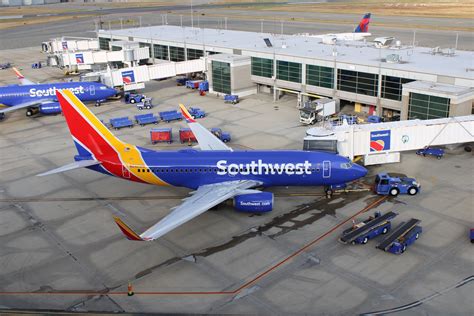
Passengers on this route can expect a block time of approximately 45 minutes, although actual airborne time is often significantly shorter. Taxi procedures, sequencing, and airport traffic account for much of the scheduled duration.
Southwest plans 83 rotations on the corridor during June 2026, with the Boeing 737-700 handling most flights. The smaller 737-700 remains particularly well suited for short, lower-demand routes thanks to its lighter operating profile and reduced seat count compared to larger variants. However, Southwest will also deploy both the Boeing 737-800 and the newer 737 MAX 8 on select departures.
The route highlights how Southwest continues balancing frequency and efficiency. Even on an extremely short sector, maintaining multiple aircraft types allows flexibility in scheduling and fleet utilization across the broader network.
Chicago To Milwaukee: A Fast Midwestern Connector
Southwest’s second-shortest route this summer links Chicago Midway International Airport (MDW) with Milwaukee Mitchell International Airport (MKE). At just 81 miles in length, the flight essentially functions as a rapid regional bridge between two major Midwestern metropolitan areas.
Although the drive between Chicago and Milwaukee can often take less than two hours under favorable traffic conditions, the air route still attracts passengers seeking network connectivity and schedule convenience. Many travelers are not flying solely between the two cities themselves. Instead, Milwaukee passengers frequently use Midway as a gateway to Southwest’s wider domestic system.
Southwest operates this route with twice-daily frequency, resulting in 60 flights each way throughout June. Morning and evening departures are timed to support business travelers and connecting itineraries alike.
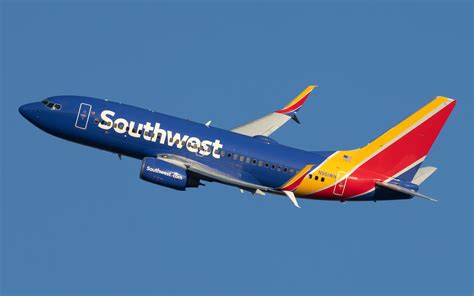
The airline overwhelmingly favors the Boeing 737-700 on this corridor. Of the 60 planned rotations, 56 will use the smaller variant, while only four flights will feature the larger Boeing 737-800. The difference in capacity is significant. The 737-700 accommodates 137 passengers, whereas the 737-800 carries 175 passengers in Southwest’s all-economy configuration.
This route also reflects Southwest’s gradual evolution away from its original point-to-point philosophy. Increasingly, the airline has concentrated operations around high-density stations and major connecting airports. Chicago Midway plays a central role in that strategy, allowing Southwest to funnel regional passengers into broader national traffic flows.
Even on a flight lasting around 45 minutes, operational precision matters enormously. Delays can quickly ripple through the day’s network, particularly when aircraft are scheduled for multiple high-frequency sectors afterward.
Hawaii’s Kona To Kahului Flight Brings Inter-Island Competition
The third Southwest route under the 100-mile threshold is perhaps the most visually spectacular. Linking Kona International Airport (KOA) on Hawaii’s Big Island with Kahului Airport (OGG) on Maui, the route measures 84 miles and delivers travelers sweeping Pacific Ocean views during the brief flight.
Unlike Southwest’s mainland short-haul sectors, this route serves a very different purpose. Inter-island flying in Hawaii is an essential transportation lifeline rather than merely a convenience. Residents, tourists, and business travelers regularly move between islands, making reliable air service critical.
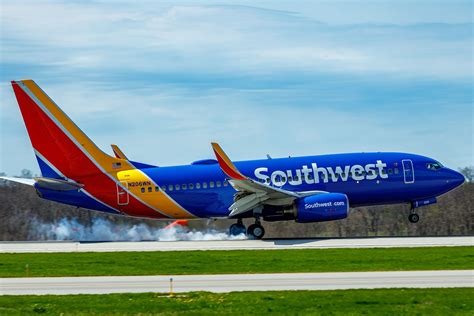
Southwest schedules 30 departures on the route during June 2026, maintaining daily service with all flights operated by the Boeing 737 MAX 8. The airline’s choice of aircraft is notable because it deploys one of its most modern and fuel-efficient jets on an extremely short stage length.
The 737 MAX 8 offers seating for 175 passengers and incorporates aerodynamic improvements along with more efficient engines. On longer flights, those upgrades produce meaningful fuel savings. On a brief inter-island hop, the economics are more complex, but fleet commonality and operational simplicity remain valuable advantages.
Passengers on the Kona–Kahului route experience a block time similar to Southwest’s mainland ultra-short sectors at roughly 45 minutes. However, the scenery dramatically changes the perception of the flight. Volcanic coastlines, deep blue ocean expanses, and dramatic island terrain transform the short journey into a memorable experience.
Why These Tiny Routes Matter To Southwest Airlines
Routes under 100 miles may seem insignificant compared to Southwest Airlines’ sprawling domestic network, but they reveal how modern airline strategy depends on far more than simply transporting passengers over long distances.
These services strengthen regional connectivity, protect competitive airport positions, and support broader network flows into major hubs like Denver and Chicago. They also demonstrate the remarkable flexibility of the Boeing 737 fleet, which can operate everything from six-hour transcontinental services to flights shorter than many suburban train rides.
For passengers, the novelty remains undeniable. Boarding a full-sized jet only to descend minutes after takeoff creates an unusual travel experience rarely found in modern commercial aviation. Yet for Southwest Airlines, these ultra-short flights are not gimmicks. They are carefully planned components of a network designed to maximize reach, efficiency, and market presence across the United States and Hawaii.