
Southwest Airlines has long built its reputation on high-frequency domestic travel, simplified operations, and point-to-point connectivity, but in 2026 the carrier is leaning further into an unexpected niche: ultra-short flights. Some of these journeys are so brief that travelers could theoretically drive the distance in about an hour—yet thousands still choose to fly.
At the center of this development is Southwest’s shortest scheduled route: the 63-mile flight between Denver and Colorado Springs. This route is not merely a novelty; it reflects a calculated strategy to strengthen network connectivity and funnel passengers through key airports in Southwest’s sprawling domestic system.
Across the United States, the airline now operates 15 ultra-short routes, many measuring under 130 nautical miles. These routes may seem tiny on a map, but collectively they reveal a sophisticated operational strategy designed to increase passenger connectivity and maximize aircraft utilization.
Southwest’s Domestic Powerhouse Network
Southwest ranks as the fourth-largest airline operator in the United States and worldwide, driven overwhelmingly by its domestic footprint. According to aviation data from Cirium Diio, 97% of the airline’s flights in March 2026 operate within the United States.
The scale of the network is immense. In March alone, Southwest plans to operate 926 routes, including:
- 854 domestic routes
- 72 international routes
Within this vast system, the airline has quietly introduced 31 newly launched connections, several of which fall into the ultra-short category. Despite their limited distances, these routes play a critical role in maintaining the efficiency of Southwest’s broader operation.
The average Southwest flight covers 686 nautical miles (about 1,270 kilometers)—a distance often considered the ideal “sweet spot” for aircraft productivity. Ultra-short routes fall far below that threshold, yet they serve a different purpose: strategic passenger distribution across the network.
The 63-Mile Flight: Denver to Colorado Springs
The Denver–Colorado Springs route, measuring just 63 nautical miles (117 km), holds the distinction of being Southwest’s shortest scheduled flight ever.
Although the flight lasts barely half an hour in the air, the route plays an outsized role in Southwest’s connectivity model. Data from the U.S. Department of Transportation reveals that between December 2024 and November 2025, the route handled 744 daily round-trip passengers on average.
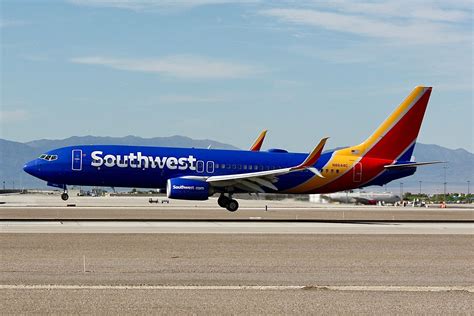
Yet the truly remarkable statistic is how passengers use the flight.
A staggering 99.3% of travelers on this route connect onward through Denver, demonstrating that the flight functions almost entirely as a feeder link into a larger hub network.
Passengers departing Colorado Springs commonly connect to destinations such as:
- Minneapolis
- Orlando
- Kansas City
- Austin
- San Antonio
- Nashville
- St. Louis
- Dallas Love Field
- Sacramento
- Tucson
When examining city-pair travel rather than airport segments, Los Angeles emerges as the most popular final destination for these connecting passengers.
This pattern highlights a central truth of airline network design: a short flight can unlock dozens of long-distance journeys.
Chicago Midway to Milwaukee: The New Contender
Another notable addition in 2026 is the Chicago Midway–Milwaukee route, which measures 70 nautical miles (130 km). Introduced on March 5, the route quickly became Southwest’s second-shortest service in its entire history, surpassed only by the Denver–Colorado Springs flight.
While the distance is short, the strategic importance is enormous. Chicago Midway Airport ranks among Southwest’s most heavily served airports, handling roughly 201 daily departures.
From Milwaukee, travelers can connect through Midway to 50 domestic and international destinations with a waiting time of no more than three hours. That connectivity significantly expands travel possibilities for Wisconsin passengers.
Transportation data shows that those 50 connecting markets collectively generated 10,200 daily round-trip passengers between July 2024 and June 2025. Even before the route launched, Southwest already controlled 49% of Milwaukee’s traffic in those markets. The new service is expected to push that share even higher.
Other Ultra-Short Routes Across the Network
Southwest’s ultra-short flight portfolio stretches across the continental United States and Hawaii. Several routes launched recently, while others have existed for years as essential regional connectors.
Among the shortest flights currently in operation are:
- Phoenix – Tucson (96 nautical miles)
- Orlando – Sarasota (90 nautical miles)
- Baltimore – Richmond (105 nautical miles)
- Houston Hobby – Austin (129 nautical miles)
- Nashville – Knoxville (132 nautical miles)

In Hawaii, the airline also operates short interisland flights, including Honolulu to Kahului and Honolulu to Lihue, where travel times are often under an hour.
These routes demonstrate that short flights are not anomalies but integral components of Southwest’s network architecture.
Why Airlines Operate Flights Shorter Than a Road Trip
At first glance, flying 60 to 130 miles may seem inefficient compared with driving or rail. Yet airline economics often tell a different story.
Short flights exist primarily to feed larger airports with connecting passengers. A traveler departing from a smaller city can quickly reach a major hub and continue onward to dozens of destinations without needing a separate airline.
This strategy mirrors a hub-and-spoke system, although Southwest historically describes its network as “hubs without hubs.” Instead of relying on a few centralized mega-hubs, the airline spreads connectivity across several busy airports.
The result is a web of short feeder flights that unlock massive network reach.
For example, a traveler leaving Colorado Springs might take the 63-mile hop to Denver, then continue on to Los Angeles, Seattle, or Orlando—all within a single ticket.
The Future of Ultra-Short Flights
Southwest’s continued investment in these routes suggests that ultra-short flights will remain a defining element of its domestic strategy. While some routes carry modest load factors—Denver to Colorado Springs, for example, averaged about 70.6% seat occupancy—their true value lies in the connections they enable.
As airlines refine scheduling technology and passenger data analytics, these micro-routes may become even more targeted. Small regional airports could gain faster access to national networks, while major airports benefit from a steady stream of connecting passengers.
In aviation, distance alone does not determine a route’s importance. A 63-mile flight can be the first link in a journey spanning thousands of miles, proving that sometimes the smallest segments hold the biggest strategic value in the skies.