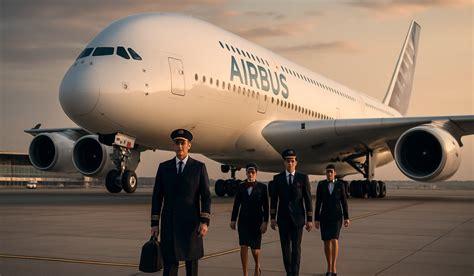
Airbus’ A380 was supposed to redefine the future of high-capacity long-haul travel. Instead, the program became one of the most expensive miscalculations in commercial aviation, with Airbus ultimately losing billions after investing roughly $30 billion in development. Yet in a remarkable twist, the aircraft that airlines struggled to justify economically has become one of the most beloved jets in the sky in 2026.
That contradiction is what makes the A380 so fascinating. The aircraft did not fail because it was technically poor. Quite the opposite: it remains the world’s largest passenger airliner, the only commercial jet with two full passenger decks, and one of the most distinctive aircraft ever produced. Its problem was that Airbus designed an enormous solution for a market that was rapidly moving in another direction.
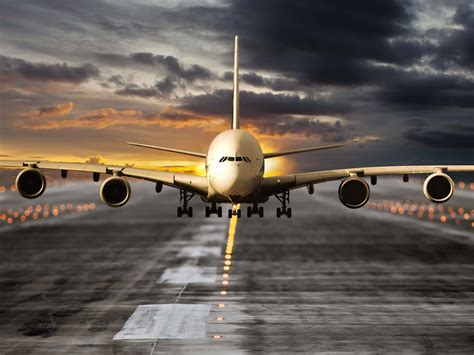
Why The Airbus A380 Was Considered A $30 Billion Failure
Airbus launched the A380 program during the 1990s to challenge Boeing’s dominance in the very-large-aircraft market and create a new flagship for hub-to-hub travel. The A380 first flew on April 27, 2005, before entering commercial service with Singapore Airlines in 2007. It remains the largest commercial aircraft and highest-capacity passenger jet in regular service.
The business case, however, proved much harder to achieve. Airbus expected airlines to need huge aircraft for congested international hubs. Instead, the industry increasingly embraced efficient twin-engine aircraft capable of flying directly between more city pairs. The Boeing 787, Airbus A350, and newer Boeing 777s allowed airlines to spread long-haul capacity across more routes without filling a 500-seat aircraft.
The timing also worked against the A380. The effects of 9/11, the global financial crisis, changing fuel prices, and a growing focus on efficiency made airlines increasingly cautious about four-engine aircraft. Every empty seat represented lost revenue, while additional engines increased fuel and maintenance costs. The A380 was efficient per passenger when full, but filling it was the challenge.
The A380 Was Never A Bad Aircraft
Calling the A380 a failure can be misleading because its weakness was primarily commercial rather than technological. The aircraft can carry up to 853 passengers in an all-economy configuration, although airline layouts are generally far less dense. A typical three- or four-class configuration provides roughly 480 to 520 seats, giving passengers something increasingly rare in modern aviation: genuine space.
The A380 has an approximately 8,000-nautical-mile range and cruises at around Mach 0.85, similar to other long-haul widebodies.
That capacity is the defining characteristic. A Boeing 747-8 can accommodate as many as 605 passengers at its maximum certified exit limit, while the Boeing 777-9 and Airbus A350-1000 deliver high capacity with only two engines. The A380’s four engines became a disadvantage as fuel economy became a priority, but its physical size created opportunities smaller jets cannot reproduce.
Emirates Turned The A380 Into A Global Icon
Emirates is more closely associated with the A380 than any other airline. The Dubai-based carrier took delivery of 123 A380s, about 49% of the 251 aircraft Airbus delivered between 2007 and 2021. That commitment helped keep the program alive after most airlines became reluctant to order very-large four-engine jets.
Emirates had a business model unusually suited to the A380. Dubai International Airport is a global connecting hub, allowing the airline to combine passengers from many origins and destinations. Rather than relying on local passengers, Emirates could use connecting traffic to fill an aircraft with hundreds of seats.
The airline also invested heavily in the aircraft itself. Emirates has refurbished substantial portions of its A380 fleet, developed dedicated maintenance capabilities through Emirates Engineering, and built Concourse A at Dubai International Airport specifically around the requirements of the A380.
That commitment is also why the A380 remains relevant in 2026. Emirates expects the type to continue operating well into the 2040s, even as the carrier adds newer Airbus A350s and Boeing 777X aircraft to its fleet.
Why Passengers Love The Airbus A380
The strongest argument for the A380 today comes from passengers. Its cabin space and onboard possibilities remain difficult for modern twin-engine aircraft to match.
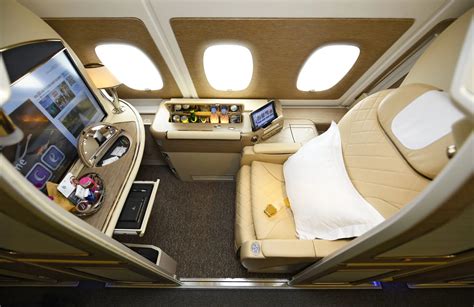
The huge upper deck has allowed airlines to create premium cabins unlike conventional widebodies. Emirates famously introduced first-class showers on its A380 and created an upper-deck lounge and bar where premium passengers can socialize during long-haul flights. Those features turned the aircraft into an experience rather than simply a means of reaching another airport.
Etihad Airways went even further with its Residence. The airline’s A380 introduced an extraordinarily private three-room concept consisting of a living area, a dedicated bedroom, and a shower. Only one Residence occupies each aircraft, making it one of the most exclusive commercial aviation products ever offered.
Singapore Airlines developed another memorable interpretation. Its A380 First Class Suites provide a separate seat and bed, with suites arranged in a 1-1 configuration. The center suites can be combined into a double-bed arrangement, creating a remarkably private space for couples traveling together.
Other operators found their own ways to use the architecture. Korean Air, for example, incorporated an onboard duty-free area into its A380 cabin.
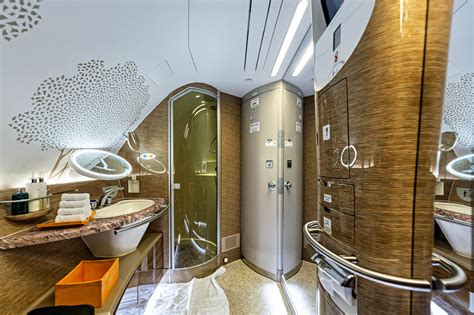
The Pandemic Nearly Ended The A380 Story
The COVID-19 pandemic exposed the A380’s commercial vulnerability more brutally than almost anything before it. When international travel collapsed, airlines suddenly had little use for aircraft capable of carrying hundreds of passengers. The very characteristic that made the A380 valuable during peak demand became a liability when passenger volumes disappeared.
Air France, Thai Airways, Malaysia Airlines, and China Southern ultimately retired their A380 fleets. Qatar Airways and Etihad Airways initially suggested that their aircraft might never return to regular service.
Demand then recovered faster than expected on many major international routes. Emirates, Singapore Airlines, Qantas, and British Airways brought their A380s back, while several invested in cabin refurbishments and upgraded passenger products. That signaled that the A380 still had commercial value on the right routes.
By early 2026, around 190 A380s remained in service with 10 airlines, according to the supplied industry reference.
The A380’s Real Advantage Is Airport Capacity
The most compelling reason for keeping the A380 alive is increasingly airport capacity.
Major airports such as London Heathrow face severe slot constraints. Airlines cannot simply add unlimited flights when demand increases because there may be no additional departure or arrival slots available. In that environment, putting more passengers onto a single aircraft becomes one of the few practical ways to increase capacity.
This is where the A380 can still make sense. A carrier can replace multiple smaller departures with one high-capacity flight while maintaining a premium-heavy cabin that supports strong yields. British Airways’ continued commitment to the A380 at Heathrow illustrates the logic, particularly on markets where demand is high and airport slots are exceptionally valuable.
Premium passengers also recognize the A380, allowing airlines to create flagship experiences that distinguish them from conventional widebodies.
Is There Really An Airbus A380 Replacement?
The aviation industry has produced more efficient aircraft, but no perfect A380 replacement. The Boeing 777-9 is expected to become the next major very-large twin-engine passenger aircraft, assuming certification remains on track. It combines substantial capacity with two engines, making it much more attractive from a fuel-efficiency perspective.
The Airbus A350-1000 also offers impressive capacity and a range of around 9,000 nautical miles, while using two Rolls-Royce Trent XWB engines. Yet neither aircraft recreates the A380’s defining feature: two complete passenger decks and an enormous cabin designed around hundreds of travelers.
Airlines therefore face a choice: operate smaller aircraft more frequently for flexibility and lower trip costs, or use a giant aircraft where slots and concentrated demand make size valuable. The industry chose the first strategy, but the second has never disappeared.
There have even been discussions about larger derivatives of existing aircraft, including potential stretched versions of the 777-9 or A350-1000. These ideas remain speculative, but the conversation itself is revealing. As global air travel grows and airports become more constrained, the industry may once again need something larger.
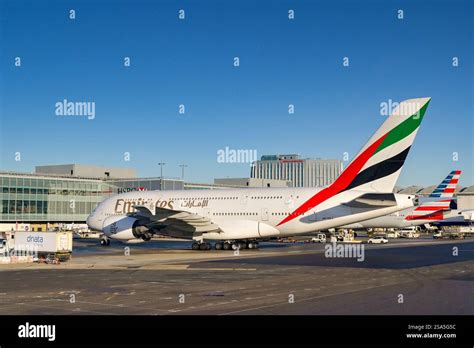
The result is an unusual form of aviation nostalgia: the A380 is both a symbol of excess and a practical tool. Its economics may be difficult, but its scale gives airlines and airports an option that smaller aircraft cannot fully replace in 2026.
Why The A380 Is More Beloved In 2026 Than Ever
The A380’s strange legacy is now clear. Airbus built it to solve an airline network problem, but passengers remember it as an aviation experience. Airlines judged it through fuel burn, seat-mile economics, maintenance costs, and utilization. Travelers judged it through spacious cabins, quietness, premium suites, lounges, showers, and the simple thrill of boarding a double-deck aircraft.
That explains why an aircraft widely described as a commercial failure can also be one of the most admired airliners ever built. Only 251 A380s were delivered, production ended in 2021, and Airbus never recovered its enormous investment. Yet the aircraft achieved something many successful jets never do: it became an icon.
In 2026, the A380 is no longer the future Airbus once imagined. It is something arguably more interesting—a surviving symbol of an era when airlines believed bigger was better, kept alive by a small group of operators that know exactly where its extraordinary capacity makes sense.
The A380 lost the economic battle against efficient twin-engine jets, but it won the emotional battle decisively. For passengers, enthusiasts, and premium travelers, the world’s largest passenger aircraft remains a giant that refuses to disappear.