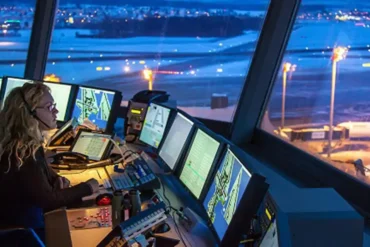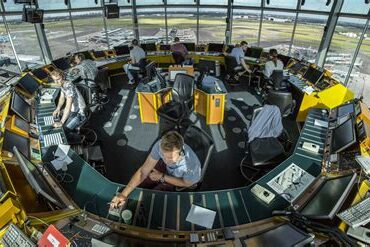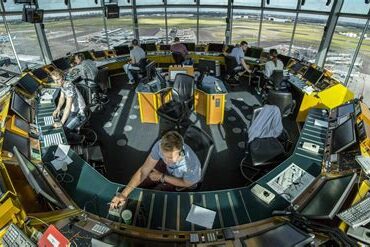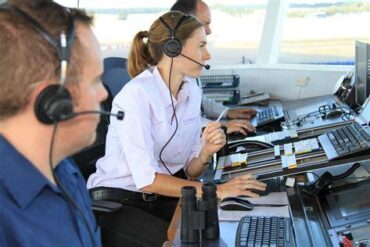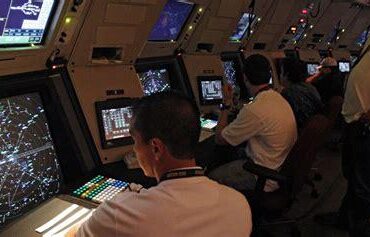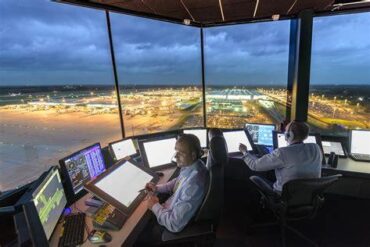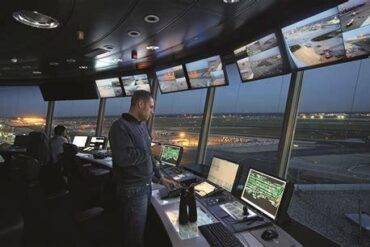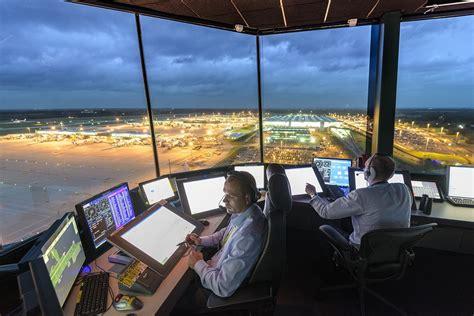
The area controller, also known as an en-route controller, plays a crucial role in providing air traffic control services within an area control center (ACC). These professionals manage flights during their climb, cruise, and initial descent phases. A significant part of their job involves identifying and resolving conflicts between aircraft. This contrasts with approach and tower controllers, who primarily focus on sequencing traffic for takeoff and landing.
Area controllers often transfer multiple aircraft at once when they exit a sector, maintaining vertical separation. However, tower and approach controllers cannot do this as their exit point is the runway threshold. Compared to their counterparts, area controllers have less frequent communication with each flight. Typically, there are just two calls: the initial contact when an aircraft checks in and the final contact when transferring to the next sector. If a flight is cruising without interference, no further messages are needed. This efficiency allows area controllers to handle more aircraft simultaneously.
During standard operations, area controllers follow a structured routine that includes several key actions. First, they scan the airspace for potential conflicts, aircraft deviations, and complex situations. This involves shifting their focus from one aircraft to another, usually spending just a second or two on each. Modern air traffic systems assist by highlighting important information, like deviations from clearance, while minimizing distractions.
Once a situation is identified, the controller develops a plan. In a typical scenario, one controller takes on the planning role, while the other executes the necessary instructions. The planner is responsible for coordinating with other sectors and making phone calls. For example, if a potential conflict arises, the controller assesses the distance between aircraft to determine if action is needed. If the separation is insufficient, they create a solution, such as issuing descent instructions or adjusting speeds to maintain safety.
In cases where an aircraft approaches a special use area, the controller devises an appropriate response, like requesting a climb or rerouting the flight. If an aircraft deviates from its clearance, the controller investigates the cause and assesses any potential impact on surrounding traffic.
The execution phase involves issuing clearances and instructions, continuing the cycle of scanning, planning, and executing until the controller hands over their position. They must remain vigilant to quickly respond to emergencies or abnormal situations. When such events occur, the controller gathers information, assesses the impact on traffic, and develops a plan to assist affected parties, all while maintaining communication with the crew.
Airspace managed by an ACC is typically divided into sectors, with each sector staffed by a team of controllers, including an executive and a planner. This division helps prevent overload and ensures efficient traffic flow. Sometimes, only one controller manages a sector, performing both roles. In certain situations, a third person may assist with routine tasks.
Conflict resolution is a critical responsibility for area controllers. They employ various techniques to address conflicts, such as changing altitude, vectoring, or direct routing. The choice of method depends on the specific circumstances, like wind direction and aircraft types.
To support these operations, area controllers utilize advanced tools and technologies. Automated systems reduce routine task time, while monitoring aids help identify irregularities. Technologies like Mode S enhance situational awareness and communication efficiency, while safety nets provide an additional layer of security against human error. Overall, the role of area controllers is vital for maintaining safe and efficient air traffic management.