Drones have dramatically reshaped the nature of modern warfare, bringing about a paradigm shift that continues to evolve with each technological advancement. Officially known as Unmanned Aerial Vehicles (UAVs), these machines have introduced new dimensions to military operations, offering precision, stealth, and efficiency without putting human lives directly at risk. As their capabilities continue to expand, so too does their influence on strategy, logistics, and international law.
From surveillance and reconnaissance to direct combat engagements and logistical support, drones are now critical components of global military arsenals. Each type serves a distinct purpose, built and deployed according to its unique mission profile. Understanding these classifications is key to comprehending their far-reaching implications.
The Rise of Military Drones in Modern Warfare
The modern battlefield has become a technological arena, and military drones are at the heart of this transformation. Their journey began as tools for reconnaissance, gathering intelligence without endangering soldiers. Over the years, however, these UAVs have evolved to fulfill multifaceted roles: launching missiles, performing aerial surveillance, providing logistical support, and even conducting autonomous decision-making during missions.
This surge in drone deployment is largely fueled by breakthroughs in aeronautics, sensor technology, artificial intelligence, and communications. The result is a range of drones that vary widely in size, purpose, range, and autonomy—each suited to specific operational needs.
Reconnaissance Drones: Eyes Above the Battlefield
Reconnaissance drones are engineered to operate discreetly while gathering crucial intelligence. They serve as the eyes of the military, flying over contested zones to deliver real-time surveillance data without risking personnel. These UAVs are typically outfitted with high-resolution cameras, electromagnetic sensors, and signal interception tools.
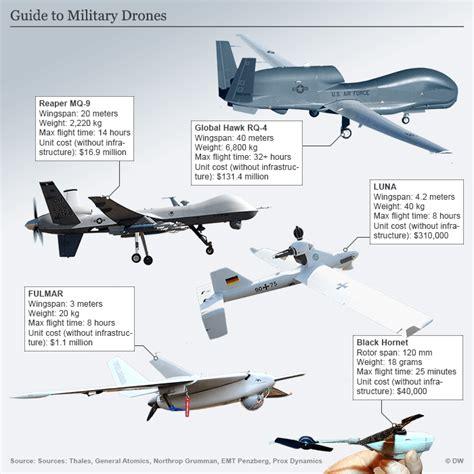
One of the most prominent models is the RQ-4 Global Hawk, developed for high-altitude, long-endurance missions. It can cover thousands of miles in a single sortie, scanning vast territories with pin-point accuracy. Equally notable is the MQ-9 Reaper, a hybrid capable of both reconnaissance and combat, proving invaluable in theaters like the Middle East.
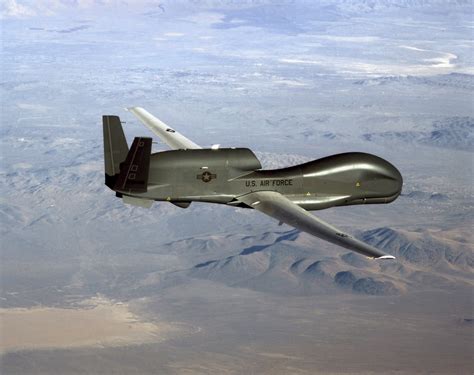
These drones operate at various altitudes—from low to near-space—and are integral for pre-strike intelligence, mission planning, and post-strike assessments. Their silent operation and bird’s-eye perspective enable unmatched situational awareness.
Combat Drones (UCAVs): Lethal Precision
Unmanned Combat Aerial Vehicles, or UCAVs, bring lethal capabilities to the drone arsenal. Designed for offensive operations, these UAVs carry precision-guided munitions including Hellfire missiles, laser-guided bombs, and air-to-ground weapons. The objective is clear: to strike high-value targets with surgical precision, minimizing collateral damage and eliminating the need for manned missions.
The MQ-9 Reaper, again, serves as a leading example, often deployed in operations targeting insurgent leaders or enemy strongholds. Equipped with real-time video feed and target recognition software, it allows remote operators to execute engagements with minimal lag.
While their tactical effectiveness is undisputed, combat drones are not without controversy. The ability to strike remotely has triggered international debates on accountability, sovereignty, and civilian casualties. Furthermore, as autonomous targeting systems improve, ethical questions surrounding machine-led lethal decisions are becoming increasingly urgent.
Surveillance Drones: Constant Watch Over Conflict Zones
Surveillance drones specialize in persistent area monitoring, offering a continuous stream of data to commanders and analysts. Unlike reconnaissance drones, which may fly in and out of a zone for a specific purpose, surveillance UAVs hover or patrol for extended periods, observing enemy movements, logistical routes, and civilian behavior.
These UAVs are often fitted with infrared cameras, radar systems, night vision, and multi-spectral imaging capabilities. A well-known platform is the Sentinel R1, which combines radar surveillance with communications intelligence to deliver comprehensive situational insights.
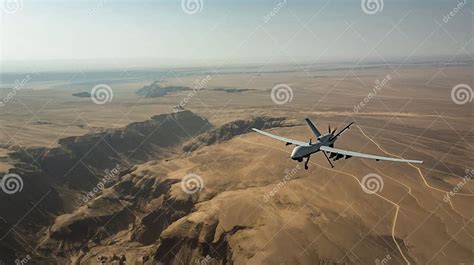
Such drones are indispensable for missions requiring battle damage assessments, real-time strategy adjustments, and coordination of ground forces. Their multi-sensor suites enable them to function day or night, in all weather conditions.
Logistical Support Drones: Aerial Supply Lifelines
Beyond combat and intelligence roles, drones also play a critical role in military logistics. Designed to deliver ammunition, medical supplies, food, and equipment, logistical drones ensure support reaches troops in hostile or remote areas without the vulnerabilities of ground convoys.
A notable example is the K-MAX, a heavy-lift UAV capable of transporting up to 6,000 pounds of cargo. This drone was deployed extensively in Afghanistan, where mountainous terrain made traditional delivery routes treacherous.
The MQ-1C Gray Eagle, although primarily a combat-surveillance hybrid, has been adapted for light logistical support. Another emerging category is Cargo Unmanned Aircraft Systems (CUAS)—currently under development by defense giants like Boeing and Lockheed Martin—which promise to revolutionize large-scale supply chain operations within combat zones.
These UAVs not only improve delivery times but also significantly reduce exposure to IEDs and ambushes, making them a game-changer for battlefield logistics.
Evolution of Military Drone Technology
The exponential growth in drone capabilities owes much to technological innovation. Advances in composite materials have yielded lighter and more resilient airframes. Battery technology now enables longer missions, while data link encryption protects real-time communication against cyber threats.
A major leap has been the integration of Artificial Intelligence. AI allows drones to execute complex tasks with minimal human intervention, from target tracking to autonomous flight path adjustments. AI systems can now recognize vehicle types, detect movement patterns, and even anticipate enemy behavior.
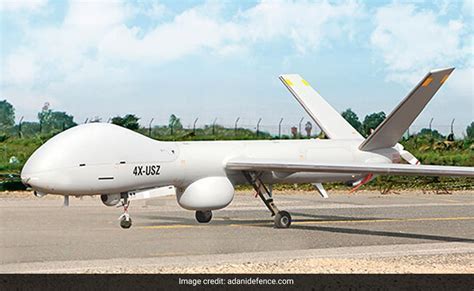
The emergence of swarm drone concepts is also noteworthy. These involve fleets of smaller drones operating in coordinated formations to saturate defenses, collect distributed intelligence, or act as decoys. As AI and miniaturization converge, we can expect UAVs that are smaller, smarter, stealthier, and even more versatile.
Ethical and Strategic Implications
The rapid deployment of military drones has ignited complex debates across ethical, legal, and strategic domains. Critics argue that the psychological detachment of drone warfare—where the operator is thousands of miles away—may reduce accountability and trivialize the act of killing. Mistaken identity and civilian casualties remain ongoing concerns.
Autonomous weapons further complicate the picture. If a drone can make lethal decisions without human oversight, who is to blame for a wrongful strike? The issue of legal responsibility becomes blurred in such scenarios.
To address these dilemmas, international institutions, including the United Nations, have begun formulating regulatory frameworks. These aim to enshrine transparency, human oversight, and adherence to international humanitarian law. Central to this conversation is the need to ensure that engagements remain proportional, discriminate, and necessary.
The Road Ahead: From Tools to Autonomous Actors
As drones evolve, their integration into combined arms operations becomes inevitable. The next generation of UAVs will likely function as nodes in a broader combat network, interacting with manned aircraft, ground forces, and naval assets. The battlefield of the future could feature semi-autonomous drone squadrons, each unit assigned to a precise role within a dynamically shifting theater of war.
Strategically, nations are racing to dominate this domain. The focus now lies not only on building superior drones but also on developing the infrastructure, cybersecurity, and doctrinal frameworks to harness them effectively.
In summary, military drones represent both the promise and peril of 21st-century warfare. They offer unparalleled precision, efficiency, and versatility—but demand equally rigorous scrutiny, ethical governance, and transparent regulation. As global powers continue to invest in UAV technology, the challenge will be to navigate this new frontier with responsibility and foresight.