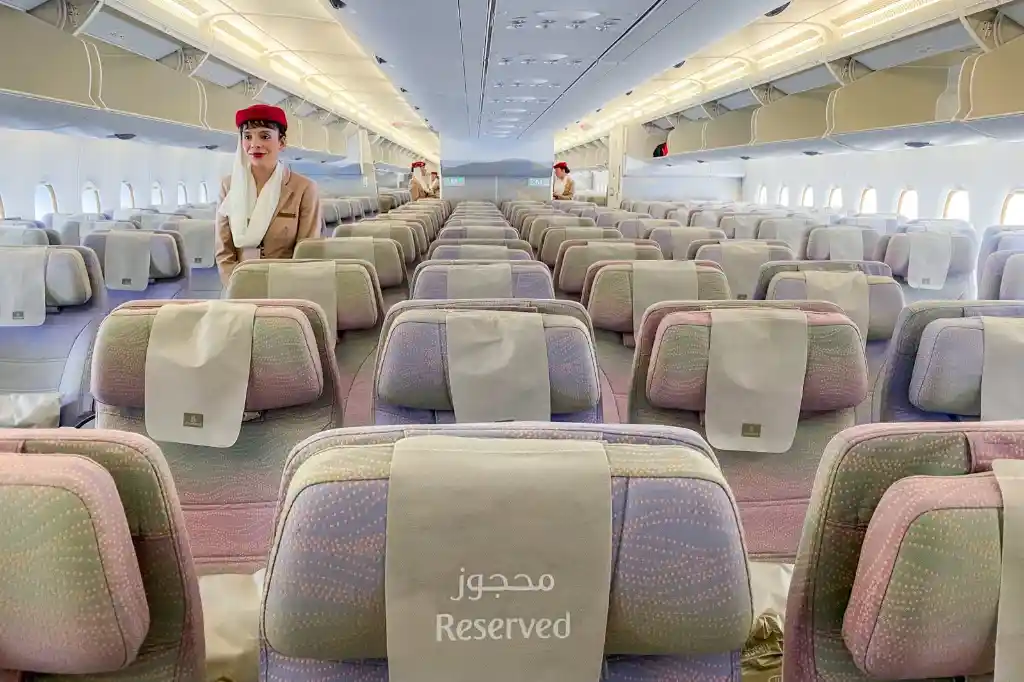
Flying economy on the world’s longest Airbus A380 routes is often imagined as a triumph of scale: hundreds of seats, a colossal aircraft, and the assumption that size alone should translate into affordability. Yet the reality is far more complex. On routes stretching close to, and sometimes beyond, 8,000 miles, economy pricing behaves unlike almost any other segment of commercial aviation. Distance, operational constraints, and market structure quietly but decisively reshape what passengers ultimately pay.
Ultra-long-haul A380 flights sit at the outer edge of what airlines can sustain profitably. These are not merely “long flights,” but endurance missions that test aircraft utilization, crew regulations, fuel planning, and network economics. As a result, economy class on these routes is no longer a simple budget option. It has evolved into a product priced around scarcity, time savings, and nonstop convenience rather than sheer seat count.
The Airbus A380 at the Edge of Commercial Range
The Airbus A380 was engineered to move large volumes of passengers between major hubs efficiently, but its most extreme deployments reveal the limits of that philosophy. Routes such as Dubai–Auckland, Sydney–Dallas/Fort Worth, and Dubai–Los Angeles push well beyond 7,500 miles, with block times frequently exceeding 14 to 16 hours. At these distances, every additional mile compounds cost.
Unlike medium long-haul operations where an aircraft might complete multiple rotations in a single day, ultra-long-haul A380 services typically max out at one rotation per 24-hour period. That single flight must absorb the full cost of fuel uplift, augmented flight and cabin crews, catering scaled for hundreds of passengers over many hours, and maintenance planning built around extended duty cycles. The result is a high fixed-cost flight that leaves little room for aggressive economy discounting.
These routes are also rare by design. Airlines do not deploy the A380 at extreme range unless demand is consistently strong. That demand tends to come from global hub pairs with deep business, leisure, and diaspora traffic, reinforcing pricing power even in economy.
Why Distance Redefines Economy Pricing
On conventional long-haul routes, economy fares often benefit from frequency. Multiple daily flights create competitive pressure, allowing airlines to dilute costs across time and inventory. Ultra-long-haul A380 routes lack that flexibility. Frequency is constrained not by demand, but by physics, crew rules, and fleet availability.
Fuel burn rises nonlinearly with distance, particularly when aircraft operate near their maximum takeoff weight. Additional contingency fuel is required, further increasing costs. Crew rest requirements mean more pilots and cabin crew are rostered per flight, each adding to operating expense. These factors combine to raise the minimum viable fare across all cabins, including economy.
This is why economy tickets on the longest A380 routes routinely defy expectations. Even with 400 or more economy seats, the cost floor remains high. Airlines are not pricing against empty seats so much as against the realities of sustaining nonstop connectivity across half the globe.
What Economy Tickets Actually Cost on the Longest A380 Routes
Real-world pricing reveals how consistently elevated economy fares are on these routes. Across multiple seasons, a clear pattern emerges: while off-peak deals exist, the baseline remains well above what travelers associate with standard long-haul economy.
Routes operated by Emirates, Qantas, and Qatar Airways dominate this segment. Round-trip economy fares during quieter travel periods can dip into the high hundreds of dollars, but that window is narrow. Typical pricing during much of the year settles comfortably into four figures, and peak-season fares often climb sharply.
For example, Dubai–Auckland, one of the longest A380 routes ever operated, frequently sees economy round-trip fares between $1,300 and $1,600 in normal seasons, rising beyond $2,500 during peak demand. Similar patterns appear on Dubai–Los Angeles and Sydney–Dallas/Fort Worth, where nonstop convenience allows airlines to command a premium even in economy.
What stands out is not just the absolute price, but its resilience. Even when sales appear, they tend to be short-lived and tightly controlled, reflecting the limited inventory airlines are willing to discount on such high-cost flights.
The Role of Market Dominance and Nonstop Scarcity
Another critical driver of economy pricing on the longest A380 routes is market structure. Many of these city pairs have only one nonstop operator, or at most two. While one-stop alternatives exist, the time savings of a nonstop flight lasting 15 hours versus a multi-segment journey of 20 hours or more carries tangible value.
Airlines understand this deeply. Nonstop scarcity allows them to maintain higher economy fares without relying on premium cabins alone for profitability. The A380’s size does not weaken this effect; instead, it supports it by enabling airlines to meet demand without adding frequency, preserving pricing stability.
In this environment, economy class becomes less price-sensitive. Travelers choosing these routes are often prioritizing time, convenience, or loyalty over absolute cost. That behavioral shift underpins why economy fares remain elevated even when hundreds of seats are available.
Is Economy Good Value on Ultra-Long-Haul A380 Flights?
Value on the longest A380 routes is highly contextual. From a pure cost-per-mile perspective, economy can occasionally look attractive, especially during off-peak periods. Covering nearly 8,000 miles for under $1,000 round trip, while rare, does happen and represents strong theoretical value.
However, endurance plays a significant role. Spending 15 to 16 hours in economy is a physical and psychological commitment. For some travelers, the price difference between economy and premium economy becomes easier to justify on flights of this length, especially when sales narrow the gap. In certain cases, discounted business class fares during promotions may even approach peak economy pricing, reshaping the value equation entirely.
Economy on these routes is best viewed not as a default choice, but as a calculated one. Timing, flexibility, and personal tolerance for long-haul travel matter more here than on almost any other commercial flight.
The A380 Cabin Experience at Extreme Distance
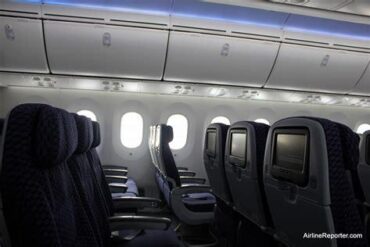
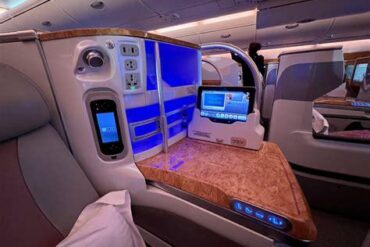
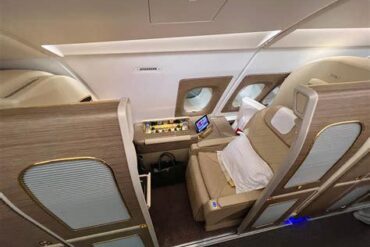
The Airbus A380 does offer inherent advantages for economy passengers. Its wide cabin allows for a sense of space that narrower aircraft struggle to replicate, even in dense configurations. Quieter engines and smoother ride characteristics can make long flights feel marginally less fatiguing.
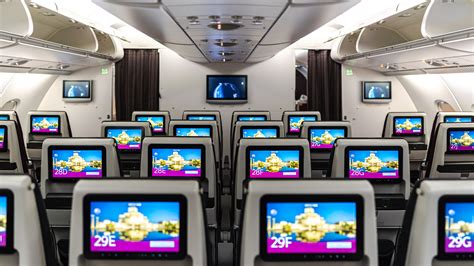
That said, comfort gains do not negate the realities of duration. Seat pitch and width in economy remain constrained by airline configuration choices, and amenities, while improved over past decades, are still designed for mass transport rather than comfort optimization. On ultra-long-haul flights, even small differences in seat design or in-flight service can significantly shape passenger perception of value.
Seasonal Volatility and the Timing Factor
Seasonality exerts outsized influence on economy pricing for the longest A380 routes. School holidays, major global events, and summer travel periods consistently push fares upward. During these windows, airlines face little pressure to discount, as demand often exceeds available capacity despite the aircraft’s size.
Conversely, shoulder seasons offer the best opportunities. Late winter, early spring, and certain autumn periods see demand soften just enough for airlines to release lower economy fares. These are the moments when economy delivers its strongest value, particularly for flexible travelers willing to book well in advance or monitor fares closely.
A Broader Shift in Ultra-Long-Haul Economics
Economy pricing on the longest Airbus A380 routes reflects a broader evolution in long-distance aviation. Ultra-long-haul flying has moved away from volume-driven discounting toward yield-focused network strategy. These flights exist not to move passengers cheaply, but to connect major global hubs nonstop in a way that reinforces airline dominance and network coherence.
In this context, economy is no longer positioned as a bargain product. It is part of a premium long-range offering where distance, scarcity, and time savings shape pricing more than seat count. The A380, despite its age, remains uniquely capable of sustaining this model by combining capacity with range in markets where demand is resilient.
What the Future Holds for A380 Economy Fares
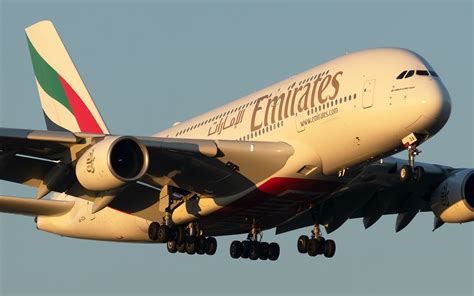
As fleets evolve and airlines increasingly deploy newer twin-engine aircraft on long routes, the A380’s role has narrowed but not vanished. Where it remains, it does so because demand justifies its scale. That reality suggests economy fares on the longest A380 routes are unlikely to collapse dramatically, even as competition evolves.
Instead, pricing will likely remain volatile but elevated, with value appearing sporadically rather than consistently. For travelers, understanding the forces behind these fares is essential. Economy on the world’s longest Airbus A380 routes is not cheap by default, but when approached strategically, it can still deliver meaningful value across some of the most extreme nonstop journeys in commercial aviation.
In the end, the cost of flying economy at the very limits of the A380’s range is less about the aircraft itself and more about what it represents: endurance, scarcity, and the premium placed on nonstop connectivity in a world where distance still matters.