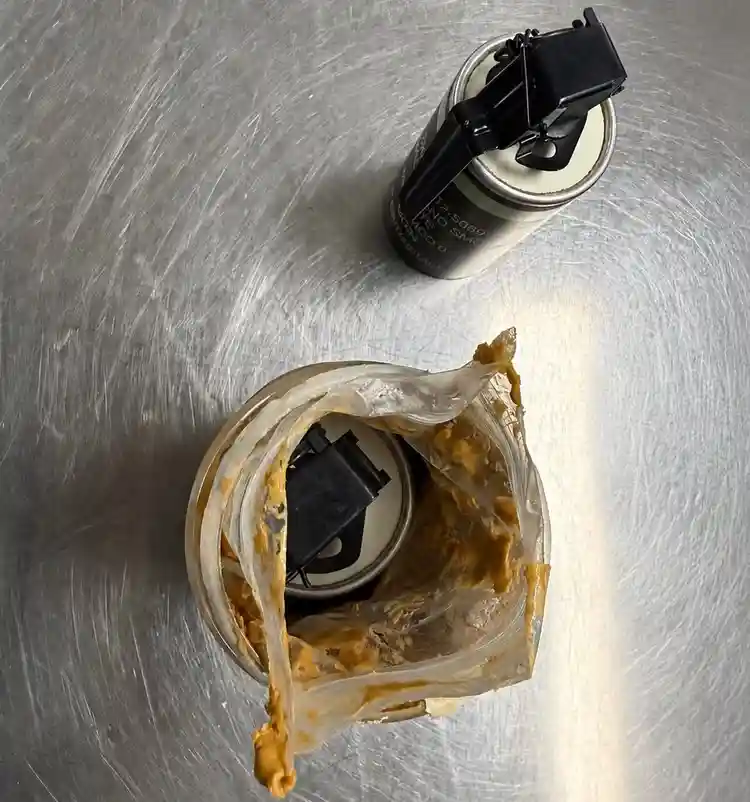
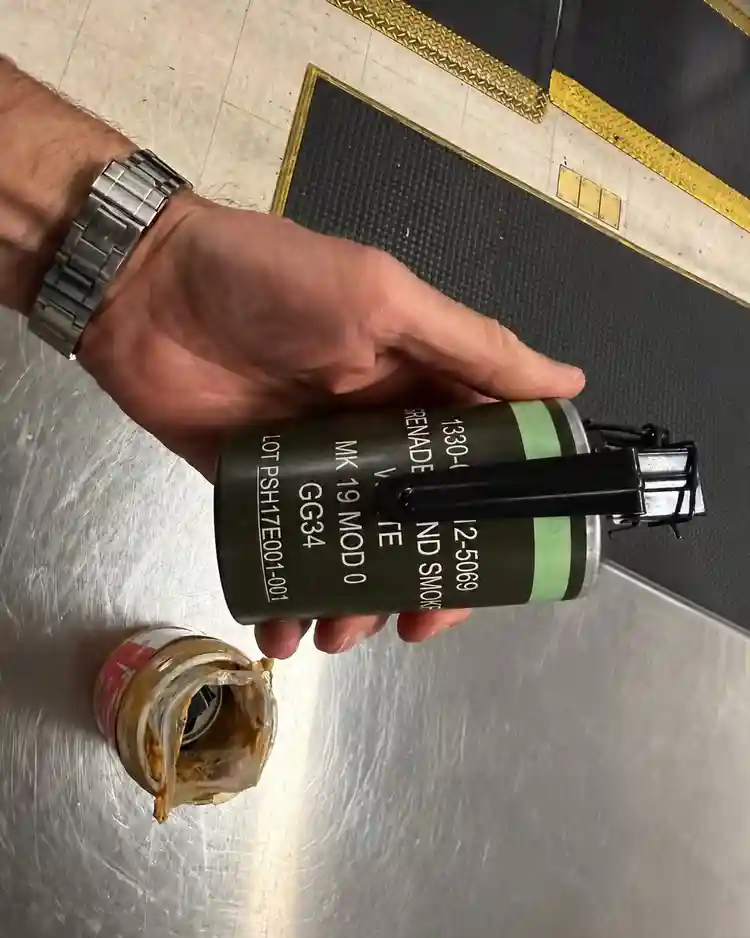
A routine baggage screening at Indianapolis International Airport (IND) prevented a potentially dangerous situation after Transportation Security Administration (TSA) officers discovered two live smoke grenades concealed inside a jar of peanut butter in a passenger’s checked luggage. The prohibited items were intercepted before the baggage was loaded onto a commercial aircraft, highlighting the effectiveness of the agency’s multilayered airport security system and the serious consequences travelers can face for attempting to transport hazardous materials.
The unusual discovery occurred after the passenger checked their baggage with the airline. Like all checked luggage, the suitcase proceeded through TSA’s automated screening process before being transferred to the aircraft. During the inspection, officers identified suspicious contents inside a peanut butter jar that had also been wrapped in a plastic bag. A closer examination revealed two live smoke grenades intentionally concealed within the container.
The TSA later shared details of the incident on social media, using the case to remind travelers that explosive and incendiary devices are strictly prohibited in both carry-on and checked baggage.
After the suspicious bag was identified, TSA officers immediately removed it from the baggage handling system to ensure the safety of airport personnel, passengers, and the aircraft. The smoke grenades were confiscated, while the remainder of the passenger’s belongings was cleared only after the hazardous items had been safely removed.
Why Smoke Grenades Are Prohibited on Commercial Flights
Although smoke grenades are commonly used for military training, emergency signaling, photography, and recreational events, they present significant risks aboard commercial aircraft. Because these devices contain pyrotechnic compounds designed to generate dense smoke, they can ignite unexpectedly if damaged, exposed to heat, or improperly handled during transportation.
For that reason, live smoke grenades are prohibited in both checked and carry-on baggage under federal aviation security regulations. Even if they are never intentionally activated, their presence creates an unacceptable hazard inside an aircraft’s cargo hold or passenger cabin.
Modern commercial aircraft are equipped with highly sensitive smoke detection systems designed to immediately identify signs of fire. If a smoke grenade were to activate during flight, it could trigger emergency alarms, fill confined spaces with thick smoke, impair visibility, and force flight crews to initiate emergency procedures. Such an event could result in an unscheduled diversion, emergency landing, operational disruptions, and significant safety risks for everyone onboard.
Advanced TSA Screening Prevented a Potential In-Flight Emergency
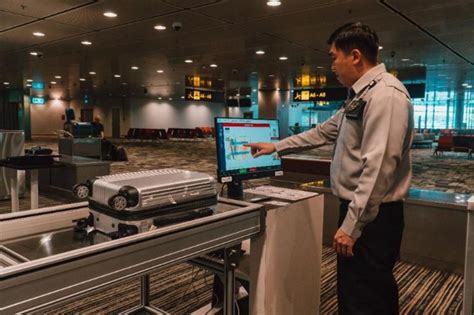
The interception demonstrates how TSA’s computerized explosive detection technology continuously scans checked baggage before it reaches an aircraft. These sophisticated screening systems analyze the contents of every checked bag using advanced imaging technology capable of detecting explosives, hazardous materials, and suspicious concealment methods that may not be visible from the outside.
Rather than relying solely on manual inspections, TSA combines automated screening with trained security personnel who evaluate suspicious images and conduct additional inspections whenever necessary. In this case, the layered security process successfully identified the concealed grenades before the luggage could be loaded.
According to TSA officials, this marked the second incident during June involving prohibited hazardous items discovered in passenger baggage, underscoring the ongoing challenge airport security personnel face in preventing dangerous materials from entering the aviation system.
Passenger Could Face Significant Civil and Criminal Penalties
Authorities have not publicly disclosed the traveler’s identity or confirmed what penalties will ultimately be imposed. However, attempting to transport prohibited explosive devices through airport security can carry severe consequences.
Depending on the circumstances of each case, travelers may face:
- Civil fines that can reach approximately $17,000 per violation.
- Criminal investigations if authorities determine there was intentional concealment or other violations of federal law.
- Additional enforcement actions from aviation security authorities or law enforcement agencies.
Because the smoke grenades were intentionally hidden inside a household food container, investigators may also examine whether the concealment represented an attempt to evade airport security screening.
Airport Security Screening Continues to Detect Dangerous Items
Every day, TSA officers inspect millions of passengers and their belongings using a combination of X-ray scanners, body scanners, metal detectors, explosive detection systems, and secondary screening procedures when necessary. These security measures are designed to identify firearms, explosives, hazardous chemicals, sharp objects, and other prohibited items before they can enter secure airport areas or aircraft.
Passengers selected for additional screening may undergo bag inspections, explosive trace detection, or physical pat-downs depending on the circumstances. While expedited programs such as TSA PreCheck and CLEAR can streamline the screening process for eligible travelers, all baggage remains subject to security inspection.
The Indianapolis smoke grenade discovery serves as another reminder that airport screening systems continue to identify even carefully concealed hazardous materials. By intercepting the live devices before departure, TSA officers prevented a situation that could have resulted in a serious in-flight emergency, protected passengers and crew, and reinforced the importance of strict compliance with aviation safety regulations.