Ultra-long-haul aviation represents one of the most remarkable achievements of modern commercial flight. While airliners have connected continents for decades, the newest generation of long-range aircraft has dramatically extended what airlines can realistically operate on a daily basis. Routes exceeding 16 to 18 hours in flight time no longer exist only as experimental missions or rare charter operations. They now form part of the regular global network.
Yet these flights remain extraordinary logistical challenges. When airlines operate routes that push aircraft toward their maximum operational range, the margin for error becomes extremely small. Fuel calculations must be precise, payload must be carefully balanced, and crew duty schedules must be engineered down to the minute. Even seemingly minor factors—such as seasonal wind patterns or airspace restrictions—can determine whether a flight operates smoothly or requires operational adjustments.
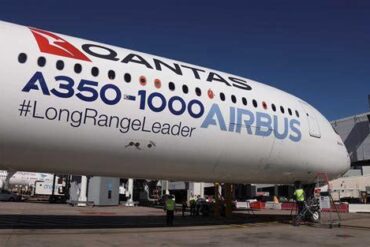
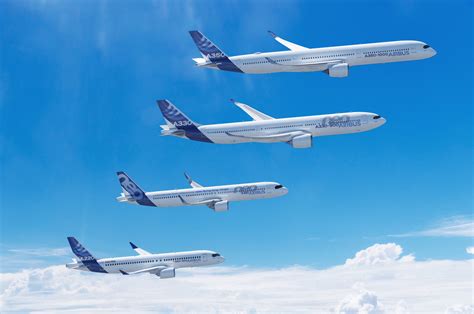
Modern aircraft like the Airbus A350 and Boeing 787 Dreamliner have made these missions possible by combining fuel efficiency with extended range capabilities. Their advanced aerodynamics, lightweight composite structures, and highly efficient engines allow airlines to connect cities that were previously separated by technical limitations.
But distance alone does not define these flights. Each ultra-long-haul route represents a carefully planned strategy that balances aircraft performance with passenger demand and network connectivity. The following five routes illustrate how airlines operate at the very edge of what modern commercial aviation can achieve.
Dallas/Fort Worth to Melbourne: Bridging North America and Southern Australia
The nonstop connection between Dallas/Fort Worth International Airport (DFW) and Melbourne Airport (MEL) demonstrates how airlines use aircraft range to unlock new strategic links between global regions. Covering approximately 8,991 miles (14,468 kilometers), the route sits firmly within the category of flights that push the limits of modern twin-engine aircraft.
Qantas operates this service using the Boeing 787-9 Dreamliner, a long-range aircraft specifically designed to handle missions where fuel efficiency and payload balance are critical. The Dreamliner’s composite airframe and advanced engine technology allow airlines to operate extremely long sectors without the excessive fuel consumption that older wide-body aircraft would have required.
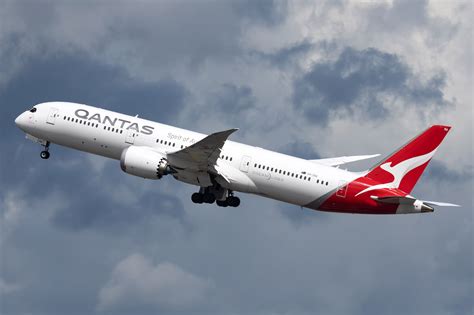
What makes this route particularly interesting is its network significance. Dallas/Fort Worth functions as one of the largest airline hubs in North America, offering extensive domestic connections across the United States. By linking Melbourne directly to DFW, Qantas effectively connects Australia to a vast network of American destinations without requiring passengers to transfer through traditional Pacific gateways such as Los Angeles or San Francisco.
From an operational perspective, flights of this length require constant monitoring of payload limits. Airlines must carefully manage several factors:
- Passenger numbers
- Cargo weight
- Fuel load
- Seasonal wind patterns
Every kilogram carried onboard influences the aircraft’s ability to travel such a long distance without refueling. Strong headwinds across the Pacific can further complicate the equation, forcing airlines to reduce cargo loads or adjust passenger capacity.
Despite these challenges, the route highlights how aircraft range translates into network utility. Instead of simply flying long distances, airlines use these capabilities to connect major global hubs in ways that enhance passenger convenience and expand international travel options.
Perth to London: Australia’s Historic Nonstop Link to Europe
Few routes symbolize the technological leap of modern aviation as clearly as the Perth to London Heathrow nonstop service. Stretching roughly 9,009 miles (14,499 kilometers), this flight marked the first time Australia and Europe were connected by a regular commercial flight without intermediate stops.
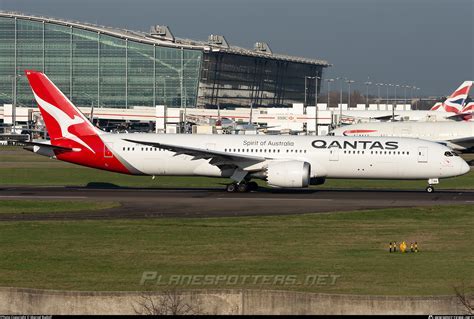
Historically, journeys between Australia and Europe required multiple stops across Asia or the Middle East. Travelers often changed aircraft in cities such as Singapore, Bangkok, or Dubai before continuing toward Europe. The introduction of the Boeing 787-9 Dreamliner changed that equation dramatically.
Qantas launched the Perth–London route as part of its broader strategy to expand long-range nonstop travel. The aircraft’s efficiency made it possible to operate a route that would have been economically unrealistic only a decade earlier.
The significance of this route extends beyond distance. Perth sits geographically closer to Europe than Australia’s eastern cities, allowing the airline to exploit the Dreamliner’s full range potential. By transforming Perth into a long-haul gateway, Qantas reshaped how international traffic flows between Australia and Europe.
Operationally, the route still requires meticulous planning. Flights must account for:
- Fuel reserves required for long oceanic sectors
- Potential diversion airports along remote routes
- Crew rest requirements during nearly 17-hour flights
Geopolitical considerations also influence operations. Airspace restrictions, international tensions, or regional conflicts can force airlines to modify flight paths. Even slight route deviations may increase distance enough to impact payload capacity.
Despite these complexities, Perth to London stands as one of the most iconic examples of ultra-long-haul aviation redefining global travel patterns.
Auckland to Doha: Connecting Isolation to a Global Hub
New Zealand sits among the most geographically isolated nations in the world, making long-haul aviation essential for international connectivity. The Auckland to Doha route illustrates how ultra-long-haul flights integrate remote regions into major global aviation networks.
Covering approximately 9,026 miles (14,526 kilometers), the route connects Auckland Airport (AKL) with Hamad International Airport (DOH), the central hub of Qatar Airways.
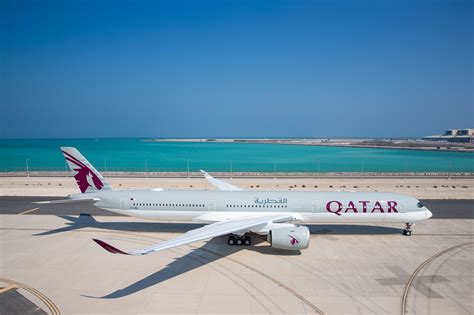
The service is operated by the Airbus A350-900, an aircraft widely regarded as one of the most efficient long-range airliners ever built. Its advanced aerodynamics and carbon-fiber fuselage allow it to carry passengers across enormous distances while maintaining relatively low fuel consumption.
However, the strategic importance of the route lies in Doha’s role as a global super-connector hub. While Auckland represents the gateway to New Zealand and parts of Oceania, Doha functions as a major transfer point linking passengers to destinations across:
- Europe
- The Middle East
- Africa
- South Asia
By operating a single ultra-long-haul flight from Auckland to Doha, Qatar Airways effectively plugs New Zealand into a worldwide network of connections.
Operating such a route requires constant attention to operational constraints. Seasonal wind patterns across the Indian Ocean can significantly affect flight duration and fuel burn. Airlines must also maintain sufficient reserve fuel for potential diversions, particularly because large sections of the route cross remote oceanic areas.
The route’s existence demonstrates how aircraft range capabilities enable entirely new global travel flows, connecting geographically distant regions through a single nonstop link.
Newark to Singapore: The Endurance Benchmark of Transpacific Flight
For many years, the route between Newark Liberty International Airport (EWR) and Singapore Changi Airport (SIN) represented the pinnacle of commercial aviation endurance. Covering roughly 9,525 miles (15,329 kilometers), the flight remains one of the longest regularly scheduled services in the world.
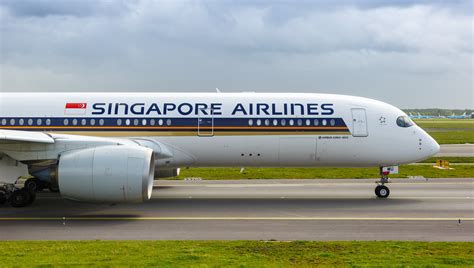
Singapore Airlines operates this route using the Airbus A350-900ULR (Ultra Long Range) variant. This specialized aircraft features additional fuel capacity and a cabin configuration designed specifically for ultra-long-haul missions.
Unlike traditional wide-body aircraft configured for maximum passenger capacity, the A350-900ULR used on this route features fewer seats and a higher proportion of premium cabins. This design reflects the economics of extremely long flights, where comfort and passenger yield become critical.
The route’s strategic importance lies in connecting two global financial centers without requiring intermediate stops. Business travelers can fly directly between the New York metropolitan region and Southeast Asia’s largest aviation hub.
Operating a flight that often exceeds 18 hours in the air requires extraordinary logistical coordination. Airlines must carefully manage:
- Crew duty rotations and rest facilities
- Aircraft weight and fuel distribution
- Passenger comfort on extended flights
- Operational flexibility for changing winds
Even slight variations in jet stream patterns can influence flight time by hours. Headwinds across the Pacific can significantly increase fuel consumption, requiring precise flight planning before departure.
Despite these challenges, the Newark–Singapore route demonstrates how technological advancements have turned previously impossible routes into routine operations.
New York JFK to Singapore: The Longest Commercial Flight in the World
At the very top of the ultra-long-haul spectrum sits the New York John F. Kennedy to Singapore route. Measuring approximately 9,527 miles (15,332 kilometers), it holds the distinction of being the longest scheduled commercial flight currently operating anywhere in the world.
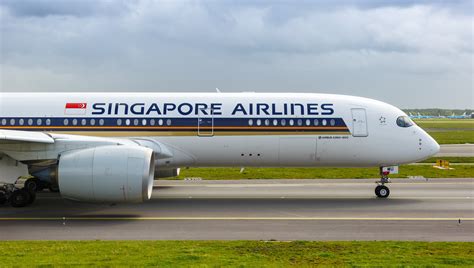
Singapore Airlines operates the service with the Airbus A350-900ULR, the same ultra-long-range aircraft used on the Newark route. The flight typically spends close to 19 hours in the air, making it one of the most demanding operations in commercial aviation.
Distance alone does not explain the complexity of this route. Flights must traverse enormous stretches of ocean and polar regions, requiring extensive contingency planning. Airlines must identify diversion airports along the route in case unexpected circumstances require an emergency landing.
From a commercial perspective, the route represents a major shift in airline economics. Historically, such long flights would have required aircraft carrying hundreds of passengers in dense configurations. Modern ultra-long-haul routes instead emphasize premium travel experiences, with fewer seats and more spacious cabins designed to maintain passenger comfort during extremely long journeys.
The route also highlights the remarkable efficiency of modern aircraft design. A generation ago, connecting New York and Singapore nonstop would have required impractical fuel loads or payload restrictions. Today, improvements in engine performance, aerodynamic efficiency, and materials engineering allow airlines to operate this mission as part of a regular schedule.
Ultimately, the JFK–Singapore flight serves as a case study in the evolution of long-range aviation. It demonstrates how airlines transform aircraft range capabilities into viable commercial services that reshape global travel patterns.
How Ultra-Long-Haul Routes Redefine Global Aviation
Routes operating near an aircraft’s maximum range illustrate the extraordinary capabilities of modern aviation technology. These flights represent far more than simple long-distance travel. They are complex operational missions that combine advanced aircraft engineering with sophisticated airline planning.
Each of the five routes explored here reflects a different strategic objective:
- Connecting major airline hubs across continents
- Eliminating traditional stopover points
- Integrating remote regions into global networks
- Serving high-value business travel markets
Behind every ultra-long-haul flight lies a delicate balance between physics, economics, and passenger experience. Aircraft must carry sufficient fuel to cover enormous distances while still transporting enough passengers and cargo to make the flight profitable.
As new aircraft technologies continue to emerge, airlines will likely push these limits even further. Upcoming projects—including aircraft with even greater efficiency and extended range—may soon make routes such as Sydney to London or Sydney to New York viable nonstop services.
Ultra-long-haul aviation therefore represents not just the edge of aircraft range, but also the frontier of global connectivity. Each successful route proves that the boundaries of commercial flight are still expanding, linking cities and continents in ways that once seemed impossible.
FAQs About Ultra-Long-Haul Flights
What qualifies as an ultra-long-haul flight?
Ultra-long-haul flights typically refer to routes lasting 16 hours or longer or covering distances above 8,000 miles (12,800 kilometers). These flights push aircraft toward the outer limits of their operational range.
Which aircraft are most commonly used for these routes?
Modern long-range aircraft such as the Airbus A350, Airbus A350-900ULR, and Boeing 787 Dreamliner dominate ultra-long-haul operations due to their superior fuel efficiency and extended range capabilities.
Why do airlines reduce seat numbers on very long flights?
Ultra-long-haul aircraft often carry fewer passengers to reduce overall weight and increase fuel range. Airlines also prioritize premium cabins to improve passenger comfort during flights lasting nearly an entire day.