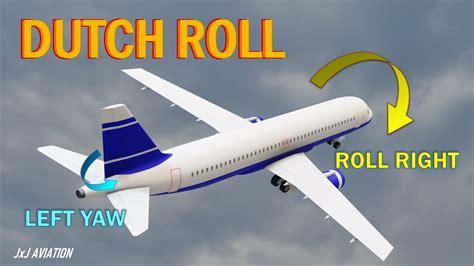
Dutch roll is a term used in aviation to describe a specific type of oscillatory motion that can occur during flight. It is a phenomenon characterized by a series of out-of-phase turns, where the aircraft rolls in one direction while yawing in the opposite direction. This motion is often unsettling for passengers and pilots, but it is important to understand its causes and how to prevent it to ensure a smooth flight experience. In this article, we will explore what Dutch roll is, its causes, and the methods used to mitigate or prevent it.
What Is Dutch Roll?
Dutch roll refers to a specific kind of unstable flight behavior in which an aircraft exhibits a continuous oscillation between rolling and yawing motions. Essentially, the aircraft alternates between rolling to one side and yawing in the opposite direction. This effect can lead to uncomfortable experiences for passengers and is often perceived as the aircraft ‘swaying’ or ‘rocking’ from side to side.
The term ‘Dutch roll’ derives from the motion’s resemblance to a traditional Dutch skating technique, which involves a series of oscillating movements. Dutch roll happens naturally in many aircraft designs, particularly those with swept-back wings, but it can also occur unintentionally during flight in certain conditions.
The Physics Behind Dutch Roll: Stability and Motion
To better understand Dutch roll, it is essential to examine two types of aircraft stability: roll stability (lateral stability) and yaw stability. These two stability characteristics interact to produce the oscillatory motion that we recognize as Dutch roll.
Roll Stability (Lateral Stability)
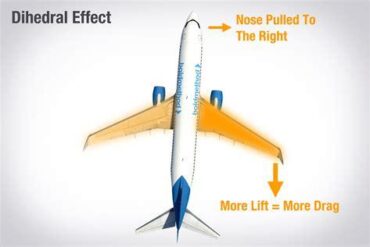
Roll stability refers to the aircraft’s ability to resist rolling motions caused by disturbances such as turbulence or control inputs. In a stable aircraft, the design of the wings and the placement of the center of gravity allow the plane to return to its original position after being tilted or rolled. An example of a modern aircraft with strong roll stability is the Boeing 737. When an uncoordinated roll is initiated to the right, the aircraft experiences a sideslip, which causes the airflow to strike the leading edge of the wings at different angles.
This phenomenon, known as the dihedral effect, leads to an increase in lift on the wing that is further from the aircraft’s center of gravity. The additional lift generates a counteracting force that helps the aircraft return to level flight. However, this effect also produces drag, which can cause the aircraft’s nose to yaw in the direction opposite of the roll.
Yaw Stability
Yaw stability refers to an aircraft’s ability to counteract unwanted yaw motions caused by factors such as drag, wind, or control inputs. The vertical stabilizer, or tail fin, plays a key role in maintaining yaw stability by generating lift in the opposite direction of the aircraft’s yaw. In the case of the 737, the vertical stabilizer works to counteract the yaw generated by the drag on the wing during an uncoordinated roll.
However, the yaw stability of modern swept-wing aircraft is generally weaker than their roll stability, leading to the conditions that favor Dutch roll. As the aircraft rolls and the vertical stabilizer attempts to correct the yaw, the forces generated by the swept wings often cause the aircraft to oscillate back and forth, resulting in Dutch roll.
Why Dutch Roll Occurs in Swept-Wing Aircraft
Modern swept-wing aircraft are particularly prone to Dutch roll due to the interaction between their roll stability and yaw stability. Swept wings, which are commonly found on commercial jetliners, are designed to provide superior roll stability. However, this design feature also contributes to a weaker yaw stability, creating the perfect conditions for Dutch roll.
When an aircraft with swept wings rolls in one direction, the relative airflow over the wings changes. The wing on the outside of the roll generates more lift, but it also produces more drag. This increased drag causes the aircraft’s nose to yaw in the direction of the roll. The vertical stabilizer attempts to correct this yaw by generating lift in the opposite direction, but the aircraft’s design often causes an oscillation between roll and yaw, leading to the Dutch roll effect.
Yaw Dampers and Their Role in Preventing Dutch Roll
One of the most effective methods for mitigating Dutch roll is the use of yaw dampers. Yaw dampers are sophisticated systems that automatically control the aircraft’s rudder to reduce oscillations and maintain smooth flight. These systems are particularly important in modern swept-wing aircraft, where Dutch roll is more likely to occur.
Yaw dampers work by detecting and correcting any yawing motion caused by the aircraft’s roll. The system continuously adjusts the rudder to counteract the yaw and prevent the aircraft from entering a sustained oscillatory motion. By automatically adjusting the rudder, the yaw damper ensures that the aircraft remains stable and minimizes the discomfort caused by Dutch roll.
How to Recover from Dutch Roll
In cases where Dutch roll occurs and the yaw damper is not functioning or the aircraft does not have one, it is essential for the pilot to know how to recover from the oscillation. While most modern aircraft are equipped with automatic systems to prevent Dutch roll, older aircraft may require manual intervention.
To recover from Dutch roll, the pilot should first stop adding control inputs and allow the aircraft to stabilize. This often involves releasing pressure from the flight controls and letting the aircraft’s natural stability work to counteract the oscillations. In some cases, small corrective inputs to the rudder or ailerons may be required to help the aircraft return to steady flight.

It is important to note that recovery techniques can vary depending on the type of aircraft. Older aircraft, such as the Boeing 727, may require more active pilot intervention, while newer jets with advanced autopilot systems and yaw dampers are often capable of recovering from Dutch roll automatically.
Preventing Dutch Roll in Modern Aircraft
For modern aircraft, Dutch roll is typically prevented or minimized through a combination of design features and flight control systems. These include:
- Swept Wing Design: While swept wings contribute to Dutch roll, they also enhance overall stability. Aircraft designers balance the effects of roll and yaw stability to minimize the likelihood of Dutch roll.
- Yaw Dampers: As discussed earlier, yaw dampers are essential in preventing Dutch roll by automatically adjusting the rudder to counteract unwanted yaw motions.
- Autopilot Systems: Many modern aircraft are equipped with autopilot systems that can detect and correct Dutch roll. These systems continuously monitor the aircraft’s flight path and make small adjustments to maintain smooth flight.
By utilizing these advanced technologies and ensuring that they are properly maintained, airlines can minimize the occurrence of Dutch roll and ensure a more comfortable and safe flight experience for passengers.
Conclusion
Dutch roll is a natural but often uncomfortable phenomenon that can occur in many aircraft, particularly those with swept-back wings. It results from the interaction between roll stability and yaw stability, causing the aircraft to oscillate between rolling and yawing motions. While it can be unsettling for passengers, modern technologies such as yaw dampers and autopilot systems have made it much easier to prevent and correct Dutch roll during flight.
By understanding the causes of Dutch roll and the methods used to prevent it, pilots and engineers can ensure that aircraft remain stable and comfortable during flight. Whether through the use of automatic systems or manual recovery techniques, Dutch roll is no longer a significant concern for modern aviation.