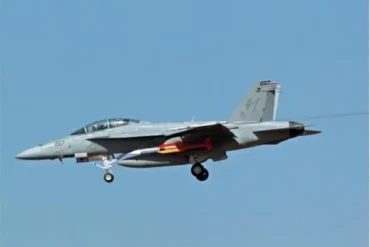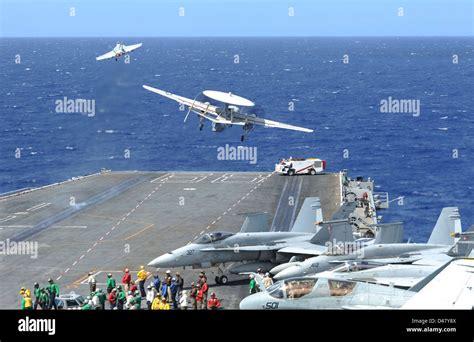
On July 9, 1991, a rare and extraordinary decision unfolded in the skies over the Mediterranean Sea, as the U.S. Navy found itself forced to take down one of its own aircraft — an E-2C Hawkeye — with an F/A-18 Hornet to avert a potential catastrophe on land. The event, remarkable in both its operational gravity and strategic implications, highlights the real-time challenges and split-second decisions that characterize naval aviation and mission-critical defense operations.
The Emergency Unfolds: Fire at 5 a.m.
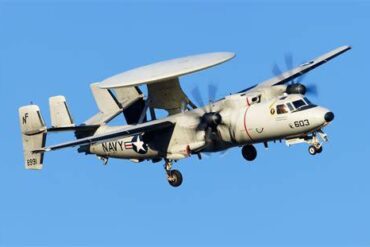
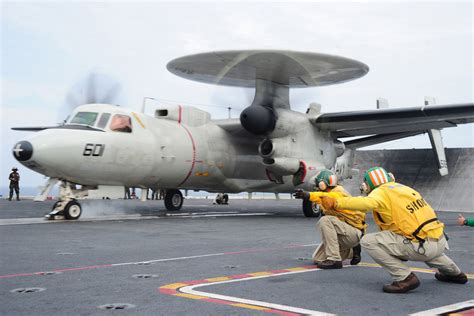
The E-2C Hawkeye, a key airborne early warning and control aircraft, was operating out of Carrier Airborne Early Warning Squadron 122 (VAW-122), stationed aboard the USS Forrestal (CV-59). At approximately 5:00 a.m. EDT, while on a routine patrol flight supporting the Allied relief mission in Northern Iraq, the aircraft’s starboard engine caught fire. Despite the crew’s best efforts, the blaze could not be contained.
Facing imminent danger, the five-member crew elected to bail out roughly 40 miles southeast of Cyprus. Rescue helicopters from both the USS Forrestal and the USS Yorktown (CG-48) quickly responded. Incredibly, the most serious injury reported was merely a chin laceration requiring only a few stitches.
A Ghost Plane in the Sky
Though the crew had safely ejected, the E-2C itself did not crash immediately. According to retired Rear Adm. Eugene Carroll Jr., the pilot likely placed the aircraft on auto-pilot, granting the crew time to escape but inadvertently allowing the Hawkeye to continue flying — unmanned and uncontrolled.
This created an immediate and severe risk. The aircraft’s trajectory placed it on a path that could lead to densely populated regions, including parts of Cyprus and Syria, or into commercial maritime lanes. Given the uncertainty and danger, the decision was swiftly made to neutralize the threat.
Engagement by F/A-18 Hornet: The Destruction of the Hawkeye
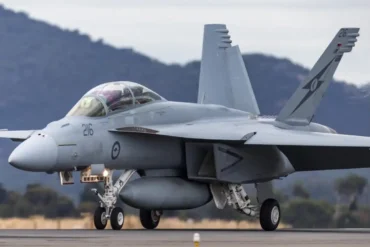
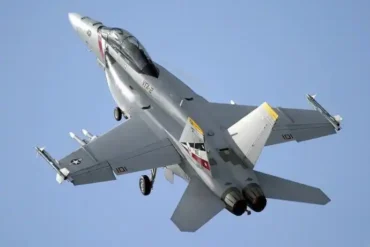
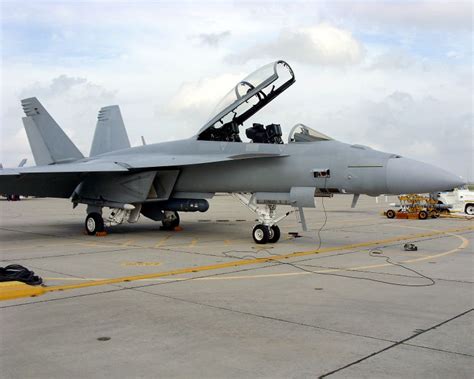
Aboard the carrier task force, the commander was briefed on the urgent situation. Within moments, an F/A-18 Hornet, already airborne, was directed to intercept the rogue E-2C. Once in range, the Hornet’s M61A1 Vulcan 20mm cannon was employed — a weapon designed for short bursts of high-speed, armor-penetrating rounds.
The Hawkeye was successfully shot down, ensuring it would not pose a threat to civilians or allied naval forces. The downing was carried out with surgical precision — not with a missile, but with cannon fire — highlighting both the discipline and capability of the Navy’s frontline fighter crews.
Security Concerns and Classified Equipment
Following the incident, speculation naturally turned to whether there was a risk of classified technology falling into foreign hands. However, officials, including Rear Adm. Carroll, downplayed these concerns. The E-2C Hawkeye carried no weapons and only modest levels of classified material — mostly encrypted communications devices, technical manuals, and intelligence reports. These materials were rated no higher than “secret”, a mid-level security classification.
As Carroll stated, “The decision to shoot down the plane didn’t involve any fear of loss of equipment to an unfriendly power.” Rather, it was a direct and measured response to an escalating safety threat.
The E-2C Hawkeye: Sentinel of the Skies
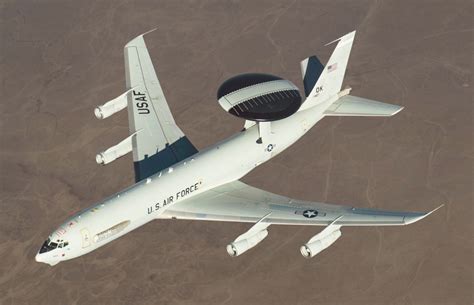
To understand the full gravity of the incident, one must appreciate what the E-2C Hawkeye represents. It is not simply a propeller-driven aircraft; it is the eyes and ears of the Carrier Strike Group. The Hawkeye is equipped with an advanced radar rotodome — 24 feet in diameter — affixed atop its fuselage. Designed for all-weather tactical battle management, it provides early warning, airborne command and control, and communications relay capabilities.
Capable of coordinating complex, multi-domain missions, the E-2C also supports:
- Air Interdiction & Surface Surveillance
- Search and Rescue Coordination
- Offensive/Defensive Counter-Air Missions
- Time-Critical Strike Management
- Drug Interdiction & Communications Relay Across Distributed Forces
Its importance lies not in firepower, but in its ability to detect, analyze, and coordinate responses to threats long before they enter visual range. That the aircraft could continue to fly, unmanned, is a testament to its engineering — and to the disciplined emergency response protocols of its crew.
Carrier Operations and Split-Second Judgments
This event provides a case study in carrier-based command decision-making. Once the Hawkeye was identified as rogue, the chain of command acted decisively. From recovery of personnel to neutralization of risk, the Navy’s layered response structure — flight operations, task force communication, command approval, and aerial engagement — operated without delay.
The choice to use cannon fire rather than a missile is also notable. It reflects a desire to avoid radar signature escalation or unnecessary weapon expenditure, and minimizes collateral damage. In a region as geopolitically sensitive as the Eastern Mediterranean — close to Syria, Lebanon, and Israel — such tactical restraint underscores the professionalism of the aircrew.
Lessons in Risk, Protocol, and Preparedness
While rare, the Hawkeye incident reveals how even routine patrol flights can yield unpredictable situations. From engine failure to a ghost aircraft drifting toward civilian airspace, the unfolding events tested the Navy’s emergency SOPs, inter-service coordination, and crisis communication channels.
Importantly, the story also illustrates that in the face of escalating complexity, the Navy prioritized human safety, mission containment, and strategic discretion over equipment preservation. It was an act of operational sacrifice, not destruction, carried out with clear intent and accountability.
Aftermath and Legacy of the Shootdown
Though it occurred more than three decades ago, the July 1991 Hawkeye shootdown remains one of the few documented cases of a U.S. Navy fighter destroying a U.S. military aircraft in peacetime — and certainly the only instance involving a crewless E-2C.
The crew of the Hawkeye, their calm professionalism in crisis, and the precision strike carried out by the F/A-18 pilot, embody the values of vigilance and responsibility within naval aviation. While no celebration followed, there was a shared understanding across the fleet that this mission, though painful, averted what could have become a disaster of geopolitical consequence.
Conclusion: When Protocol Meets Moral Imperative
What began as a standard flight in support of humanitarian efforts ended in a tragic but necessary intervention. The July 1991 downing of the E-2C is more than an oddity in military records — it is a lesson in duty, where tactical rules met moral urgency. There were no villains, no hostile fire, and no geopolitical brinkmanship — only a crew’s brave decision to eject, and another pilot’s burdened resolve to pull the trigger for the greater good.
In a world where high-stakes decisions often unfold unseen, this event stands as a rare, fully revealed moment of aerial integrity, command clarity, and operational honor.