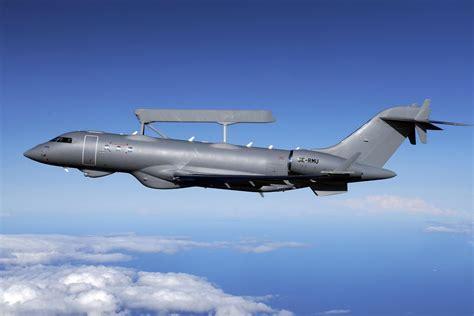
Egypt is moving closer to a significant shift in its airborne early warning and control capability as it evaluates the Saab GlobalEye AEW&C aircraft as a potential successor to its long-serving U.S.-made E-2C Hawkeye fleet. The discussions, which have matured steadily since mid-2025, reflect Cairo’s growing urgency to modernize surveillance coverage amid evolving regional threats, expanding maritime responsibilities, and the natural limits of legacy platforms introduced decades ago.
The negotiations with Saab are not occurring in isolation. They form part of a broader recalibration of Egypt’s defense posture, driven by the need for persistent, wide-area situational awareness across airspace and sea lanes that stretch from the eastern Mediterranean to the Red Sea and deep into the Sinai Peninsula. For Egypt, airborne early warning remains a cornerstone of national air defense, linking fighter aircraft, ground-based radar networks, and command centers into a coherent operational picture.
At the heart of the current talks lies a simple but consequential question: whether the GlobalEye’s multi-domain surveillance approach can deliver a decisive upgrade over the E-2C Hawkeye, an aircraft that has served Egypt reliably but is increasingly constrained by age, endurance, and architecture.
Egypt’s E-2C Hawkeye Legacy and Its Operational Limits
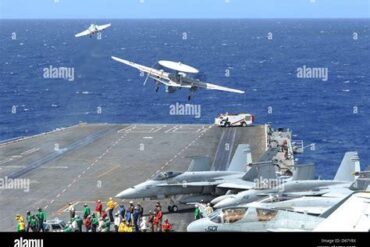
The Egyptian Air Force’s E-2C Hawkeye fleet has been a pillar of national air defense since the late 1980s, providing airborne radar coverage that significantly extends detection ranges beyond ground-based systems. Acquired between 1986 and 1993, the aircraft enabled Egypt to establish a credible airborne command and control capability at a time when regional air threats were rapidly evolving.
Subsequent upgrades, particularly the Hawkeye 2000 modernization, prolonged the platform’s relevance. Enhanced mission computers, improved operator consoles, and the APS-145 radar allowed Egypt to track thousands of air and surface targets at long distances, maintaining operational credibility well into the 2010s. These aircraft also proved their value during real-world operations, including surveillance and coordination roles during Egyptian air operations linked to instability in neighboring Libya.
Yet even with these upgrades, the structural age of the E-2C airframe imposes growing constraints. Designed in the 1960s for carrier operations, the turboprop aircraft faces rising maintenance demands, limited growth potential, and shorter endurance compared to modern jet-based platforms. As Egypt’s surveillance requirements have expanded from pure air defense to include maritime domain awareness and counter-UAV detection, the Hawkeye’s limitations have become increasingly evident.
Why GlobalEye Is Gaining Attention in Cairo
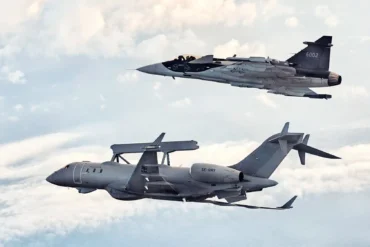
The Saab GlobalEye represents a fundamentally different approach to airborne early warning. Built on the Bombardier Global 6000/6500 long-range business jet, it combines high altitude, long endurance, and advanced sensor fusion in a single platform. This design allows the aircraft to operate higher and faster than the E-2C, covering broader areas with fewer sorties while remaining on station for extended periods.
For Egypt, these performance characteristics translate into greater persistence over critical regions, including the Red Sea approaches, the Suez Canal corridor, and the eastern Mediterranean. The GlobalEye’s ability to rapidly reposition also enhances flexibility, enabling the Egyptian Air Force to respond more quickly to emerging threats or shifting operational priorities.
Beyond raw performance, GlobalEye’s appeal lies in its multi-domain surveillance architecture. Rather than focusing primarily on airborne targets, the aircraft integrates air, maritime, and ground surveillance into a single mission profile, offering a more comprehensive operational picture aligned with modern defense concepts.
Advanced Sensors and Multi-Domain Awareness
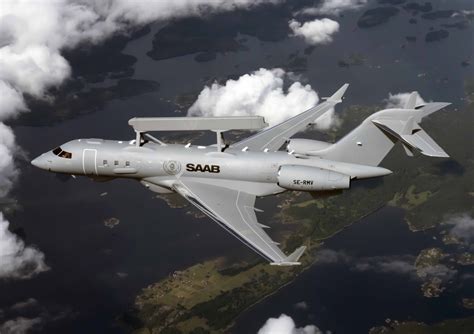
At the core of the GlobalEye system is Saab’s Erieye Extended Range radar, mounted above the fuselage in a distinctive dorsal configuration. This active electronically scanned array provides long-range detection of fighter-sized targets and is optimized for tracking low-observable and low-flying threats, including cruise missiles and unmanned aerial systems.
Complementing the Erieye radar is the Leonardo SeaSpray 7500E maritime surveillance radar, which enables detailed monitoring of surface vessels across vast sea areas. This capability is particularly relevant for Egypt, given its responsibility for securing maritime traffic near one of the world’s most critical shipping chokepoints. Integrated electro-optical and infrared sensors further enhance target identification, allowing operators to classify contacts with greater confidence.
The result is an aircraft capable of simultaneously managing air defense warning, maritime patrol tasks, and surface surveillance. This fusion of sensor data allows commanders to understand how threats in one domain may interact with another, a critical advantage in increasingly complex operational environments.
Network-Centric Operations and Data Sharing
Another defining feature of the GlobalEye is its network-centric design philosophy. Unlike older AEW&C platforms that function primarily as airborne command posts, GlobalEye is engineered as a data node within a wider command and control ecosystem. It supports multiple secure data links, satellite communications, and real-time information sharing with ground and naval units.
For Egypt, which operates a diverse mix of Western, Russian, and Chinese systems, this architecture offers both opportunities and challenges. On one hand, it promises improved integration and faster dissemination of actionable intelligence. On the other, it requires careful alignment with existing command networks to ensure interoperability without compromising security.
GlobalEye’s flexibility also extends to crew configurations. While it typically carries onboard operators, it can also conduct missions where sensor data are transmitted directly to ground centers, reducing crew workload and expanding operational options. This approach aligns with Egypt’s broader push toward distributed command and control, reducing reliance on single airborne decision points.
Strategic Implications for Egypt’s Defense Posture
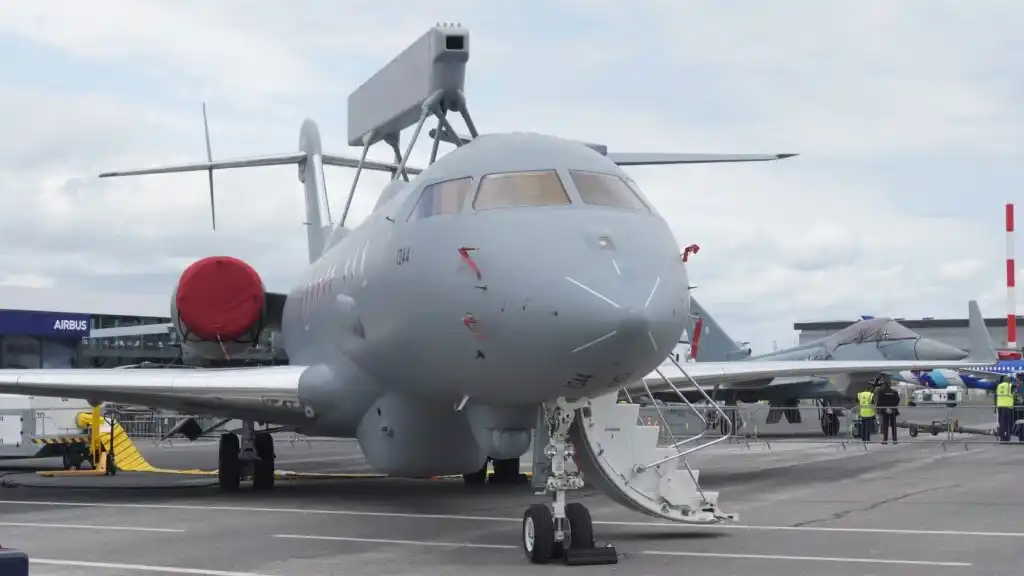
Should Egypt proceed with a GlobalEye acquisition, the move would carry significant strategic implications. Enhanced airborne surveillance would strengthen air defense coordination, improve maritime security, and provide earlier warning against asymmetric threats such as drones and low-flying missiles. This capability would also support joint operations across air, naval, and ground forces, reinforcing Egypt’s role as a regional security actor.
The timing of the discussions is notable. Egypt has been steadily diversifying its defense partnerships, seeking to balance reliance on traditional suppliers with new relationships that offer greater flexibility and technology access. Saab’s GlobalEye, already in service with countries such as the United Arab Emirates, represents a proven system with a growing international footprint.
Financial, Industrial, and Political Considerations
Despite its technical advantages, a GlobalEye acquisition is not without obstacles. The financial scale of the program is substantial, encompassing aircraft procurement, training, infrastructure, and long-term sustainment. Egypt is therefore likely exploring phased deliveries or tailored financing arrangements to manage costs.
Industrial participation is another key consideration. Cairo has consistently emphasized local maintenance and support capabilities in recent defense deals, aiming to reduce lifecycle costs and build domestic expertise. Any agreement with Saab would need to address how much technology transfer and local involvement can be accommodated under Swedish export regulations.
Political dynamics also play a role. Replacing a U.S.-made system with a European alternative signals Egypt’s intent to maintain strategic autonomy in defense procurement, while still preserving cooperative ties with Washington. The decision will therefore reflect not only operational needs but also broader diplomatic calculations.
A Decision That Will Shape Egypt’s Surveillance Future
As of early 2026, the discussions between Egypt and Saab remain exploratory, with no finalized contract or delivery timeline announced. Yet the depth of engagement underscores Cairo’s seriousness about transforming its airborne early warning capability. Whether Egypt ultimately selects the GlobalEye or opts for another solution, the evaluation process itself highlights the growing importance of integrated, long-range surveillance in national defense planning.
For Egypt, the choice will shape how effectively it can monitor its skies and seas in an era defined by rapid technological change and increasingly complex threats. The GlobalEye offers a compelling vision of what next-generation airborne surveillance can provide, and its consideration marks a pivotal moment in the evolution of Egypt’s air defense architecture.