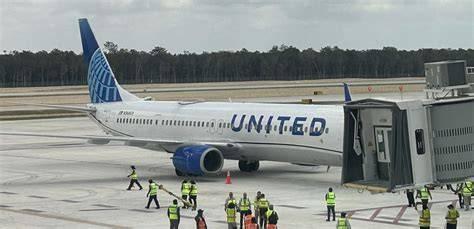
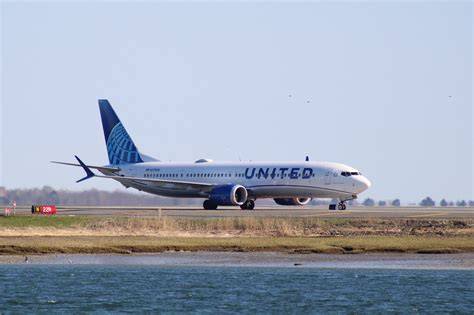
United Airlines will terminate both of its nonstop routes to Tulum International Airport (TQO), closing the books on a Riviera Maya experiment that lasted less than two years. The Star Alliance carrier’s seasonal Newark Liberty International Airport (EWR) service, already flagged for removal before the winter schedule, operates for the final time on January 2, while the year-round George Bush Intercontinental Airport (IAH) link from Houston is axed on January 4, a schedule change confirmed by the airline. United began serving Tulum in April 2024, peaking at up to four weekly flights, and will now leave the Mexican Caribbean gateway entirely. The carrier’s official response to questions about the withdrawal was characteristically brief: it makes regular adjustments to schedules based on seasonality, demand and other market factors. For a destination that opened with grand ambitions of siphoning traffic from Cancun, the retreat of one of America’s largest airlines is a significant blow.
Why the Houston–Tulum Route Was Always Fragile
The Houston–Tulum city pair covers just 831 miles (1,337 km), making it the shortest flight from the United States to any Mexican airport. That geography is a double-edged sword. On paper, a short hop promises low fuel burn and efficient aircraft utilization, but it also means the route competes against a mature Cancun market where frequencies, connections and ground logistics are already optimized. A 831-mile sector leaves little room for yield recovery when demand softens, and when a short-haul leisure route underperforms, airlines reallocate the aircraft to stronger opportunities within weeks. United’s Houston hub offered the region’s best connecting feed, yet even that structural advantage could not offset the broader demand problem facing Tulum itself.
Tulum International Airport and the Riviera Maya Gateway Gamble
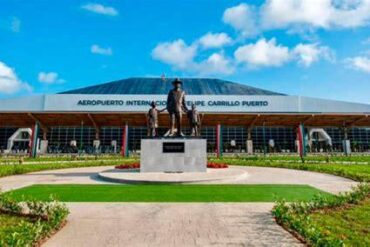
Tulum International Airport, officially Felipe Carrillo Puerto International Airport, sits roughly 12 miles (20 km) southwest of Tulum in Quintana Roo and was designed as a second gateway to the Mexican Caribbean and the Riviera Maya. It operates alongside Cancun International Airport (CUN), which lies about 78 miles (125 km) to the north and still absorbs the overwhelming majority of the region’s domestic and international traffic. The facility is run by Grupo Olmeca Maya Mexica, a holding company owned by the Mexican military, an arrangement that has drawn persistent questions about accountability and transparency in civilian airport management. Its 12,000-foot runway and terminal can handle widebody aircraft, and the field offers 123 aircraft stands, all currently occupied by narrowbody equipment.
The Airline Pullback Across Tulum’s Route Map
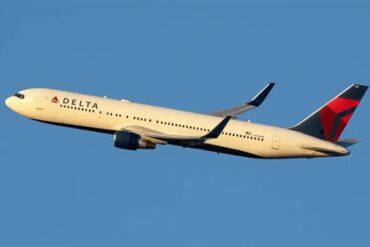
United’s departure is part of a widening pattern of retrenchment. American Airlines remains from Dallas/Fort Worth (DFW) and Miami (MIA), while Delta Air Lines has narrowed its footprint to a single Atlanta (ATL) service after dropping Minneapolis–St. Paul. Aeromexico has exited Tulum completely, and Volaris terminates its Guadalajara nonstop on January 7. Mexicana de Aviación and Viva still link Tulum with Mexico City Felipe Ángeles (NLU) and Monterrey, and seasonal Canadian capacity persists through Air Canada, Air Transat and WestJet. The busiest corridor remains Mexico City Felipe Ángeles, carrying more than 170,000 passengers in the 2025 calendar year, while Houston and Atlanta each recorded over 50,000 annual passengers according to Mexico’s Federal Civil Aviation Agency.
The Demand Problem Behind United’s Tulum Withdrawal
The core issue is that airlines overprojected how many travelers would abandon Cancun for Tulum. The airport was widely framed as a slow burn rather than an immediate success, and high operational costs for carriers and the airport alike have collided with softening passenger numbers across the Riviera Maya. Passengers arriving at Tulum also face costly ground transportation, a friction point that has pushed leisure travelers back toward Cancun’s established transfer ecosystem. Layering that onto a regional tourism slump, the commercial case for a short Houston sector collapsed before it could mature, and United’s exit is less a surprise than a delayed confirmation of the market’s verdict.

What United’s Exit Means for Tulum and Riviera Maya Travelers
For travelers, the practical effect is reduced nonstop options from the United States and renewed pressure to route through Cancun, where competition keeps fares and transfers more favorable. For Tulum, the loss of a major hub carrier signals that the airport’s military-backed operating model and cost structure must adapt if it hopes to attract replacement capacity. The remaining US service from American and Delta keeps the gateway alive, but the removal of United’s Houston link leaves the Riviera Maya’s second airport dependent on a thinner, more seasonal network, and the clock on its slow-burn recovery is now ticking louder.