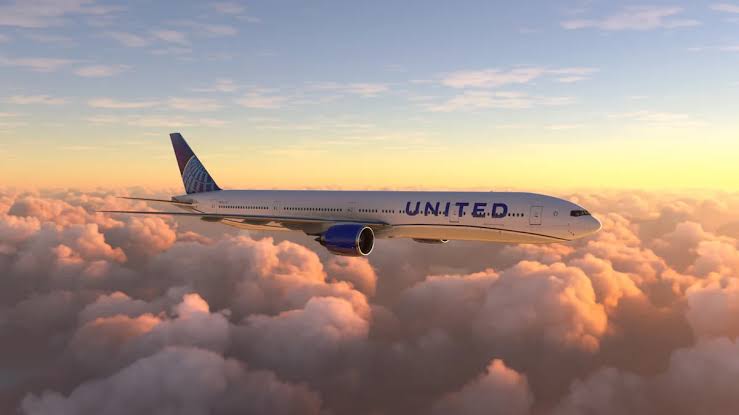
United Airlines had a big opportunity to put Los Angeles back at the center of its transpacific strategy, yet when the carrier revealed its summer 2027 network, the route many observers expected was absent. The missing service was Los Angeles International Airport (LAX) to Seoul Incheon International Airport (ICN), a market that looks tailor-made for United on paper. The carrier announced new long-haul destinations, including Pacific growth from San Francisco to Naha and Los Angeles to Osaka, but it stopped short of confirming the Los Angeles-Seoul flight.
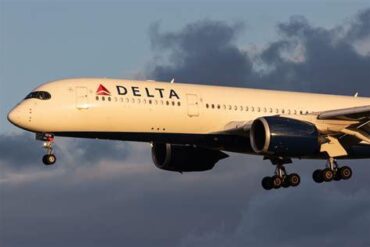
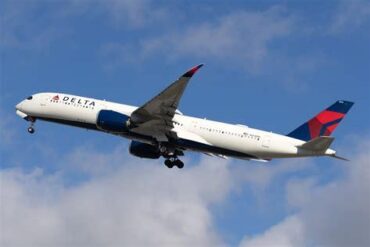
That omission matters because Seoul is a visible gap in United’s network. United already has a powerful presence in Asia through San Francisco, while Los Angeles offers a huge local market, extensive domestic connectivity, and a deep pool of corporate travelers. A nonstop LAX-ICN service would therefore fill a very visible hole in United’s Southern California network and give the airline a direct answer to the strength of the Delta Air Lines and Korean Air partnership.
The timing makes the silence more interesting. United staged its network announcement at Newark Liberty International Airport around the arrival of its first Airbus A321XLR, using the event to outline its 2027 ambitions. With ten new long-haul destinations on the map and several Pacific opportunities receiving attention, expectations were high that Los Angeles-Seoul would finally appear. Instead, United left the route off the schedule, suggesting that regulatory and operational considerations may be more important than the excitement surrounding a potential announcement.
Why United Los Angeles-Seoul Was Expected
For United, Los Angeles is the most logical place to add Seoul service outside its established San Francisco hub. San Francisco already functions as the airline’s primary Pacific gateway, with daily Boeing 777-300ER and 787-9 service to Seoul. Adding another Seoul flight from San Francisco would strengthen an already dominant position rather than solve a network weakness.
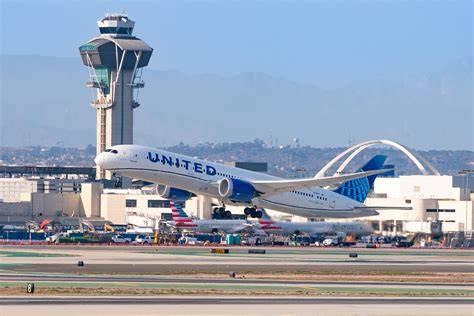
Los Angeles is different. United operates long-haul Asian services from LAX to Tokyo Haneda and is adding Osaka Kansai, but South Korea remains a conspicuous omission. The Southern California market has a large Korean-American population, substantial technology and entertainment industries, and a broad corporate economy that generates premium international demand. A nonstop flight to Seoul would allow United to tap that traffic while also feeding passengers from its extensive domestic network.
The competitive environment makes the opportunity even more compelling. Delta Air Lines and Korean Air have built a formidable joint venture around Los Angeles-Seoul, giving them a combination of local traffic, connecting opportunities, premium cabins, and coordinated schedules that is difficult for an independent carrier to challenge. United could use LAX-ICN to attack that concentration directly, especially if regulatory remedies create an opening for another airline to secure meaningful access at Incheon.
The Korean Air-Asiana Merger Changes the Equation
The most important reason United may have remained quiet is the complicated regulatory aftermath of the Korean Air-Asiana merger. Korean Air agreed to acquire a 63.88% controlling stake in Asiana, but securing approval across several jurisdictions required competition remedies designed to preserve consumer choice. Those remedies can include airport slots, traffic rights, and other structural measures intended to give alternative airlines a realistic chance to compete.
That sounds straightforward until the details of a long-haul route are considered. A slot is valuable only if its timing supports the commercial model. A United flight arriving in Seoul at an inconvenient hour could make connections difficult, while a poorly timed departure from Los Angeles could weaken the airline’s ability to attract premium customers and connect domestic passengers. Regulators therefore have to consider whether transferred slots are genuinely useful rather than simply counting them as a remedy on paper.
Air Premia has already become part of that competitive picture. Korean Air agreed to lease four Boeing 787-9 aircraft to the hybrid carrier as part of efforts to maintain competition on the Los Angeles-Seoul market. That creates an immediate alternative to the existing joint venture, but it does not necessarily give United the specific regulatory package it would need to justify a major standalone operation.
For United, waiting could therefore be more rational than announcing first and negotiating later. If regulators eventually require stronger and more permanent divestitures, the airline could secure a much better foundation for LAX-ICN. Announcing prematurely could mean committing resources before knowing whether the necessary airport infrastructure would actually be available.
Seoul Incheon Slots Are Only Part of the Problem
The challenge is not simply obtaining permission to land at Incheon. United would need useful arrival and departure times, terminal access, gates, baggage arrangements, and potentially connectivity agreements. These details can determine whether a new route is competitive or becomes an expensive exercise in moving passengers between airports and terminals.
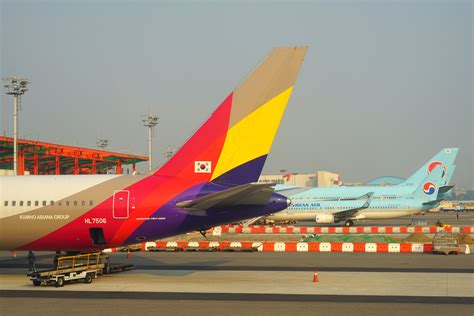
Korean Air operates its hub from Incheon’s Terminal 2, where it has established premium facilities, baggage systems, lounges, and connection flows. Asiana’s integration into Korean Air further strengthens that footprint. A new carrier operating from Terminal 1 could technically serve the same airport while still facing a meaningful disadvantage in the passenger experience and connecting process.
For a premium-heavy airline such as United, that matters. Business travelers choosing between competing nonstop flights are not evaluating the flight number alone. They consider departure times, lounge access, connections, frequent-flyer benefits, and the reliability of the overall journey. If United receives a slot but lacks comparable infrastructure, the regulatory remedy may satisfy a legal requirement without producing a genuinely level competitive field.
This is why the eventual remedy package could be more important than the route announcement itself. If United secures synchronized slot times and adequate terminal facilities, LAX-ICN becomes much more credible. If it receives less attractive times or limited access, the economics could look considerably weaker, even with a large Los Angeles customer base.
United Needs the Right Widebody Aircraft
Aircraft availability is another major piece of the puzzle. A nonstop Los Angeles-Seoul flight stretches roughly 5,189 nautical miles, putting it well beyond the maximum operational range cited for United’s Airbus A321XLR. The aircraft’s approximately 4,700-nautical-mile range makes it useful for thinner long-haul markets, but it cannot simply replace a widebody on this particular transpacific corridor.
That means United would likely need a Boeing 787-9 or another suitable long-range widebody for LAX-ICN. Every aircraft assigned to the route, however, has an opportunity cost. A 787-9 flying a daily transpacific rotation cannot simultaneously support another profitable long-haul market, and United has plenty of competing demands for its widebody fleet across Europe, South America, and Asia.
The arrival of the A321XLR can indirectly help. United expects the aircraft to operate routes where a widebody may provide more capacity than the market requires. By using the A321XLR on thinner European services from Newark or Washington Dulles, the airline can release larger aircraft for higher-demand markets. That does not make the XLR a Los Angeles-Seoul aircraft, but it can help create the fleet flexibility required for Pacific expansion.
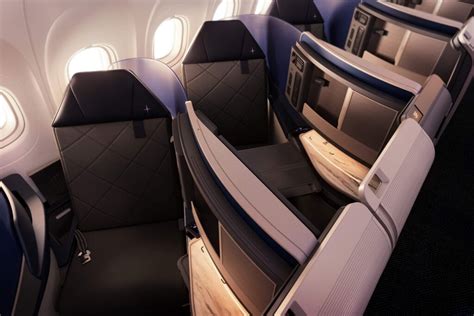
United’s planned configuration is also significant. The airline has configured the A321XLR with 20 Polaris business-class suites, 12 Premium Plus seats, and 34 Economy Plus seats, creating a premium-oriented narrowbody capable of replacing older widebodies on selected routes. If deliveries remain on schedule, United can gradually reshape its fleet while preserving widebody aircraft for markets where their capacity and range are essential.
Why LAX Is More Important Than Denver or More SFO Capacity
United has several possible gateways for Asia, but they are not interchangeable. San Francisco already has the strongest Pacific infrastructure, while Denver has a huge domestic network but a different local demand profile. Los Angeles combines a massive population base with international business demand and an unusually important Korean travel market, making it the strongest candidate for a new Seoul route.
A daily LAX-ICN flight would complement United’s existing Pacific network. Southern California passengers could avoid connecting through San Francisco, while travelers from across the western United States could connect through Los Angeles. That creates two potential revenue streams: local traffic and connecting passengers.
The route could also improve United’s competitive positioning at LAX. Airlines build network strength by creating enough relevant international choices to become a preferred carrier for a metropolitan market. Seoul is precisely the kind of destination that could make United’s Los Angeles operation more attractive to corporations with significant Asia-Pacific travel.
Still, network logic does not guarantee profitability. A 787-9 flying more than twelve hours each way requires strong yields and consistently high demand. United would be entering a market where a highly integrated competitor already has enormous scale, so matching the incumbent’s schedule and product would require substantial investment.
The Missing Korean Partner Is a Bigger Issue
Perhaps the greatest commercial weakness is United’s lack of a Korean home-market joint-venture partner. United’s transpacific strategy has benefited enormously from partnerships elsewhere in Asia, but an independent LAX-Seoul operation would not have the same domestic Korean feed that Korean Air enjoys through its own network.
That distinction becomes crucial when demand fluctuates. A joint venture can spread passengers across a wider network and coordinate schedules, making it easier to fill aircraft throughout the year. United would instead carry much of the risk itself. The airline could feed the route from its American network, but it would have fewer natural connections beyond Seoul without a comparable Korean partner.
Why Quietly Waiting May Be United’s Best Move
The absence of LAX-ICN from the 2027 announcement should not necessarily be interpreted as a rejection of the route. In fact, the silence may indicate that United wants to preserve flexibility until the regulatory situation becomes clearer. A premature launch would lock the airline into assumptions about slots, terminal access, aircraft availability, and competitive conditions that could change before the first flight operates.
United has little reason to rush for publicity. Its new A321XLR fleet can gradually free widebody aircraft for strategically important missions. If regulatory remedies produce high-quality Seoul access, United can announce LAX-ICN from a position of strength.
The next clues will come from regulatory filings, final slot divestitures, and United’s fleet allocation decisions heading into 2027. If the airline begins positioning a 787-9 for additional Los Angeles flying while suitable Incheon slots become available, the route speculation will become more credible. If neither development occurs, United may decide the economics do not justify entering without stronger structural support.
Los Angeles-Seoul Could Still Be Coming
United Airlines’ decision not to announce Los Angeles-Seoul during its major 2027 network reveal is notable precisely because the route makes so much strategic sense. LAX has the demand, United has the Pacific expertise, and the Korean Air-Asiana merger has created a regulatory environment in which new competition is unusually plausible. Yet those advantages do not eliminate the practical barriers surrounding slots, terminals, aircraft, partnerships, and profitability.
The quiet omission therefore looks less like a disappearance of the idea and more like a decision to wait for better conditions. United can use its A321XLR deliveries to release widebody capacity, monitor the final Korean regulatory remedies, and determine whether Incheon access will be commercially useful rather than merely technically available. If those pieces eventually align, Los Angeles-Seoul could become one of United’s most strategically significant transpacific additions.
For now, however, the route remains the flight United was expected to announce but quietly did not. That makes the eventual decision even more interesting. If United eventually puts LAX-ICN on the schedule, the story will not simply be about adding another nonstop flight to Asia; it will be about whether a major U.S. network carrier can use regulatory change, fleet flexibility, and Los Angeles demand to challenge one of the strongest transpacific partnerships in the market.