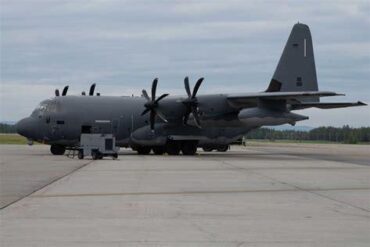
The US Air Force C-130J Super Hercules has demonstrated that it can operate in some of the harshest and least-developed environments without relying on the specialized ski equipment traditionally associated with the LC-130. During Exercise Northern Viking 2026 in Iceland, a standard wheeled C-130J landed on both a grassy field and a beach, showing how far the latest version of the Hercules has expanded the range of locations from which it can operate. The aircraft still cannot land on snow or ice like the ski-equipped LC-130, but the exercise offered a useful glimpse of how the Air Force’s newer transport fleet can take on missions once considered better suited to more specialized aircraft.
The demonstration is significant because Iceland occupies an increasingly important position between North America, Europe, the North Atlantic, and the Arctic. Its geography provides access to important maritime approaches while its northern location exposes aircraft and crews to cold temperatures, rapidly changing weather, limited infrastructure, and austere operating surfaces. For an airlift aircraft, those conditions are not simply inconveniences. They can determine whether an aircraft can safely land, unload cargo, and depart again. The ability to operate away from conventional runways therefore gives the C-130J Super Hercules considerable operational value.
The 37th Airlift Squadron participated in Northern Viking 2026 as part of US efforts to conduct specialized operations alongside NATO allies. During the exercise, its crews put the aircraft through conditions that required them to apply cold-weather procedures while operating far from the predictable environment of a major military airbase. Senior Airman Lydia Knight, a 37th Airlift Squadron loadmaster, described the aircraft as highly versatile and emphasized the value of actually practicing the procedures required in colder northern regions. That distinction matters: an aircraft’s theoretical capabilities mean little if crews cannot confidently employ them in the field.
C-130J Super Hercules Lands On An Icelandic Beach
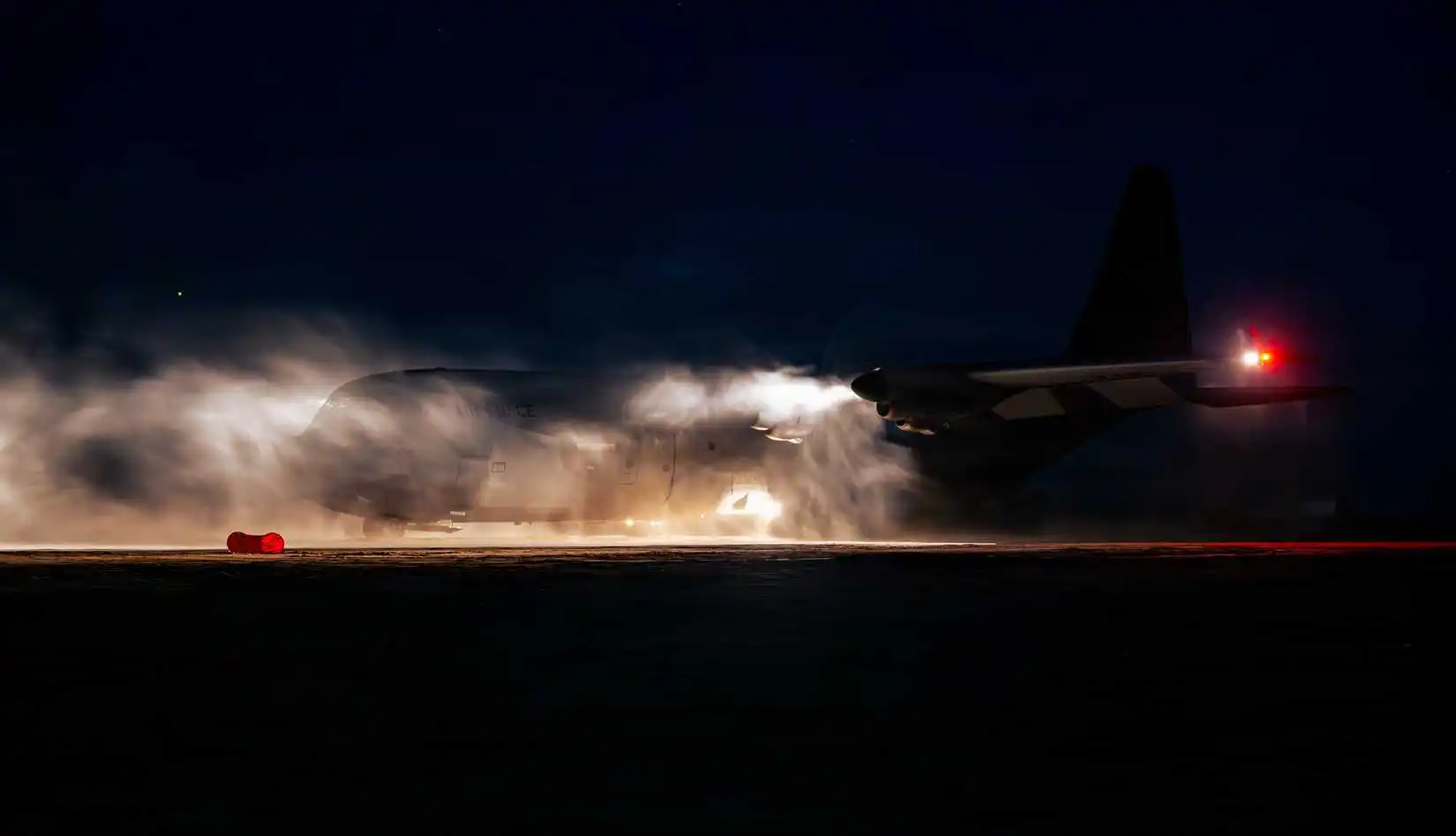
One of the most visually striking parts of the exercise was the decision to land the C-130J on a beach. The aircraft was also operated from a grass field, demonstrating the flexibility that makes the Hercules family one of the world’s most recognizable tactical airlifters. Neither environment resembles the prepared concrete or asphalt runway normally associated with large military transport aircraft. Instead, they represent the sort of improvised operating locations that can become important when conventional airfields are unavailable, damaged, overcrowded, or deliberately avoided.
For the crew, a beach landing involves considerably more than simply finding a sufficiently flat piece of ground. Surface condition, slope, loose material, obstacles, available landing distance, weather, and the ability to turn or reposition the aircraft all become important considerations. A transport aircraft carrying personnel and equipment must also be able to get back into the air after completing its mission. The C-130J’s ability to handle these conditions illustrates why the aircraft remains central to the Air Force’s efforts to distribute airlift capacity across a much larger number of potential operating locations.
The exercise also showed why the modern C-130J should not be viewed merely as an incremental replacement for the C-130H. Its digital cockpit, modern propulsion system, improved propellers, and increased performance give crews capabilities that are substantially different from those available on earlier Hercules variants. The aircraft retains the basic design philosophy that made the original Hercules so useful, but modern technology has expanded the practical envelope in which it can operate.
That versatility is particularly important in northern regions. Iceland can offer relatively undeveloped landing areas, cold temperatures, strong winds, and weather conditions that can change rapidly. Operating successfully in such an environment gives the Air Force experience that can potentially be applied elsewhere across the High North, where distances are enormous and conventional infrastructure is limited.
Why The LC-130 Skibird Is Still Different
Despite the impressive performance of the C-130J in Iceland, there is an important limitation. A standard wheeled C-130J cannot replace the LC-130 when the mission requires landing on snow or ice. That is the fundamental reason the Air Force is still investing in a new generation of ski-equipped Super Hercules.
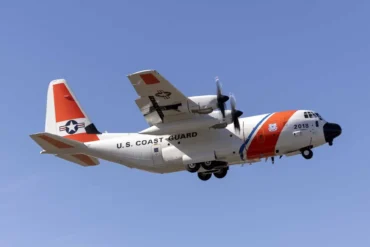
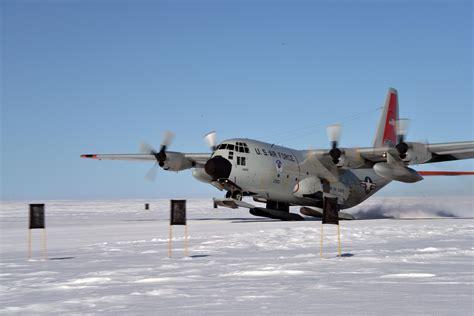
The LC-130H Skibird operated by the New York Air National Guard’s 109th Airlift Wing is uniquely configured for polar operations. The aircraft can operate from prepared and unprepared snow surfaces using its large ski system, allowing it to reach remote locations that conventional wheeled transports cannot access. The capability is particularly important in Greenland and Antarctica, where an ice runway may be the only practical landing surface available.
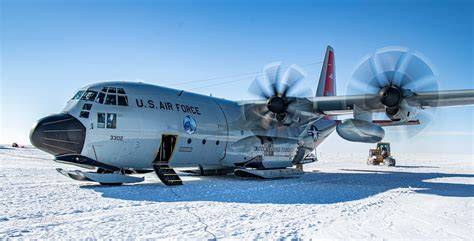
The 109th Airlift Wing has described itself as the only unit in the world operating ski-equipped LC-130 aircraft. Its Skibirds support missions in some of the most inhospitable areas where the United States maintains an airlift requirement. They have transported personnel and supplies in support of the National Science Foundation, including missions connected to remote scientific operations in Greenland and Antarctica.
Those missions demand specialized training. Members of the unit have trained on the Greenland ice cap at Kangerlussuaq, including through the Arctic Aircraft Recovery School, commonly known as the Kool School. The harsh environment provides crews with an opportunity to experience the conditions they may encounter during real-world polar missions before they are deployed to Antarctica. There is little room for experimentation once an aircraft is operating hundreds or thousands of miles from conventional support facilities.
The difference between the C-130J and LC-130 therefore comes down to more than simple aircraft performance. The standard Super Hercules has become remarkably capable on rough ground, grass, beaches, and other austere surfaces, but the LC-130 possesses a specialized landing system designed specifically for snow and ice. That makes the two aircraft complementary rather than interchangeable.
The US Air Force Is Finally Replacing The LC-130H
The Air Force’s decision to develop an LC-130J addresses the one major area where the standard C-130J remains unable to duplicate the Skibird’s capabilities. The existing LC-130H fleet is aging, with aircraft delivered between 1974 and 1996. By the middle of the 2020s, the need to replace those aircraft had become increasingly urgent as the Arctic gained strategic importance.
Funding began moving forward in 2025 and 2026. The effort included approximately $29 million in redirected research and development funding, followed by an additional $165 million allocation for procurement of an initial LC-130J aircraft and associated components. Taken together, the funding represented a major step toward recapitalizing a fleet whose mission is too specialized to simply disappear.
Senator Chuck Schumer has characterized the investment as important to maintaining US leadership in polar regions, particularly through the continued modernization of the aircraft operated by the New York Air National Guard. The plan calls for a new C-130J to be produced before undergoing additional modifications to become an LC-130J. That approach allows the Air Force to take advantage of the modern Super Hercules production line while adding the equipment required for polar operations.
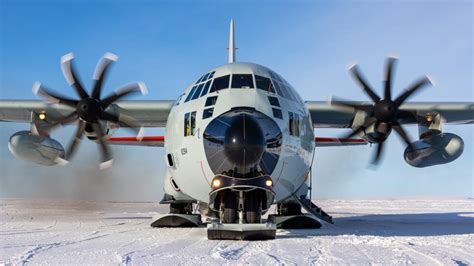
Government documents describing the program indicate that the LC-130J will incorporate post-production modifications including ski capabilities, thermal protection, and structural reinforcement. It will also move the specialized polar aircraft from the older analog C-130H architecture to the modern digital C-130J standard.
The modernization effort involves both Lockheed Martin and Sierra Nevada Corporation, with the companies expected to contribute to different elements of the polar modernization effort. The result should be an aircraft with the performance and avionics of the Super Hercules combined with the unique ability to operate from snow and ice.
More Power Makes The C-130J A Different Airlifter
One reason the C-130J can perform so effectively from austere surfaces is its propulsion system. The aircraft uses four Rolls-Royce AE 2100D3 turboprop engines driving six-bladed Dowty R391 composite scimitar propellers. Compared with older Hercules aircraft, this combination provides substantially more thrust and improved efficiency.
The increased power has practical consequences during takeoff. Depending on which legacy Hercules variant is being considered, the C-130J can offer roughly 21 to 29 percent more thrust and approximately a 40 percent shorter takeoff distance. In an austere environment, that difference can determine whether a particular landing area is operationally useful.
Shorter takeoff performance is especially valuable when an aircraft must operate from an improvised strip where runway length cannot be increased. A beach, grass field, or remote forward operating location may offer only a limited usable surface. More thrust gives crews greater flexibility while carrying the personnel, fuel, equipment, and supplies required for the mission.
This is why the C-130J is better understood as a modern tactical airlifter that happens to share the basic architecture of the original Hercules rather than simply an updated version of an old aircraft. Its greater performance allows the Air Force to use the platform across a broader range of environments without installing specialized equipment for every mission.
The Limits Of Wheeled Hercules Aircraft Were Already Visible
The importance of specialized landing systems was highlighted elsewhere in 2026 when MC-130J Commando II aircraft were involved in a recovery operation during Operation Epic Fury. Following the loss of an F-15E Strike Eagle over Iran, US forces dispatched a rescue package that included two MC-130Js to an austere forward airstrip.
The aircraft reportedly encountered extremely soft ground, with their wheels sinking into mud. Because they could not be recovered in time, the aircraft were ultimately destroyed to prevent them from being captured. The incident illustrated a basic reality of tactical airlift: an aircraft can have outstanding performance and still be defeated by the surface on which it must operate.
That lesson applies directly to Arctic operations. Grass, sand, gravel, and mud can present severe challenges, but snow and ice introduce an entirely different set of requirements. A ski-equipped LC-130 is specifically designed to distribute its weight over a much larger surface area and operate where a conventional landing gear arrangement would be unsuitable.
The C-130J’s growing ability to operate from austere terrain therefore does not make the LC-130 obsolete. Instead, it clarifies the dividing line between general austere-airfield capability and specialized polar capability.
Iceland Shows Where Agile Combat Employment Is Going
The Northern Viking exercise also fits into a much larger Air Force strategy known as Agile Combat Employment, or ACE. The basic idea is to avoid concentrating too much combat power at a small number of major airbases. Instead, aircraft should be capable of dispersing across numerous locations and continuing operations even when the primary bases are threatened.
The C-130J is particularly well suited to this concept because it can transport personnel, equipment, maintenance supplies, and other cargo while operating from relatively austere airfields. The same aircraft can therefore help establish and sustain dispersed operating locations rather than merely flying between large permanent bases.
The Air Force has already demonstrated similar concepts elsewhere in northern Europe. C-130Js have operated from a Swedish highway, showing how the aircraft can use unconventional infrastructure when required. Captain Ty Millsap of the 86th Airlift Wing explained that this creates a much larger collection of potential operating locations rather than forcing aircraft to depend on one major airbase.
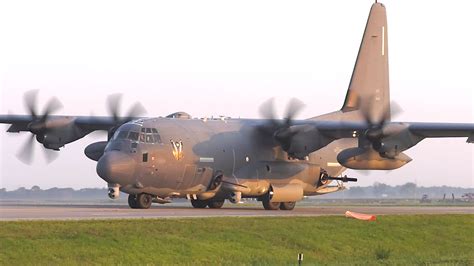
That concept becomes particularly important in the Indo-Pacific. Large American bases such as Andersen Air Force Base in Guam could become high-priority targets during a major conflict. Dispersing aircraft to smaller islands and less predictable locations can complicate an adversary’s targeting problem and make it harder to eliminate US airlift capacity in a single attack.
If conventional runways are damaged, the ability of C-130Js to use grass, sand, roads, and other surfaces could become even more important. The aircraft does not need every operating location to look like a traditional airbase. That flexibility is one of the reasons the Super Hercules remains so valuable despite its decades-old lineage.
The Arctic Is Becoming A More Important Military Operating Area
The significance of Northern Viking extends beyond a single exercise or aircraft type. The Arctic and High North are becoming increasingly important strategic regions, driven by changing accessibility, emerging maritime routes, natural resources, and growing military activity.
Iceland’s geographic position makes it particularly valuable. It sits between North America and Europe and close to important North Atlantic approaches. For NATO, that makes the island relevant to surveillance, logistics, maritime operations, reinforcement, and the movement of forces.
The United States therefore needs aircraft that can function effectively in northern environments without depending entirely on established infrastructure. The C-130J’s ability to operate from austere surfaces provides one layer of that capability, while the future LC-130J will provide the specialized snow-and-ice capability that standard aircraft cannot deliver.
The distinction is strategically useful. Not every Arctic mission requires skis, and fitting every transport aircraft for polar operations would impose unnecessary cost and complexity. Instead, the Air Force can employ large numbers of standard C-130Js for dispersed operations while maintaining a specialized LC-130 fleet for missions where snow and ice are unavoidable.
The New LC-130J Could Give The Skibird A Major Upgrade
The planned LC-130J could ultimately give the New York Air National Guard a much more capable aircraft without abandoning the unique mission that made the Skibird famous. The modern engines, propellers, digital avionics, and improved performance of the C-130J should make the new aircraft considerably more capable than the aging LC-130H.
One particularly interesting change is the expectation that the new LC-130J will not need the external rocket-assisted takeoff systems sometimes associated with the older aircraft. The additional power provided by the Super Hercules propulsion system should eliminate the need for that solution in normal operations.
That would simplify the aircraft while improving its overall performance. More importantly, it would give the 109th Airlift Wing a platform designed for the future rather than one increasingly dependent on maintaining decades-old technology.
The transition is expected to begin with a new C-130J entering production and then undergoing conversion into an LC-130J, with first deliveries projected around the end of the decade. Once operational, the aircraft should preserve America’s unique ability to move people and supplies onto remote polar surfaces while bringing the fleet into the modern Super Hercules era.
Why The Iceland Mission Matters
The most important message from Northern Viking 2026 is not that the C-130J has suddenly replaced the LC-130. It has not. A standard wheeled Super Hercules still cannot perform the full snow-and-ice mission of the Skibird.
What the Iceland deployment demonstrates is that the modern C-130J can cover a surprisingly large portion of the broader austere-airlift mission without specialized skis. A beach, grass field, highway, or damaged forward airstrip can all become potential operating locations when the aircraft, crew, and mission planning are properly matched to the environment.
That flexibility is increasingly valuable as the Air Force prepares for a future in which airbases may be contested and access to established infrastructure cannot be guaranteed. Iceland provides an ideal northern laboratory for that concept, while the planned LC-130J ensures that the United States will retain the specialized capability needed when conditions become too extreme for wheels.
In that sense, the two Hercules variants represent different pieces of the same strategy. The C-130J expands the number of places from which American airlift can operate, while the LC-130J will preserve access to the places where even that highly capable aircraft still needs skis. Together, they give the US Air Force and Air National Guard a far more flexible airlift toolkit for an era in which the Arctic, the North Atlantic, and dispersed operations are becoming increasingly important.