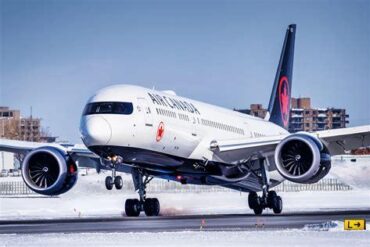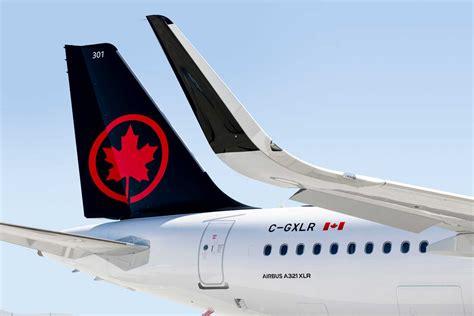
Air Canada has introduced another Airbus A321XLR on a transatlantic route, connecting Montréal–Trudeau International Airport with Lyon–Saint Exupéry Airport in France. The new service began on September 7 and is designed as a limited seasonal operation, with the narrowbody aircraft covering the route during a period when passenger demand is not strong enough to consistently justify a widebody.
The decision highlights how Air Canada is using the A321XLR to add flexibility to its long-haul network. Rather than maintaining a large aircraft on the Montréal–Lyon corridor throughout the year, the airline can match capacity more closely with seasonal demand. The aircraft will operate the route five times per week until October 22 before the Airbus A330 returns for the winter schedule.
The timing is particularly significant because the A321XLR gives Air Canada the ability to maintain a nonstop European connection during the shoulder season without sacrificing the economics of a larger widebody. The same strategy will return in spring, with the aircraft scheduled to operate between Montréal and Lyon five times weekly from late March through late April.
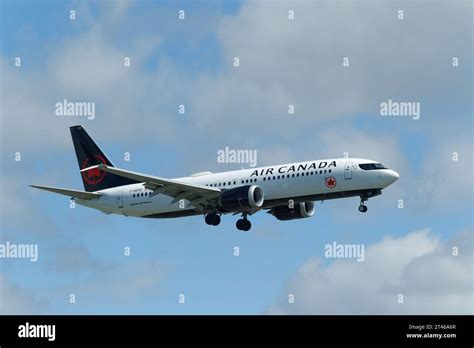
Air Canada A321XLR Adds a Nine-Hour Transatlantic Flight
The Montréal–Lyon service is operated as AC876 westbound and AC877 on the return. The overnight flight from Montréal departs at 10:15 p.m. and arrives in Lyon at 11:40 a.m. the following day. The scheduled flying time is approximately seven hours and 25 minutes, making it a relatively long but manageable mission for the A321XLR.
The return journey is considerably longer. AC877 departs Lyon at 12:55 p.m. and reaches Montréal at 3:40 p.m., with a scheduled duration of approximately eight hours and 45 minutes. Stronger westbound headwinds across the North Atlantic therefore push the return service close to the nine-hour mark.
That makes the route an interesting demonstration of the A321XLR’s long-range capabilities. The aircraft is technically a narrowbody, with passengers seated in a single-aisle cabin, but its extended range allows Air Canada to serve European destinations that previously required larger aircraft or were difficult to operate economically year-round.
A321XLR Replaces Air Canada A330 During the Shoulder Season
Air Canada’s move to the A321XLR represents a temporary reduction in capacity compared with the Airbus A330 previously assigned to the route. The change is primarily about matching supply with demand rather than abandoning the Montréal–Lyon market.
Lyon is an important French market for Air Canada because Montréal provides onward connections across the carrier’s Canadian and international network. The nonstop service also benefits from the cultural and linguistic ties between Quebec and France, creating a market that combines visiting-friends-and-relatives traffic, business travelers and leisure passengers.
Air Canada and Air Transat are currently the only long-haul airlines offering nonstop transatlantic flights between Lyon and North America. Their products target somewhat different segments, with Air Canada providing a more premium-oriented network service and Air Transat concentrating heavily on leisure demand.
The A321XLR’s smaller capacity allows Air Canada to remain in the market during periods when operating an A330 could be less attractive financially. It is an increasingly important role for the aircraft as airlines look for ways to maintain thinner long-haul routes without requiring hundreds of passengers on every departure.
Inside Air Canada’s 182-Seat A321XLR
Air Canada’s A321XLR assigned to the route features 182 seats, giving the aircraft a substantially different cabin experience from the airline’s larger widebodies. At the front are 14 Signature business-class seats arranged in a 1-1 configuration. These seats convert into lie-flat pods, providing a premium product more closely associated with long-haul widebody operations.
Behind the business-class cabin are 168 economy seats arranged in the standard 3-3 configuration. Economy passengers receive approximately 31 inches of seat pitch and five inches of recline. On a westbound flight approaching nine hours, the narrowbody environment will inevitably feel different from an A330 or Boeing 787, particularly for travelers who value the greater cabin space of a widebody.
Nevertheless, the aircraft’s ability to combine a premium cabin with long-range capability gives Air Canada considerable flexibility. It can preserve nonstop connectivity and a lie-flat business-class product while reducing the number of seats that must be filled.
Lyon Remains an Important Air Canada European Destination
The Montréal–Lyon route is part of a broader French network operated by Air Canada. The carrier maintains nonstop service from Canada to several French destinations, including Paris, Lyon, Nantes, Nice, Marseille and Toulouse. The A321XLR has already become a useful tool within this network, with Nantes and Toulouse also receiving the aircraft.
Air Canada’s growing A321XLR operation reflects a wider fleet strategy. The Montreal-based airline already has six A321XLRs in service across domestic and international routes and has placed an order for 30 aircraft of the type.
The Lyon deployment is therefore more than a short-term aircraft substitution. It demonstrates how Air Canada can use the A321XLR to fine-tune capacity across the Atlantic, opening or maintaining routes that may not support a widebody throughout the entire year.
For passengers, however, the key point is timing: the nine-hour nonstop A321XLR experience between Montréal and Lyon is limited. The aircraft operates only from September 7 through October 22 in the current fall schedule, with another short deployment planned in spring. Air Canada is then expected to return larger aircraft to the route, including the A330 in winter and Boeing 787-8 and 787-9 Dreamliners in the following summer schedule, although schedules remain subject to change.