Pilot pay has become one of the biggest labor-cost stories in commercial aviation, but the bill does not simply arrive as a higher airfare. When major airlines agree to substantially higher pilot salaries, the financial impact spreads through ticket pricing, ancillary fees, capacity decisions, profit margins, aircraft utilization, technology investments, and even the number of flights an airline chooses to operate.
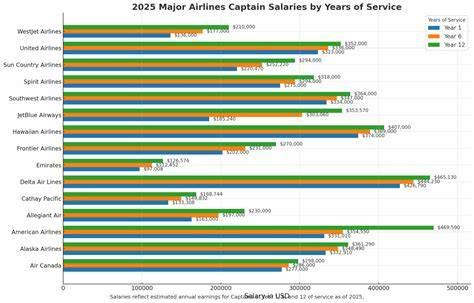
The issue became especially visible after Delta Air Lines, United Airlines, and American Airlines reached major pilot agreements in 2023. Collectively, the deals represented almost $27 billion in additional pilot compensation over their respective contract periods. Those agreements were negotiated during a powerful recovery for aviation, when airlines needed pilots, travel demand was rebounding, and experienced flight crews had considerable leverage.
That raises a deceptively simple question: Who actually pays for higher pilot salaries? The obvious answer is passengers. Yet the economics of an airline are far more complicated. Airlines cannot simply add a fixed surcharge to every ticket and assume customers will accept it. Instead, they must decide how much of the higher labor expense can be recovered through fares and fees while absorbing the remainder through operational efficiencies, lower margins, capacity adjustments, or other financial decisions.
How Pilot Raises Become an Airline Cost
A pilot raise starts as a labor expense on an airline’s books, but its consequences extend throughout the business. Labor is one of the largest recurring costs for US airlines, and pilot compensation is particularly significant because airlines require highly trained crews to operate every flight. A commercial aircraft cannot generate revenue simply by sitting at a gate, and it cannot depart without appropriately qualified pilots.
The financial effect is therefore connected to the airline’s entire operating schedule. If pilots receive higher salaries, an airline must account for those costs when planning routes, scheduling aircraft, forecasting revenue, and determining how many seats it needs to sell at particular price levels. The higher the labor bill, the more revenue the airline must generate to preserve its expected profitability.
Importantly, this does not mean every passenger automatically pays a specific amount toward a pilot’s salary. Airline economics operate at the network level. A profitable international route can help support weaker routes, while premium passengers can contribute disproportionately more revenue than travelers purchasing the cheapest available economy ticket. The cost of pilot raises is pooled across the airline’s business rather than attached neatly to individual tickets.
Why Airlines Cannot Simply Raise Every Fare
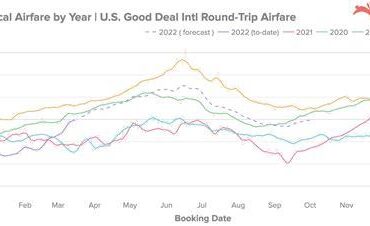
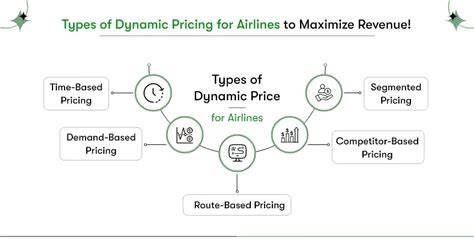
Airlines use sophisticated dynamic pricing systems to determine what customers pay. Instead of establishing one permanent price for every seat, carriers continuously adjust fares according to demand, competition, historical booking patterns, remaining inventory, and the pace at which seats are selling.
Systems from companies such as PROS, Sabre, Amadeus, and Lufthansa Systems support this increasingly data-driven approach. A flight that appears inexpensive on Monday can become significantly more expensive by Friday if bookings accelerate. Conversely, a flight with weak demand may see prices fall as departure approaches.
This creates an important limitation for airlines attempting to recover higher labor expenses. A carrier cannot simply announce that pilot wages have increased by 20% and increase every ticket by 20%. Passengers remain price-sensitive, competitors remain active, and empty seats produce no revenue.
If an airline prices a flight too aggressively, customers may move to another carrier. If that happens often enough, the airline could lose more revenue from lower passenger volumes than it gains from higher fares. Airlines therefore attempt to find the point where fares are high enough to support profitability but low enough to maintain demand.
The Real Role of Dynamic Pricing in Funding Higher Wages
Dynamic pricing provides airlines with a more subtle way to recover increased labor costs. Suppose a carrier knows that demand for a particular holiday weekend is exceptionally strong. Rather than applying the same percentage increase to every passenger, the airline can allow market demand to push fares higher on flights where customers are willing to pay more.
That approach can generate additional revenue without making every ticket visibly more expensive. A business traveler booking late may pay substantially more than a leisure traveler who purchased a ticket months earlier. A passenger requiring a specific departure time may also pay more because that flight provides greater value.
This is why airline ticket prices cannot be understood simply by looking at operating costs. Fuel, labor, aircraft ownership, maintenance, airport charges, distribution costs, and other expenses matter, but pricing ultimately reflects what customers are willing to pay for a particular seat at a particular moment.
Higher pilot wages become one factor inside that much larger calculation.
Labor Costs Are Larger Than Fuel Costs for US Airlines
The contrast between labor and fuel illustrates why pilot compensation deserves more attention. According to figures cited from Airlines for America, labor represented 34.9%, or $21.8 billion, of US carriers’ spending during the first quarter, while fuel represented 17.1%, or $10.7 billion.
The difference is substantial. US carriers spent roughly $11.1 billion more on labor than fuel during that period.
Separate Bureau of Transportation Statistics figures reinforce the same pattern. In the first quarter of 2026, domestic US airlines recorded approximately $17.3 billion in labor costs, equivalent to 36.9% of expenditure, compared with $7.4 billion in fuel costs, or 15.8%. International operations recorded $6.0 billion in labor costs, representing 38.7%, while fuel accounted for $3.5 billion, or 22.6%.
These figures help explain an apparent contradiction in airline economics. Fuel prices often receive more public attention than labor costs even though labor can represent a much larger share of expenditure.
Why Fuel Surcharges Feel More Immediate Than Pilot Raises
The difference largely comes down to predictability.
Fuel prices can move dramatically in a short period. Geopolitical events, supply disruptions, production decisions, and crude oil market movements can suddenly change the economics of operating an aircraft. Airlines may have to respond quickly because fuel is consumed every time an aircraft flies.
Pilot salaries are different. Major compensation increases normally emerge from lengthy negotiations between airline management and labor unions. Once an agreement is reached, the financial impact can often be forecast years in advance.
That predictability gives airlines more time to adjust. A carrier can incorporate contractual wage increases into its financial planning, fleet strategy, schedules, and revenue forecasts. A sudden fuel shock can force immediate action, while a pilot contract allows management to prepare for a known future expense.
This also explains why the passenger may not see a clearly identifiable “pilot raise” surcharge on a ticket. The cost can be incorporated gradually into the airline’s broader pricing and operational strategy.
Ancillary Revenue Gives Airlines Another Way to Recover Costs
Ticket revenue is only one source of money generated by passengers. Airlines increasingly rely on ancillary revenue, including checked baggage charges, seat selection, priority services, onboard connectivity, and other optional purchases.
This creates another mechanism for absorbing higher labor expenses.
Rather than dramatically increasing the headline fare, an airline can make relatively small adjustments across several revenue categories. A modest fare increase combined with higher seat-selection revenue, baggage income, premium boarding purchases, and other ancillary sales can produce a meaningful improvement in total revenue per passenger.
The strategy is particularly useful because customers do not all purchase the same products. A passenger traveling with a carry-on and choosing a standard seat may pay little beyond the base fare, while another traveler might pay for checked luggage, extra legroom, priority boarding, Wi-Fi, and a more flexible ticket.
The cost of higher pilot wages can therefore reach passengers indirectly through the broader airline revenue model rather than through the ticket alone.
Airlines Can Also Pay for Raises Themselves
There is another side to the equation that is often overlooked: shareholders and airline profits can absorb part of the increase.
If market conditions prevent an airline from raising fares sufficiently, management may accept lower margins. That does not mean the customer has escaped the cost entirely. Lower profits affect investors and can reduce the amount of cash available for dividends, share repurchases, debt reduction, or future investment.
Airlines can also search internally for savings. Technology investments may improve revenue management. Fleet simplification can reduce training and maintenance complexity. More efficient aircraft can lower operating costs. Outsourcing selected activities can reduce expenses where management believes outside providers can perform work more economically.
The objective is not necessarily to transfer every dollar of a pilot raise to passengers. It is to prevent the additional labor expense from damaging the airline’s overall financial performance.
Capacity Can Become a Hidden Response to Higher Labor Costs
One of the most important ways airlines manage rising costs is through capacity.
If operating additional flights becomes less attractive because the cost of doing so has increased, an airline can slow expansion, reduce frequencies, change aircraft assignments, or withdraw from weaker markets. The strategy can appear unrelated to pilot compensation, but labor costs are part of the calculation behind every scheduled flight.
Capacity decisions also influence ticket prices. If fewer seats are available while demand remains strong, airlines have greater pricing power. Reducing supply can therefore help an airline protect margins without applying an obvious surcharge to every passenger.
This dynamic was visible during periods of higher fuel costs as US airlines adjusted capacity to protect profitability. The same economic principle can apply when other major costs rise.
However, capacity reductions can create a secondary cost for travelers. Even if the fare itself does not rise dramatically, fewer flights may mean less convenient schedules, fewer nonstop options, or higher prices on the remaining departures.
Strong Travel Demand Makes Pilot Raises Easier to Fund
The timing of the 2023 pilot contracts was significant. Airlines were emerging from the disruption caused by the pandemic, travel demand had returned strongly, and carriers faced pressure to rebuild their networks.
At the same time, airlines were competing for qualified pilots. An aging workforce, industry expansion, global competition for experienced flight crews, and strong passenger demand strengthened pilots’ bargaining position.
For airlines, strong demand creates a crucial advantage. When customers continue booking flights despite higher prices, carriers have more flexibility to increase revenue without causing a major collapse in passenger volumes.
That does not mean passengers willingly volunteer to fund pilot salaries. Instead, the market creates conditions in which airlines can charge more while still filling aircraft.
Who Ultimately Pays for Pilot Raises?
The most accurate answer is everyone connected to the airline’s financial ecosystem.
Passengers can pay through higher base fares, more expensive optional services, or fewer available seats. Shareholders can pay through reduced profits. Airlines themselves can pay by finding operational efficiencies or accepting lower margins. In some cases, employees in other parts of the business may feel the consequences if management delays hiring, restructures operations, or redirects investment.
The effect is therefore distributed rather than concentrated.
For passengers, the most visible part is the airfare. Yet a pilot raise does not automatically translate into a fixed dollar amount added to every ticket. Airline pricing is too dynamic and the business model too interconnected for such a simple relationship.
A $10 increase in operating cost does not necessarily produce a $10 fare increase. Depending on demand, competition, aircraft capacity, and other revenue opportunities, the airline may recover more, less, or none of that amount directly from ticket prices.
The Bigger Picture Behind Pilot Pay and Airfares
The debate over pilot salaries ultimately reveals something fundamental about commercial aviation: airline pricing is an exercise in balancing costs, demand, capacity, and customer behavior simultaneously.
Pilot compensation is a major expense, particularly for US airlines, but it is only one part of a much larger financial equation. Airlines must pay for fuel, aircraft, maintenance, airport infrastructure, technology, insurance, distribution, and thousands of other operational requirements. At the same time, they must sell seats in a fiercely competitive marketplace where customers can compare fares almost instantly.
That is why the financial impact of pilot raises tends to appear gradually and in different forms. A passenger may see a higher fare on one route, a more expensive seat assignment on another, or fewer flight choices from a particular airport. Meanwhile, the airline may quietly offset some of the cost through better scheduling, stronger revenue management, fleet efficiency, or lower profit margins.
The real payer is therefore not simply the passenger. The burden is distributed throughout the airline’s economic system.
As long as demand for air travel remains strong and qualified pilots remain in short supply, airlines will continue facing pressure to provide competitive compensation. The challenge for carriers will be determining how to fund those salaries without pricing passengers out of the market or sacrificing the profitability needed to keep expanding their networks.
In the end, pilot raises do reach ticket prices—but rarely in a straight line. They move through a complicated chain of fares, fees, capacity, productivity, profits, and investment decisions. For travelers trying to understand why airfare keeps changing, that hidden chain is often more important than the salary number itself.