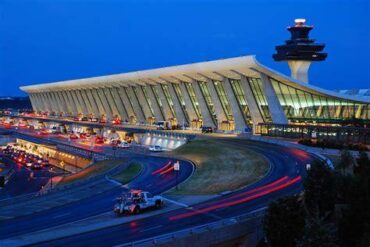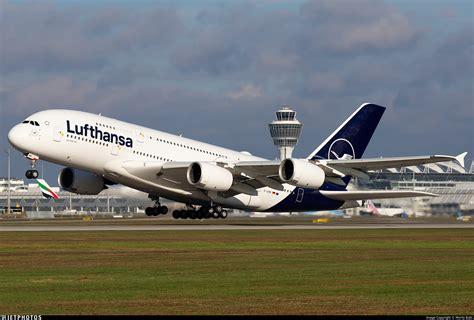
Thousands of travelers expected Lufthansa flight LH414 to complete its routine journey from Munich Airport (MUC) to Washington Dulles International Airport (IAD) on July 4. Instead, passengers aboard one of the airline’s flagship Airbus A380 aircraft found themselves arriving in an airport that almost never welcomes the European superjumbo. The unexpected landing at Hartsfield-Jackson Atlanta International Airport (ATL) quickly became one of the most talked-about aviation events of the holiday weekend, drawing attention from passengers, aviation enthusiasts, and planespotters alike.
The diversion was not caused by a technical malfunction or operational emergency. Instead, severe weather around the Washington metropolitan area disrupted arrivals into Dulles, forcing Lufthansa’s flight crew to seek an alternative airport capable of safely accommodating the world’s largest passenger aircraft. Although weather diversions are common during the busy summer thunderstorm season in the United States, diversions involving an Airbus A380 remain exceptionally uncommon because relatively few airports possess the infrastructure needed to handle the massive aircraft efficiently.
Lufthansa’s daily LH414 service normally departs Munich during the late afternoon before crossing the Atlantic and arriving in Washington roughly nine hours later. Historical flight tracking showed that the July 4 departure already left Munich more than an hour behind schedule, placing the aircraft into an increasingly challenging weather situation as it approached the U.S. East Coast. Instead of making a straightforward arrival, the aircraft spent valuable time maneuvering while conditions around Washington deteriorated.
Severe Weather Forced Lufthansa To Abandon Its Washington Arrival
As thunderstorms intensified near Washington Dulles, air traffic controllers and flight crews had to continuously reassess arrival options. According to passenger accounts shared online, the aircraft was initially expected to divert toward New York JFK, before the possibility of returning to Washington briefly emerged. Ultimately, neither option proved practical, leading the crew to continue farther south toward Atlanta.
The constantly changing routing produced an unusually winding flight path visible on public flight-tracking services. Rather than proceeding directly to its destination, the aircraft remained airborne while operational decisions evolved alongside changing weather conditions. Lufthansa later confirmed that adverse weather alone prompted the diversion and noted that 472 passengers were onboard the Airbus A380.
Although diversions inevitably inconvenience passengers, they also demonstrate the aviation industry’s emphasis on operational safety. Flight crews, dispatchers, and air traffic controllers routinely coordinate alternative plans whenever severe weather threatens safe arrivals, ensuring that aircraft never attempt unstable or unsafe approaches simply to maintain schedules.
Atlanta’s Limited A380 Infrastructure Created Another Delay
Landing safely represented only part of the challenge. Once the Lufthansa aircraft reached Atlanta shortly before 10:00 PM, passengers still could not immediately leave the aircraft.
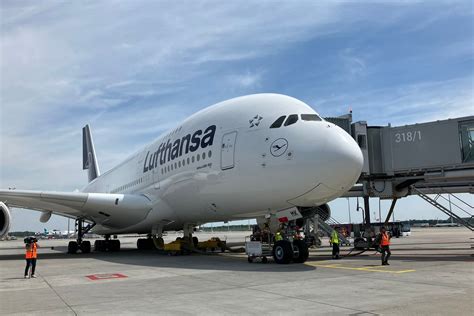
The airport possesses only one gate specifically configured to accommodate an Airbus A380. At the time of arrival, that gate was occupied by another widebody aircraft, forcing the Lufthansa superjumbo to remain parked away from the terminal while waiting for suitable gate access. As a result, passengers reportedly remained onboard for approximately another hour before finally disembarking.
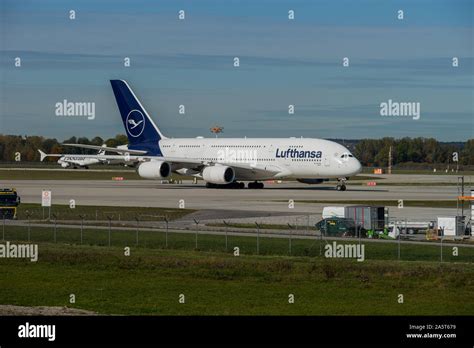
This unusual bottleneck highlighted why scheduled A380 operations remain rare in Atlanta. Unlike global hubs such as London Heathrow, Dubai, or Singapore, Atlanta has little regular demand for the superjumbo, making extensive A380 infrastructure economically unnecessary.
Why Passengers Could Not Simply Continue To Washington
Many travelers naturally expected the aircraft to resume its journey once weather conditions improved. However, the disruption had already exceeded normal operating limitations.
The following evening, the Airbus A380 departed Atlanta for Washington not as the continuation of LH414, but as a separate ferry flight. That operational decision meant passengers needed alternative travel arrangements instead of remaining onboard the aircraft.
Fortunately, Atlanta’s position as Delta Air Lines’ largest hub significantly reduced the disruption’s overall impact. Many affected passengers were rebooked onto Delta services bound for Washington or connected onward to their final destinations across the United States. Even so, the late-night arrival created logistical challenges, particularly as numerous nearby hotels had already reached capacity during the Independence Day holiday period.
An Extremely Rare Airbus A380 Visit To Atlanta
The diversion attracted significant attention because Atlanta almost never hosts scheduled Airbus A380 operations. Aviation enthusiasts gathered to photograph the aircraft, recognizing that opportunities to see the world’s largest passenger jet at the airport are exceptionally limited.
The rarity reflects Lufthansa’s own network planning. The German flag carrier does not operate scheduled Munich-Atlanta services. Instead, Atlanta receives Lufthansa flights almost exclusively from Frankfurt, with those services typically operated by the fuel-efficient Boeing 787-9 rather than the considerably larger A380.
Likewise, scheduled flights between Munich and Atlanta are currently operated only by Delta Air Lines, which uses the Boeing 767-400ER on the route. As a result, seeing Lufthansa’s flagship superjumbo parked at one of the world’s busiest airports represented an extraordinary operational anomaly rather than the beginning of a new service.
A Weather Diversion That Became An Aviation Talking Point
The July 4 diversion demonstrated how rapidly changing weather can reshape even the most carefully planned long-haul operations. What began as a routine transatlantic flight evolved into a rare appearance of Lufthansa’s Airbus A380 in Atlanta, followed by complex passenger rebooking, overnight logistics, and a ferry flight to Washington.
For the 472 passengers onboard, the experience undoubtedly extended an already long journey. For aviation observers, however, the unexpected arrival offered a memorable reminder that even in an era of sophisticated flight planning, nature continues to influence airline operations in remarkable ways.