The Subtle Safety Rule Most Passengers Overlook
At first glance, being asked to raise your window shade during taxi, takeoff, and landing can feel like a minor inconvenience—especially if you were hoping to nap or avoid the glare of sunlight at 35,000 feet. Yet this seemingly small instruction is rooted in a deeply intentional safety philosophy that governs modern aviation. Every movement inside an aircraft cabin during critical phases of flight is carefully designed to maximize survivability, reduce reaction time, and enhance situational awareness.
Air travel remains one of the safest modes of transportation, not because of luck, but because of layers upon layers of procedural discipline. Among these layers is the requirement—enforced by many airlines—that window shades remain open during the most crucial moments of a flight. It’s not about aesthetics, passenger comfort, or even courtesy. It’s about ensuring that in the rare event something goes wrong, every second saved can translate into lives saved.
Passengers often underestimate how quickly emergencies can escalate. A rejected takeoff, a runway excursion, or a sudden engine failure can unfold in seconds. In those moments, the cabin crew must instantly assess the situation and make decisions that affect hundreds of lives simultaneously. An open window shade becomes more than a convenience—it becomes a critical tool for survival.
Situational Awareness: Seeing Danger Before It Escalates
The most compelling reason airlines insist on open window shades is situational awareness. During taxi, takeoff, and landing, flight attendants rely heavily on visual cues from outside the aircraft to determine whether it is safe to initiate an evacuation.
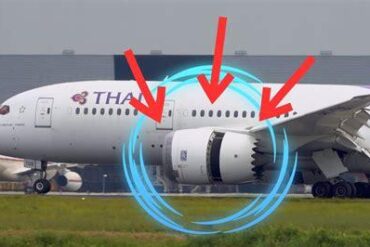
Imagine an emergency landing where one engine has caught fire. If a passenger seated near an overwing exit opens the hatch without knowing what’s outside, they could be stepping directly into flames or into the path of a spinning engine. With the window shade already open, both crew and passengers can instantly evaluate external hazards—fire, smoke, debris, water, or structural damage.
This immediate visibility eliminates hesitation. There’s no need to fumble with a shade or lose precious seconds trying to understand what lies beyond the exit. Instead, the crew can quickly decide whether to use or block a particular exit, redirecting passengers accordingly.
Airlines such as KLM and British Airways emphasize this in their operational procedures. Their training manuals explicitly instruct cabin crew to ensure visibility through windows during critical phases, reinforcing the idea that what you can see can save you.
Equally important is the perspective this provides to emergency responders outside the aircraft. Firefighters and rescue teams approaching the plane need to assess cabin conditions—whether there’s visible smoke, fire spread, or passenger congestion. Open shades allow them to see inside, improving their ability to act decisively and safely.
Faster Evacuations: Every Second Counts
Aviation safety regulations require that an aircraft be fully evacuated within 90 seconds, even with half the exits blocked. That’s not a generous window—it’s a race against time where confusion can be deadly.
When an evacuation begins, there is no room for hesitation. Passengers are often disoriented, frightened, and unfamiliar with emergency procedures. Open window shades remove one layer of uncertainty by providing instant visual context.
Instead of stepping blindly into the unknown, passengers can orient themselves quickly. They can see whether it’s daytime or nighttime, whether the aircraft is on land or water, and whether hazards are present. This reduces panic and allows for more orderly movement toward exits.
Consider how much time could be lost if multiple passengers had to open their shades during an emergency. Even a delay of five to ten seconds per row can cascade into a significant slowdown across a full cabin. In a situation where smoke may be filling the cabin or fire spreading externally, those seconds are not trivial—they are life-critical margins.
Eye Adjustment: Preparing for Sudden Environmental Changes
Another often overlooked factor is human vision adaptation. The human eye requires time—sometimes up to ten seconds or more—to adjust between light and dark environments. During an emergency evacuation, that delay can be dangerous.
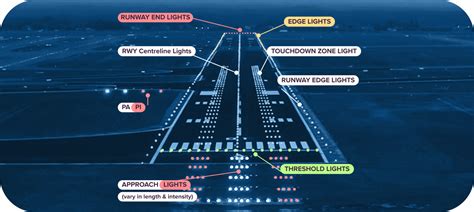
Airlines intentionally dim cabin lights during takeoff and landing for this exact reason. When combined with open window shades, passengers’ eyes gradually adapt to the external lighting conditions. If an evacuation becomes necessary, they are not suddenly blinded by bright sunlight or plunged into darkness.
This is particularly critical during night operations. If the cabin is brightly lit but the outside environment is pitch black, stepping out of the aircraft can momentarily impair vision. By keeping shades open and lights adjusted, airlines ensure passengers are visually prepared for immediate exit.
This principle aligns with broader aviation safety strategies: reduce surprises, minimize disorientation, and optimize human performance under stress.
Not a Law, But a Powerful Best Practice
Interestingly, keeping window shades open during critical phases of flight is not universally mandated by law. Authorities like the Federal Aviation Administration (FAA) allow airlines to decide whether to enforce this practice. However, major global organizations such as the International Air Transport Association (IATA) and the International Civil Aviation Organization (ICAO) strongly recommend it.
This creates a fascinating dynamic. While not legally required in all jurisdictions, the practice is widely adopted because it represents a proven safety enhancement. In regions like Europe, regulators such as EASA (European Union Aviation Safety Agency) are more aligned with enforcing or strongly encouraging this rule.
In the United States, policies have varied. For example, United Airlines briefly introduced a policy requesting passengers to keep window shades open, only to later reverse it in favor of consistency with other carriers. Despite these differences, the underlying rationale remains universally acknowledged: open shades improve safety outcomes.
It’s also worth noting that if a crew member instructs a passenger to open their shade, compliance is not optional. Ignoring such instructions can be considered a violation of aviation regulations, as crew authority during flight is absolute when it comes to safety.
Aircraft Design and the Role of Window Placement
Aircraft design further reinforces the importance of open window shades. On certain regional jets, such as the Bombardier CRJ series, some exit doors lack direct windows. In these cases, flight attendants rely on nearby passengers—often those seated in the front rows—to keep their shades open so they can borrow that line of sight.
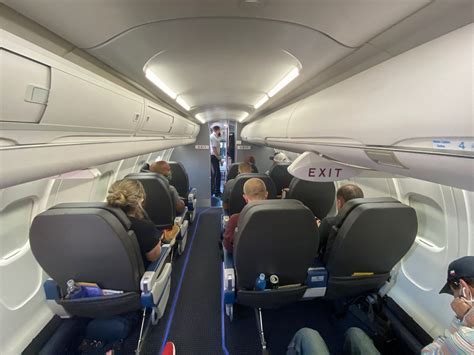
On larger aircraft like the Boeing 737 or Airbus A320, exit rows are positioned mid-cabin, and passengers seated there may be responsible for assisting in an evacuation. Window visibility becomes even more crucial, as these passengers must quickly determine whether it is safe to open the exit.
Modern aircraft have taken this concept even further. The Boeing 787 Dreamliner and Airbus A350 feature electronically dimmable windows instead of traditional shades. During critical phases of flight, cabin crew can override passenger controls to ensure windows remain transparent. This ensures consistent visibility across the cabin, regardless of passenger preference.
These design choices highlight a broader truth: aircraft are engineered not just for efficiency and comfort, but for rapid emergency response.
The Bigger Picture: Cabin Safety Is a System
Open window shades are just one piece of a much larger safety system that governs passenger behavior during flight. Every instruction given by the cabin crew—no matter how minor it may seem—is part of a carefully coordinated strategy.
Passengers are asked to:
- Fasten seatbelts securely
- Stow baggage properly
- Return tray tables to their upright position
- Adjust seatbacks to the upright position
- Remove headphones during critical phases
Each of these actions serves a specific purpose. Loose items can become dangerous projectiles during sudden deceleration. Reclined seats can block evacuation paths. Headphones can prevent passengers from hearing vital instructions.
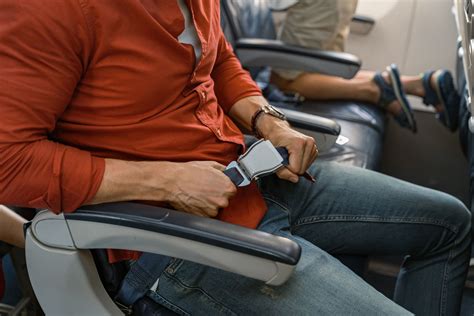
When viewed individually, these rules might feel excessive. But together, they create a controlled environment optimized for rapid evacuation and minimal injury. The open window shade fits seamlessly into this system, enhancing both visibility and coordination.
Why Some Airlines Don’t Enforce It Strictly
Given the clear safety benefits, it might seem puzzling that not all airlines enforce open window shade policies consistently. The reasons are less about disagreement and more about operational flexibility and passenger experience.
Different airlines balance safety recommendations with customer expectations. In highly competitive markets, even small inconveniences can influence passenger satisfaction. Some carriers choose to treat open shades as a recommended practice rather than a strict rule, especially on short domestic flights.
There’s also the challenge of consistency. When policies vary between airlines, passengers can become confused or resistant. Aligning procedures across fleets and regions is not always straightforward, particularly in countries where regulations are less prescriptive.
Despite these variations, the industry consensus remains clear: open window shades during critical phases enhance safety, even if enforcement differs.
A Small Action With Outsized Impact
What makes this practice particularly compelling is how simple yet powerful it is. Unlike complex safety systems that require advanced technology or extensive training, opening a window shade is effortless. Yet its impact during an emergency can be profound.
It improves visibility, speeds up decision-making, aids emergency responders, and prepares passengers for rapid evacuation. Few safety measures offer such a high return on such a minimal effort.
In aviation, safety is often about stacking small advantages. Each measure may seem minor on its own, but together they create a system that is remarkably resilient. The open window shade is a perfect example of this philosophy in action.
Final Thoughts: Trust the Process, Even in the Small Details
Air travel operates on a foundation of precision, discipline, and foresight. The request to open your window shade is not arbitrary—it’s a reflection of decades of safety evolution, informed by real-world incidents and continuous improvement.
Next time you hear that familiar instruction, it’s worth remembering that it’s not about compliance for its own sake. It’s about ensuring that if the unexpected happens, everyone on board has the best possible chance of getting out safely.
Sometimes, the smallest actions carry the greatest weight. And in the world of aviation, even a thin panel of plastic between you and the outside world can make all the difference.