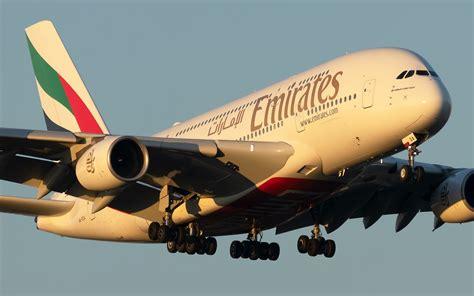
Flying long-haul is rarely just about reaching a destination; it is about how the hours in between are experienced. Among modern commercial aircraft, Emirates’ Airbus A380 has earned a reputation that goes beyond size or spectacle. It is widely regarded as one of the most comfortable and refined ways to travel long distances, not because of a single standout feature, but because of how design, space, and airline strategy converge into a coherent passenger experience.
The A380 entered service at a time when airlines were increasingly focused on efficiency and density. While many carriers later retreated from the superjumbo, Emirates doubled down, shaping its network and onboard product around the aircraft’s strengths. The result is not simply a larger airplane, but a fundamentally different way of moving people across continents—quieter, calmer, and less fatiguing, especially on flights lasting ten hours or more.
What sets the Emirates A380 apart is not novelty. It is refinement. From boarding flow to in-flight ambience, the aircraft consistently delivers a sense of ease that many travelers notice immediately, even before service begins. That feeling persists throughout the journey, subtly reshaping expectations of what long-haul flying can be.
A Cabin Environment That Feels Genuinely Different
One of the most immediate benefits of flying on Emirates’ Airbus A380 is the distinctly calm cabin atmosphere. This calmness is not accidental. It is the direct result of the aircraft’s immense internal volume, which allows space to be distributed more generously than on single-deck widebodies.
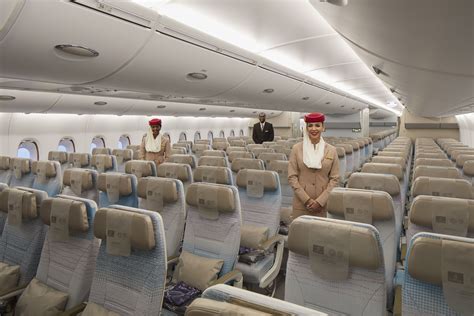
Wide aisles, expansive galleys, and open seating zones reduce congestion during boarding and throughout the flight. Passengers move more freely, queues feel shorter, and the cabin never seems to compress around peak moments such as meal services or lavatory access. Over long distances, these small reductions in friction add up, making the flight feel less tiring and more manageable.
Noise levels also play a crucial role. The A380’s four engines are positioned farther from the cabin, and the aircraft’s sheer mass dampens vibration. Combined with advanced sound insulation, this results in a noticeably quieter cruise, particularly on the upper deck. Many passengers describe the experience as smoother and more stable, even in moderate turbulence, reinforcing the perception of effortlessness that defines the A380.
Designed for Stability, Not Just Capacity
The Airbus A380 was engineered with stability and passenger comfort in mind at a time when global hubs were becoming increasingly congested. Its wingspan, weight, and flight characteristics create a ride that feels planted and composed at altitude. This physical stability translates directly into passenger comfort, especially during turbulence, where the aircraft’s mass helps absorb motion rather than amplify it.
Emirates leverages these design advantages by maintaining consistent cabin layouts across its A380 fleet. Familiarity reduces stress for frequent travelers, while thoughtful zoning minimizes unnecessary foot traffic. Premium cabins are largely isolated from economy movement, and even within economy, the sense of crowding is lower than on many smaller widebodies configured at high density.
Unlike aircraft where efficiency dictates compromise, the A380 gives Emirates room to prioritize how the cabin feels rather than how many seats can be added. This philosophy is evident not only in seat spacing, but in how passengers interact with the space around them for hours at a time.
The Upper Deck Advantage
Perhaps the most defining feature of the Emirates A380 experience is the full-length upper deck, a space that fundamentally changes the way premium travel feels. Reserved almost entirely for business and first class, the upper deck functions as a self-contained environment, separated from the flow of the main cabin below.
This vertical separation reduces noise and movement, creating a quieter, more private atmosphere. Boarding and disembarkation feel smoother, and in-flight interruptions are minimal. For many travelers, especially those accustomed to single-deck aircraft, the upper deck introduces a sense of exclusivity that is architectural rather than promotional.
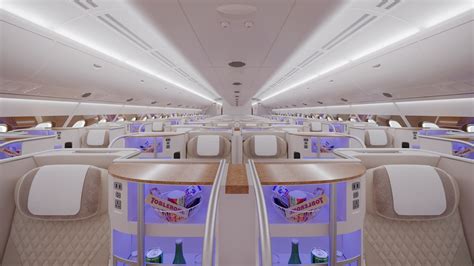
The upper deck is also where Emirates places some of its most recognizable features, including the onboard lounge. Rather than feeling gimmicky, this social space works because it is integrated naturally into the aircraft’s layout. Passengers can stretch, interact, or simply change scenery during ultra-long-haul flights, reinforcing the idea that the journey itself is part of the experience.
Premium Features That Feel Purpose-Built
In first class, the Emirates A380 showcases amenities that remain unmatched in commercial aviation. The onboard shower spa is not merely a headline feature; it is a practical luxury on flights spanning half a day or more. The ability to refresh before landing transforms arrival, particularly for business travelers moving directly into meetings or events.
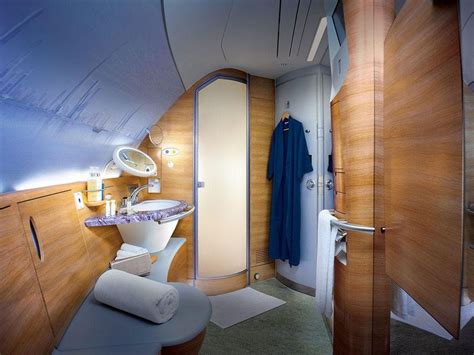
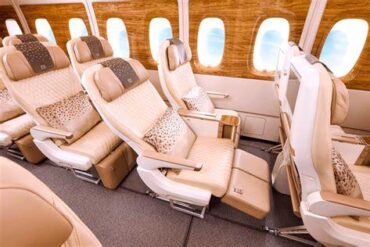
What makes these features compelling is how naturally they fit within the aircraft. They are not squeezed into corners or presented as novelties, but designed as integral elements of the cabin. This sense of purpose extends to lighting, storage, and personal space, all of which benefit from the A380’s scale.
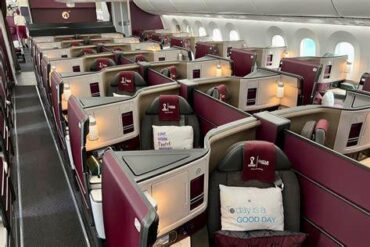
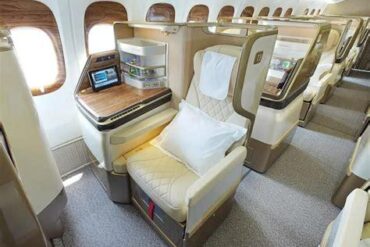
Business class passengers experience similar advantages. Seats feel less confined, aisles remain clear, and the cabin retains a relaxed rhythm even during busy service periods. Over time, this consistency shapes perception, making the A380 feel like a premium platform, not just a premium cabin.
Economy Class Without the Usual Fatigue
Even in economy class, where space constraints are most noticeable on long flights, the Emirates A380 delivers tangible benefits. The wider cabin allows for a layout that feels less oppressive, and higher ceilings reduce the sense of enclosure that often defines long-haul economy travel.
Movement within the cabin is easier, particularly on overnight flights when passengers frequently stand, stretch, or visit lavatories. Reduced noise and vibration contribute to better rest, and many travelers report feeling less exhausted upon arrival compared with similar flights on narrower aircraft.
While seat dimensions may be comparable to other modern widebodies, the overall environment elevates the experience. Comfort is not defined solely by centimeters of legroom, but by how the surrounding space behaves over time.
How the A380 Compares to Modern Widebodies
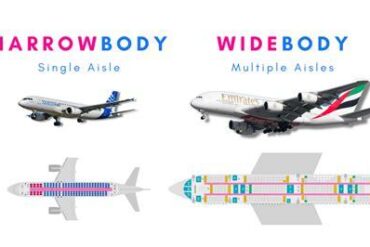
When measured purely by efficiency, aircraft like the Boeing 777 or Airbus A350 excel. They burn less fuel per seat and offer airlines greater flexibility. However, from a passenger perspective, these aircraft operate within tighter physical limits that inevitably influence cabin design.
On single-deck widebodies, all passengers share the same corridors. Boarding bottlenecks are common, and premium cabins experience constant through-traffic. Noise levels are higher, and service periods feel more intense due to compressed layouts.
The Emirates A380 avoids these issues through vertical separation and sheer volume. Cabins are distributed across two decks rather than stretched along one, reducing congestion and preserving calm. The difference is not always dramatic in short bursts, but over long sectors, it becomes unmistakable.
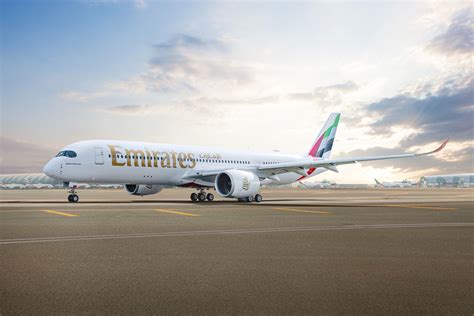
This is why many frequent flyers actively seek out A380-operated routes, even when seat products are similar across fleets. The aircraft itself becomes part of the value proposition.
Route Strategy and When the Benefits Matter Most
The advantages of flying on Emirates’ Airbus A380 are most pronounced on ultra-long-haul routes connecting major global hubs. Flights exceeding ten hours give the aircraft’s stability, space, and quietness time to make a meaningful impact.
On shorter long-haul or high-frequency regional routes, the differences narrow. In these scenarios, service quality and seat design play a larger role than cabin volume. Emirates’ modern twin-engine aircraft can deliver an excellent experience, even if they lack the A380’s distinctive atmosphere.
Availability also matters. The A380 is concentrated on high-demand markets, and aircraft substitutions can occur. Passengers specifically seeking the A380 experience benefit from checking aircraft assignments carefully, as the presence or absence of the superjumbo fundamentally changes the journey.
A Flagship That Aligns with Airline Philosophy
What ultimately makes the Emirates A380 so successful is alignment. The aircraft’s design philosophy matches Emirates’ focus on long-haul comfort, premium differentiation, and experiential travel. Rather than treating the A380 as a capacity tool, the airline has refined it into a flagship that embodies its brand.
This approach explains why Emirates continues to invest in the type while others have stepped away. The A380 works within Emirates’ network because routes, schedules, and cabin products are built around its strengths. It is not simply flown; it is curated.
Why the Experience Remains Unmatched
The benefits of flying on Emirates’ Airbus A380 are not rooted in novelty or nostalgia. They are grounded in how space, stability, and thoughtful design interact to create a calmer, more humane way to fly long distances. From reduced noise to smoother boarding, from upper-deck privacy to in-flight social spaces, the aircraft consistently delivers advantages that are felt rather than advertised.
For travelers who value comfort over efficiency metrics, and experience over pure functionality, the Emirates A380 remains one of the most compelling choices in commercial aviation. It proves that when aircraft design and airline strategy are aligned, flying can still feel special—even in an era dominated by optimization and cost control.
In a sky increasingly filled with similar-looking widebodies, the Emirates Airbus A380 stands apart not because it is the largest, but because it makes long-haul travel feel genuinely better.