The world’s most advanced bombers represent the pinnacle of aerospace engineering, strategic doctrine, and national power projection. These extraordinary aircraft—many of them operating far beyond the edge of civilian technological understanding—continue to define how major powers shape deterrence, conduct long-range strike operations, and ensure survivability in a contested, increasingly unpredictable battlespace. Although drones, hypersonic weapons, and satellite-driven targeting networks have transformed the nature of modern conflict, the manned strategic bomber remains an irreplaceable asset. It offers something no other platform can fully replicate: unmatched payload flexibility, global reach, and the adaptable mission sets needed for both nuclear and conventional operations.
Today’s top bombers are not merely carryovers from Cold War arsenals; they are continually modernized platforms engineered for decades of future relevance. Each aircraft reveals the strategic priorities of the nation that built it. Some emphasize payload and endurance, others rely on stealth and electronic warfare dominance, while a few depend on sheer speed to outfly and outperform emerging defenses. Together, these heavy aircraft form the backbone of nuclear triads, long-range strike wings, and expeditionary task forces worldwide.
As we survey the ten most capable bombers flying today, we uncover a landscape shaped by innovation, doctrine, and global ambition—a landscape where only the most technologically advanced and strategically versatile platforms earn a place.
Xi’an H-6K: China’s Evolving Conventional Strike Asset
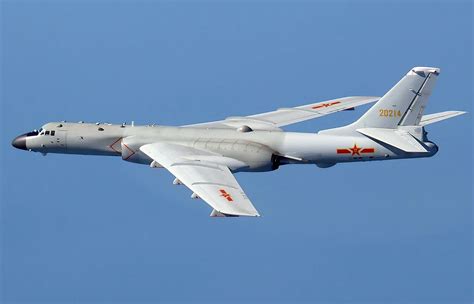
China’s Xi’an H-6K, though rooted in the Soviet Tu-16 design of the 1950s, has undergone one of the most dramatic transformations in modern military aviation. Redesigned from the forward fuselage to the cockpit fairing, stripped of its traditional glazed nose, and equipped with a completely rebuilt electronics suite, the H-6K stands today as a credible long-range missile carrier.
Its removal of the internal bomb bay allows additional fuel volume—an engineering choice that expanded combat radius to approximately 3,500 kilometers. Armed with KD-20 cruise missiles or YJ-12A anti-ship missiles, the aircraft excels in standoff attack missions rather than contested airspace penetration. The H-6K’s strategic relevance is tightly linked to China’s theater-level deterrence around Taiwan, Guam, and the Western Pacific.
Xi’an H-6N: Extending Reach Through Air-Launched Ballistic Power
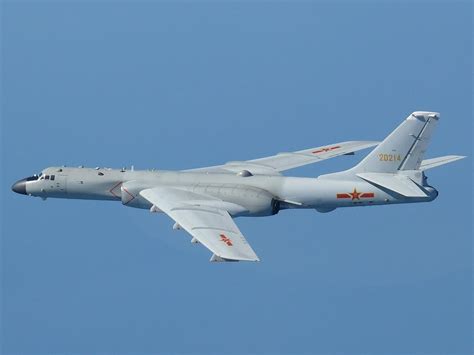
China’s H-6N represents the most ambitious evolution of the H-6 family. Its defining feature—a recessed belly hardpoint designed to carry a massive air-launched ballistic missile, often identified as the CH-AS-X-13—signals a dramatic shift toward long-range hypersonic and quasi-ballistic strike missions. Refueling capability further extends its operational envelope, enabling persistent patrols around the South China Sea.
Although the airframe remains constrained by the core structure of earlier models, the H-6N’s mission sets reflect a doctrinal transition: China is moving toward rapid-reaction, high-precision regional strike options that complicate the calculations of any rival operating in the Indo-Pacific. Its ranking remains modest due to structural heritage, yet its strategic importance grows every year.
Tupolev Tu-22M3 ‘Backfire C’: Russia’s High-Speed Maritime Hammer
The Tupolev Tu-22M3, a fast, variable-sweep bomber optimized for maritime strike, retains enormous relevance thanks to its speed and its arsenal of devastating anti-ship missiles. Capable of reaching nearly Mach 2, the Backfire can launch Kh-22 or Kh-32 missiles—among the fastest operational strike weapons on earth.
Originally designed to counter U.S. carrier battle groups, the Tu-22M3 now serves multiple roles, from maritime interdiction to land-attack missions using Kh-55 or Kh-101 cruise missiles. While modernization efforts have improved avionics and propulsion reliability, the aircraft’s aging structure and lack of stealth relegate it to heavily supported missions rather than independent penetration strikes.
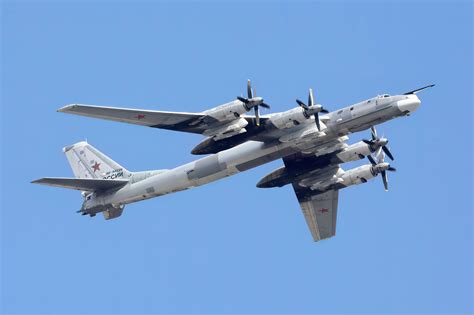
Tupolev Tu-95MS ‘Bear’: Endurance Without Equal
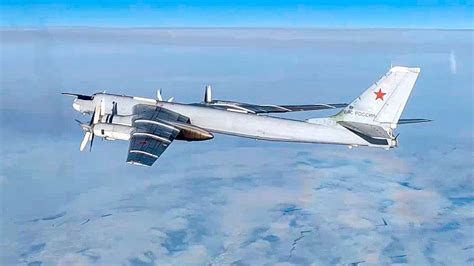
Distinctive for its counter-rotating turboprop engines and unmistakable acoustic signature, the Tu-95MS remains one of the world’s longest-serving bombers. Its extraordinary range and ability to carry Kh-55, Kh-555, or Kh-101 missiles make it an invaluable standoff weapon carrier for Russian strategic missions.
Its patrol routes stretch across the Arctic, Pacific, and North Atlantic, often signaling political intent more than imminent conflict. Though the Bear lacks the stealth or speed required to penetrate modern defenses, it excels in endurance, reliability, and strategic messaging—core elements of Russia’s nuclear deterrent posture.
Boeing B-52H Stratofortress: The Unmatched Veteran
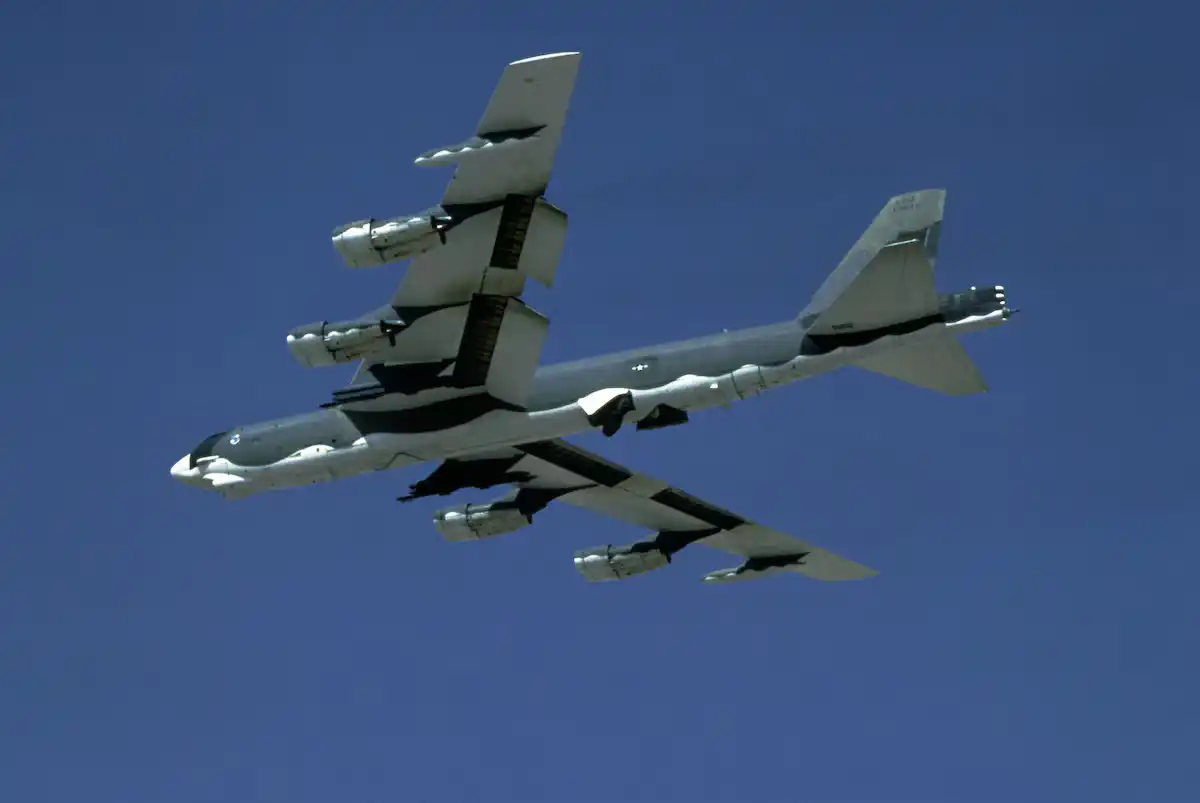
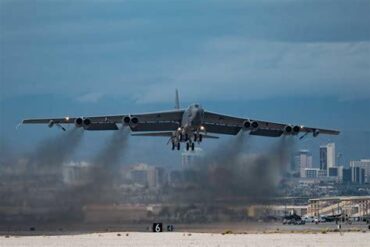
No bomber in history has demonstrated greater longevity or adaptability than the B-52H Stratofortress. For more than six decades, its vast payload capacity, intercontinental range, and compatibility with cutting-edge standoff weapons have kept it indispensable to U.S. global strike operations.
With the upcoming B-52J modernization—featuring new Rolls-Royce engines, advanced AESA radar, upgraded communication systems, and improved avionics—the Stratofortress is poised to remain operational into the 2050s. Its future includes hypersonic missile integration, transforming a mid-20th-century platform into a key component of 21st-century warfare.
Tupolev Tu-160M ‘Blackjack’: Russia’s Supersonic Heavyweight
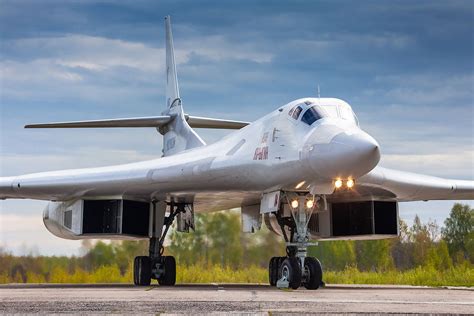
The Tu-160M, with its sleek white fuselage and variable-sweep wings, stands as Russia’s most powerful heavy bomber. Capable of sustained supersonic flight, equipped with modern NK-32-02 engines, and integrated with advanced cruise missile systems, the Blackjack represents Russia’s premium nuclear delivery platform.
Recent modernization revitalizes its strategic role: improved avionics, cockpit systems, and renewed production capacity at Kazan underscore Russia’s commitment to maintaining a high-speed strategic bomber fleet. Although it lacks stealth shaping, its performance envelope—speed, range, and payload—secures its position as one of the world’s most formidable non-stealth bombers.
Boeing B-1B Lancer: America’s Swift Conventional Strike Force
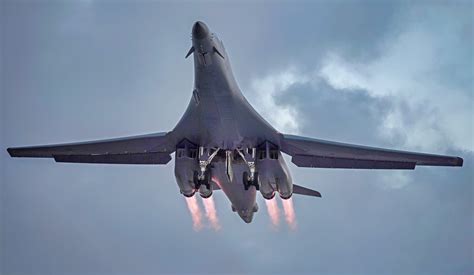
The B-1B Lancer, often called the “Bone,” remains the fastest bomber in operational service. Originally conceived for nuclear missions, it was repurposed for low-level penetration and heavy conventional strike roles, supported by terrain-following radar and high-performance engines.
Capable of exceeding Mach 1.2 at sea level, equipped with cavernous internal weapon bays, and undergoing continuous upgrades to integrate hypersonic weapons, the B-1B remains a central pillar of U.S. global conventional airpower. Its adaptability ensures that even in the age of stealth, speed still defines strategic value in certain mission profiles.
Xi’an H-20: China’s Long-Awaited Stealth Breakthrough
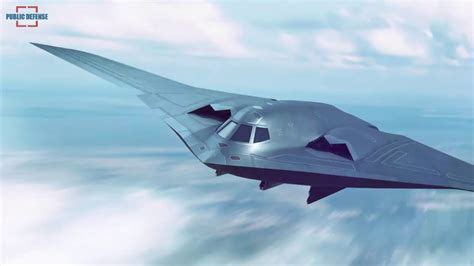
China’s H-20 marks a historic shift: the nation’s first true stealth strategic bomber. Expected to feature a flying-wing design, extensive low-observable materials, and long-range strike capability, the H-20 will transform China’s airpower posture from regional to global.
While final specifications remain classified, analysts anticipate intercontinental performance, substantial internal payload capacity, modern sensor fusion, and compatibility with next-generation standoff missiles. The H-20 signals China’s intention to compete directly with U.S. stealth platforms and reshape strategic balances in the Pacific and beyond.
Northrop Grumman B-2 Spirit: The Stealth Icon
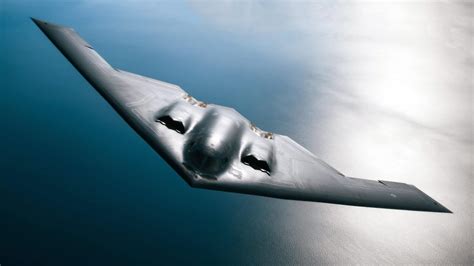
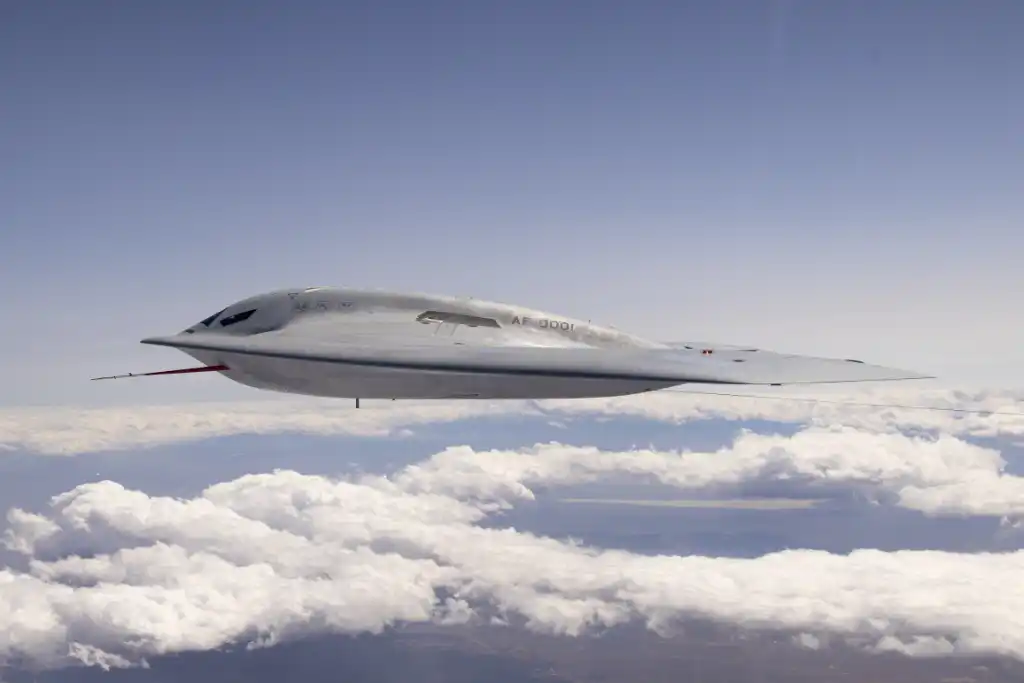
The B-2 Spirit remains the most elegant demonstration of stealth engineering ever fielded. Its flying-wing configuration, radar-absorbent materials, and precision-strike capability allow it to bypass layered defense systems that would neutralize conventional aircraft.
Operational since the late 1990s, the B-2 has undergone deep modernization, including upgraded defensive management systems, advanced communications, and improved radar functionality. Able to deliver both nuclear and conventional payloads—including the massive GBU-57 bunker buster—the Spirit remains unmatched in penetrating the world’s most heavily defended airspace.
Northrop Grumman B-21 Raider: Defining the Future of Global Strike
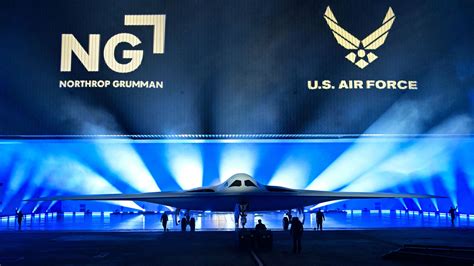
At the apex of modern bomber development stands the B-21 Raider, the newest and most advanced stealth aircraft ever constructed. Designed through digital engineering principles, the Raider embodies modularity, maintainability, and rapid upgrade cycles—features that ensure adaptability against emerging threats like advanced integrated air-defense systems and electronic warfare environments.
Its stealth characteristics surpass previous generations, while its open architecture enables seamless integration of new weapons, sensors, and mission systems. Expected to operate in both manned and unmanned modes, the B-21 is not merely a bomber but a strategic networked sensor node capable of supporting joint and allied operations.
The Raider’s projected fleet size far exceeds that of the B-2, ensuring that stealth bombing—once limited to a small elite force—becomes a scalable backbone of U.S. airpower for decades to come.
The Strategic Significance of Modern Bombers
The continued investment in bomber fleets across the United States, China, and Russia underscores a critical truth: global strike capability remains a cornerstone of national defense strategy. While ballistic missiles and unmanned systems play crucial roles, bombers offer unmatched operational flexibility:
- They can be recalled after launch—unlike ballistic weapons.
- They can carry diverse payloads, from precision-guided bombs to hypersonic missiles.
- They allow visible displays of power through long-duration patrols.
- They serve as airborne command and sensing platforms in networked battlespaces.
Bombers also enable a level of strategic ambiguity; adversaries must always account for their unpredictable flight paths, variable loadouts, and capacity for both conventional and nuclear missions.
Technology, Doctrine, and the Future of Aerial Power
As nations modernize their bomber fleets, a convergence emerges between stealth, digital architecture, and long-range precision weaponry. The platforms topping this list—particularly the B-21 Raider and the anticipated H-20—represent more than aircraft. They embody a shift toward systems designed for contested environments saturated with radar arrays, cyber warfare, electronic interference, and satellite-based detection.
The future bomber will not rely solely on its own attributes. Instead, it will form part of a broader kill-web: a network of space-based sensors, unmanned aircraft, long-range missiles, and joint command systems. Within this evolving ecosystem, strategic bombers remain the decisive long-range fist behind national policy.
Conclusion: The Modern Bomber as a Symbol of Strategic Resolve
The ten aircraft surveyed here illustrate a world where technological ambition and geopolitical necessity fuel continuous innovation. From the venerable B-52 to the revolutionary B-21 Raider, from Russia’s supersonic Tu-160M to China’s emerging H-20, bombers remain essential instruments of deterrence, influence, and combat capability.
They carry not only ordnance but also the weight of national credibility. In the decades ahead, these platforms will define how nations project power, protect their interests, and shape the strategic environment across land, sea, air, and space.
Their dominance today is not merely historical—it is a blueprint for the future of global conflict and the evolving architecture of national defense.