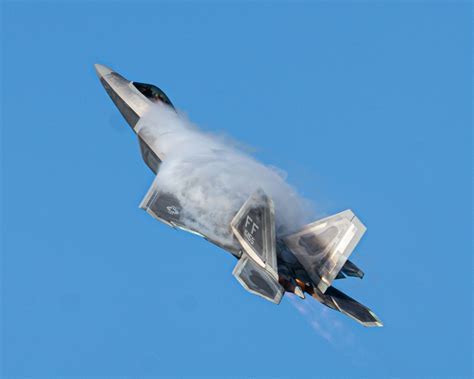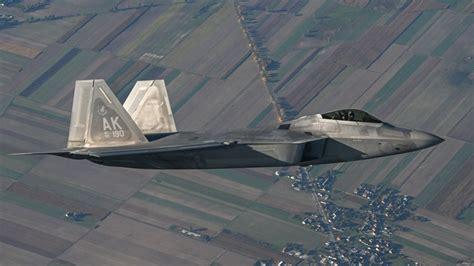
The Lockheed Martin F-22 Raptor is more than just a fifth-generation stealth fighter—it is the embodiment of American aerospace supremacy. Designed during the Cold War as the ultimate air superiority aircraft, the F-22 was envisioned to outclass any future adversary in speed, agility, stealth, and firepower. Yet despite its unmatched capabilities, the F-22 has been deliberately banned from being sold to any foreign nation—a rare move in the global arms industry.
A Technological Masterpiece With No Export Path
When the F-22 Raptor entered service in 2005, it introduced a new standard for what a fifth-generation fighter could achieve. The aircraft combined stealth technology, supercruise capabilities, and sensor fusion in a way that no other fighter had done before. With the ability to detect and destroy threats before being seen, it swiftly earned the reputation of being the most lethal air dominance fighter in existence.
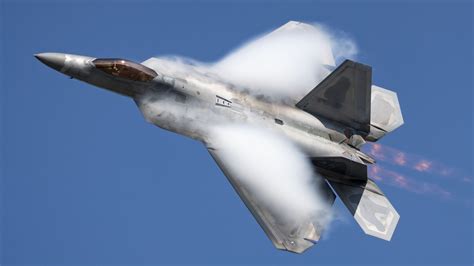
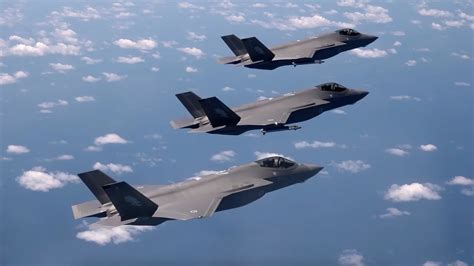
Unlike the F-35 Lightning II, which was developed with international partners and intended for export, the F-22 was designed as a U.S.-only weapon system. Its role was to ensure American aerial superiority far into the 21st century. Built to counter potential adversaries like Russia and China, the Raptor was intended to fight and win in a world where stealth and first-strike capabilities were paramount.
Why the U.S. Congress Banned F-22 Exports
The ban on exporting the F-22 was not a result of chance or oversight. In 1998, the U.S. Congress codified into law—via the Defense Appropriations Act—that no F-22 Raptors could be sold to foreign entities. This decision was driven by national security concerns, primarily over the aircraft’s classified technologies.
The F-22 contains cutting-edge systems including advanced radar-absorbent materials, classified avionics, low-probability-of-intercept radar, and a complex sensor fusion suite that provides unprecedented situational awareness. U.S. defense officials feared that even selling to close allies like Japan or Israel could inadvertently risk these secrets falling into adversarial hands through espionage, reverse engineering, or battlefield capture.
Allies’ Interest—and Washington’s Refusal
Nations such as Australia, Japan, and Israel expressed repeated interest in purchasing the Raptor. These countries are some of the United States’ closest strategic allies, already trusted with top-tier platforms like the F-15, F/A-18, and the F-35. Yet despite the demand and the strategic alignment, the U.S. never wavered in its stance.
This decision was not without economic consequences. Without foreign buyers, the unit cost of each F-22 skyrocketed. The U.S. originally planned to acquire 750 Raptors. Ultimately, due to post-Cold War budget cuts and shifting focus toward counterinsurgency operations, only 187 were produced, with just 183 remaining in service today after some were lost in accidents. Furthermore, 32 of these are non-combat training variants. The lack of foreign orders meant no economies of scale, leading to an early closure of the production line.
The Stealth Dilemma: Security vs. Sustainability
Exporting high-tech fighters is a balancing act between strategic reach and operational security. The F-22, as an air dominance platform, was built with future peer conflict in mind. Allowing even allies to operate it could present exposure risks. Once exported, the U.S. would lose control over how and where the aircraft is flown.
There’s also the risk of technological exploitation. Adversaries like Russia and China are known to target allied networks and military systems to extract sensitive data. Even the best cybersecurity and operational security cannot guarantee total immunity. For the U.S., the only guaranteed way to keep the F-22’s secrets safe was to keep it exclusively American.
The Cost of Exclusivity: Strategic and Economic Trade-Offs
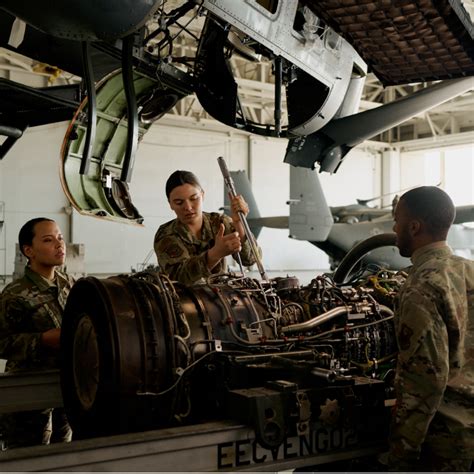
Although protecting sensitive technologies was a strategic priority, the export ban significantly impacted the F-22’s viability. Without international orders to help offset costs and sustain production, the program became too expensive to continue. Production ceased in 2011, and today, sustaining the small Raptor fleet is increasingly difficult due to supply chain challenges and diminishing spare parts.
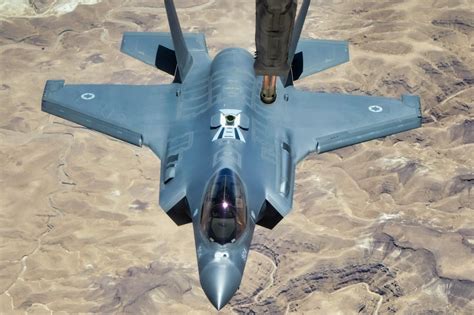
In contrast, the F-35’s export-driven model has ensured global production longevity. The program has over a dozen partner nations, with hundreds of aircraft delivered worldwide. By allowing allies to help finance and field the aircraft, the F-35 has become not only a strategic asset but also an economic engine. The same could never be said for the Raptor.
F-22 vs. F-35: Different Paths, Different Outcomes
While both aircraft are fifth-generation fighters, they serve different roles. The F-22 is optimized for air superiority, able to engage and destroy enemy aircraft before being seen. The F-35, on the other hand, is a multi-role platform, equally adept at strike missions, electronic warfare, and intelligence gathering. Its modular design and software-driven upgrades make it more adaptable to modern battlefield demands.
For allies that wanted the sheer aerial dominance of the Raptor, the F-35 offered a more flexible and politically viable alternative. Israel, for example, used the F-35 in penetration operations against Iranian S-300 air defense systems, showcasing its stealth and first-strike capabilities. Although the F-35 may not match the Raptor in raw dogfighting ability, its integrated systems and multirole versatility make it a more practical choice for most nations.
Historical Precedents: U.S. Export Policy on Fighters
The U.S. has a long history of restricting access to its most advanced fighters:
- F-16 Fighting Falcon: Initially restricted from sale to Latin America, it is now the most widely exported U.S. fighter.
- F-15 Eagle: Sales were once limited to NATO nations and key allies. Eventually, countries like Japan, Saudi Arabia, and Israel received the aircraft.
- F/A-18 Hornet: Exported in limited numbers, with Australia being the only operator of the EA-18G Growler electronic warfare variant.
Export restrictions tend to loosen over time as technology matures. However, the F-22 is unique in that its export ban has never been lifted, despite considerable international demand.
Why the F-22 Will Likely Never Be Exported
Even if Congress were to reverse the export ban, practical challenges remain. The production line is dismantled. The supplier ecosystem is gone. Rebuilding would be prohibitively expensive. Moreover, the aircraft’s design is now two decades old, and the next-generation NGAD (Next Generation Air Dominance) platform is on the horizon. In an era of drone warfare and networked combat, retrofitting the F-22 for current missions would be inefficient.
There is also a symbolic aspect: the F-22 was designed to be a pure symbol of American military dominance, a capability so potent it must remain untouchable by anyone else. Its exclusivity reinforces U.S. power projection. Letting that go, even for billions in revenue, could undermine that image.
Legacy of the Raptor and the Road Ahead
Today, the F-22 remains the most lethal air-to-air combat aircraft ever built. Despite its limited numbers, it continues to serve as a cornerstone of the U.S. Air Force’s deterrence strategy. It is frequently deployed to hotspots in the Pacific and Europe, signaling American resolve and technological supremacy.
While the world has moved on with platforms like the F-35, Russia’s Su-57, and China’s J-20, none have yet matched the Raptor’s stealth, agility, and kill ratio. Its role as the apex predator of the skies is undisputed—and perhaps that’s precisely why it was never for sale.