
American Airlines has quietly removed one of its longest-standing transatlantic routes, ending plans to resume service between Miami International Airport (MIA) and Paris Charles de Gaulle (CDG). The decision marks a notable shift in the carrier’s European strategy and reduces its winter presence from its crucial Florida hub. While American remains a significant transatlantic player, the cancellation highlights how competitive pressure and evolving network priorities are reshaping airline long-haul planning.
For decades, the Miami–Paris corridor served as an important connection between South Florida and one of Europe’s largest aviation hubs. According to data from the U.S. Department of Transportation, American Airlines had operated the route since at least 1992, maintaining daily year-round flights for many years before the global aviation shutdown in early 2020. The route once symbolized American’s ambition to link its Latin America gateway with major European capitals.
After international travel rebounded, however, the service never fully regained its previous strength. Instead of returning as a permanent route, the airline brought it back only as a seasonal winter operation beginning in late 2022. Flights typically ran during the colder months when leisure demand from Europe to Florida peaks, reflecting a more cautious deployment of widebody aircraft across American’s network.
The route’s most recent chapter ended on March 27, 2026, when the final scheduled American Airlines flight departed Miami for Paris. The airline had originally planned to restart the service on December 17, 2026, just ahead of the Christmas travel surge. Those plans have now vanished from scheduling systems such as Cirium Diio and OAG, confirming that the route will not return.
The Aircraft and Schedule That Never Returned
American Airlines primarily assigned the Boeing 787-8 Dreamliner to the Miami–Paris service in its final seasons. With 234 seats, the 787-8 is the airline’s smallest widebody aircraft, often used on thinner long-haul routes where demand does not justify larger jets like the 777-300ER.
Before the cancellation, the planned winter schedule was designed for maximum connectivity. Flights were set to depart Miami at 7:35 p.m., arriving in Paris at 10:15 a.m. the following day. The return service would leave Charles de Gaulle at 9:35 a.m., landing back in Miami at 1:50 p.m. local time. Such timing allowed convenient connections through American’s Miami hub to destinations across Latin America and the Caribbean, historically a key advantage for the airline.
Despite the strategic logic, the numbers hinted that the route was struggling to outperform other transatlantic options.
Passenger Demand and Performance on the Route
Between December 2024 and November 2025, American Airlines transported 53,092 round-trip passengers on the Miami–Paris route. Because the service operated only during winter months, the total still represents a respectable flow of travelers between the two cities.
Yet within American’s Miami-to-Europe network, Paris ranked as the least trafficked destination. The airline’s other European routes from the hub included Barcelona, London Heathrow, Madrid, and Rome Fiumicino, all of which performed slightly better or delivered stronger strategic value.

Load factors provide another piece of the puzzle. Across American’s Miami–Europe network, aircraft averaged an 86.5% seat occupancy rate. The Paris route achieved 83.2%, placing it below the network average. Interestingly, even London Heathrow, typically one of the busiest transatlantic markets, posted a slightly lower load factor at 81.8%.
Load factor alone never tells the full story. Airlines evaluate routes based on yield, cargo demand, competitive pressure, and aircraft utilization. A flight can depart nearly full yet still struggle financially if fares are too low or operating costs remain high.
Competition on the Miami–Paris Market
Even without American Airlines, travelers will continue to see strong capacity between South Florida and Paris. Air France maintains a powerful presence on the route with two daily flights from Paris Charles de Gaulle to Miami, leveraging its global SkyTeam network and strong European connectivity.
Meanwhile, French low-cost long-haul carrier French bee operates three weekly flights between Paris Orly and Miami, offering lower fares that appeal to leisure travelers. This combination of full-service and low-cost competition likely intensified pressure on American’s seasonal operation.
A Smaller Miami–Europe Network Ahead
The removal of Paris reflects a broader shift in American Airlines’ European schedule from Miami. Looking ahead to January 2027, the airline plans to operate 24 weekly departures from Miami to Europe, a sharp drop from 31 weekly flights in January 2026. That represents a 23% reduction in transatlantic capacity from the hub.
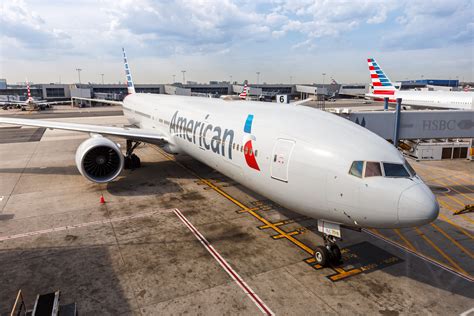
The remaining network will focus on three core destinations:
- London Heathrow – 10 weekly flights using Boeing 777-200ER and 777-300ER
- Barcelona – daily service with the Boeing 787-8
- Madrid – daily flights operated by the 777-200ER
Historically, the airline offered far more service. In January 2020, for example, American scheduled 42 weekly departures from Miami to Europe, including additional Heathrow flights and a now-defunct route to Milan Malpensa. That Italian service ended in March 2020 but returned later as a summer seasonal route in 2026.
The new schedule therefore represents the smallest winter transatlantic offering from Miami since 2011, excluding the extraordinary pandemic years.
American Airlines still maintains a powerful global network, yet the disappearance of the Miami–Paris link shows how modern airline strategy favors precision over presence. Aircraft are increasingly deployed where margins, partnerships, and demand align most strongly. In an era of tight fleet availability and intense competition, even routes with three decades of history can quietly fade from the map.