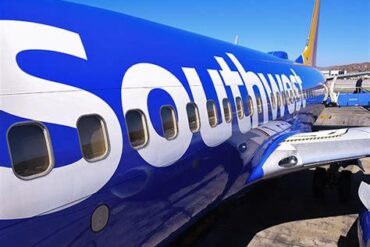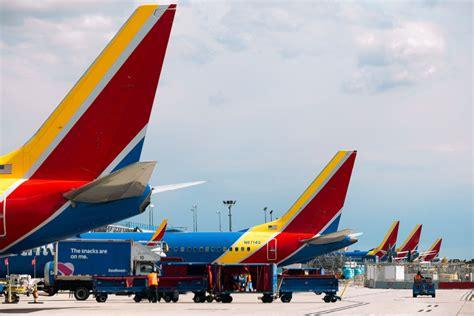
The U.S. Department of Justice (DOJ) has formally withdrawn its lawsuit against Southwest Airlines, concluding a legal dispute that originated under the Biden administration. The lawsuit, which alleged that Southwest operated chronically delayed flights in violation of federal consumer protection laws, was filed in January as part of a broader federal crackdown on unfair airline practices.
The DOJ’s decision to end the case comes just months after the Department of Transportation (DOT) imposed a $140 million civil penalty on Southwest for its infamous 2022 holiday season operational collapse, during which the airline cancelled more than 16,000 flights. The dismissal of the case marks a significant moment in the ongoing tension between federal regulators and the airline industry over transparency, accountability, and passenger rights.
Legal Origins: A Short-Lived But High-Profile Lawsuit
Filed in the final days of 2023, the DOJ’s complaint accused Southwest of knowingly publishing flight schedules that it could not realistically operate. According to the lawsuit, this constituted a violation of federal statutes that prohibit unfair or deceptive practices in air transportation.
The basis of the complaint centered on two specific flights that occurred more than two years ago. While limited in scope, the legal action was intended to send a message across the industry. The government sought maximum civil penalties, signaling that even isolated incidents of deception would be pursued when they resulted in harm to passengers.
At the time, Southwest responded to the suit by calling the government’s move “disappointing,” arguing that focusing on a pair of isolated events failed to represent the broader context of their operational track record.
Background: The 2022 Holiday Collapse and its Aftermath
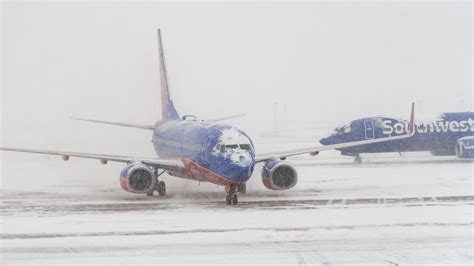
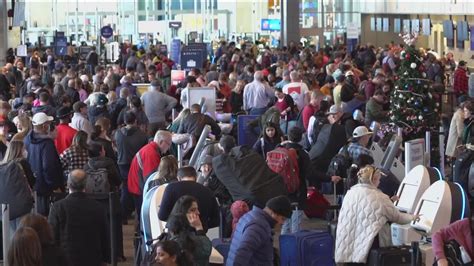
Southwest’s larger troubles began in December 2022, when a combination of severe winter weather in Denver and Chicago caused widespread disruptions. What started as a weather-related issue soon escalated into a systemic crisis, with the airline’s crew scheduling software failing to recover in real time. Thousands of Southwest passengers were stranded across the country as the airline was forced to cancel thousands of flights over several days.
The event became one of the most significant operational meltdowns in recent aviation history. As backlash mounted, federal agencies launched investigations, culminating in the DOT’s $140 million settlement with Southwest in late 2023. According to the DOT, this was the largest civil penalty ever assessed against an airline for consumer protection violations.
Why the DOJ Dropped the Case
The DOJ did not provide an extensive public explanation for dropping the case, but legal analysts suggest several contributing factors:
- Limited scope of the original complaint: The lawsuit centered on just two delayed flights. Though emblematic of broader concerns, the narrow scope may have undermined the strength of the legal argument.
- Redundancy with DOT enforcement actions: With the DOT already securing a record financial settlement, the DOJ lawsuit may have been viewed as duplicative or unnecessary.
- Changing regulatory priorities: A shift in focus toward broader structural reforms in the airline industry may have contributed to the DOJ’s decision to reallocate its legal resources.
This decision, while controversial, reflects the complex interplay between legal strategy and regulatory enforcement. It also highlights the challenges of translating consumer dissatisfaction into enforceable legal claims when the underlying facts are limited in scope.
Consumer Advocacy and Public Reaction
Consumer rights groups expressed mixed reactions to the DOJ’s move. While some applauded the end of what they saw as a symbolic and inefficient lawsuit, others criticized the government for backing down from a rare legal confrontation with a major U.S. carrier.
“The DOJ just sent the wrong signal,” said an aviation consumer advocate in a statement. “Passengers need protection, not retreat. Southwest’s actions in 2022 were not isolated missteps—they were part of a pattern of poor planning and disregard for customers.”
However, others argue that the $140 million penalty from the DOT—and the public scrutiny it generated—has already led to meaningful internal changes at Southwest. The airline has since invested heavily in upgrading its crew management systems and emergency protocols to prevent another operational collapse.

What This Means for Airline Accountability
This case—and its resolution—marks a turning point in how federal agencies balance public accountability with legal practicality. While civil penalties serve as an important deterrent, the decision to forego additional litigation suggests a pivot toward preventive regulation rather than punitive enforcement.
In fact, the DOT has proposed new rules that would require airlines to offer automatic refunds for canceled or significantly delayed flights. These reforms aim to establish proactive consumer protections that reduce the need for litigation in the first place.
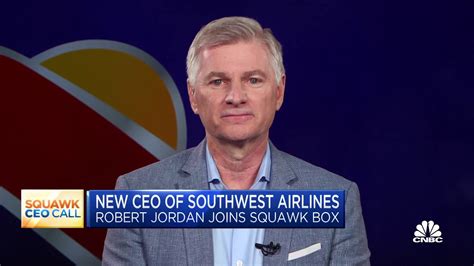
Moreover, lawmakers have continued to pressure airlines to become more transparent in their scheduling and contingency planning. Congressional hearings held in early 2023 featured intense questioning of airline executives, including Southwest CEO Bob Jordan, who promised improvements and greater investment in technology.
Southwest’s Response and Ongoing Reform
Since the 2022 debacle, Southwest has taken a number of steps aimed at rebuilding trust with passengers and preventing another system failure. These include:
- $1.3 billion in capital improvements to weather resilience and operations infrastructure.
- Deployment of a next-generation crew reassignment platform that allows faster reconfiguration in disruption scenarios.
- Expansion of customer service staffing and creation of an internal Crisis Response Team.
These efforts, while still underway, indicate that the airline understands the magnitude of the reputational damage it suffered. Whether these changes are sufficient to restore long-term consumer confidence remains to be seen, but early signals show a measurable drop in customer complaints filed with the DOT in 2024 compared to 2023.
Regulatory Strategy Moving Forward
For federal regulators, the Southwest case may serve as a case study in modern enforcement tactics. With limited statutory tools and finite legal bandwidth, agencies may increasingly focus on high-impact settlements, targeted rulemaking, and systemic reforms.
While the DOJ has walked away from direct litigation, its involvement is far from insignificant. The threat of legal action alone forced Southwest into deeper cooperation with regulators and contributed to the scale of the civil penalties imposed by the DOT.
This dual-track approach—combining deterrent settlements with regulatory modernization—could become a blueprint for future federal oversight in the aviation sector. It also underscores the importance of inter-agency coordination between entities like the DOJ, DOT, and FAA when tackling complex industry failures.
Final Thoughts: The Broader Implications
The collapse of the DOJ lawsuit against Southwest Airlines may appear anticlimactic, but it encapsulates a broader debate over how best to enforce consumer protections in commercial aviation. As airlines grow larger and more technologically complex, traditional legal remedies may prove insufficient in delivering swift and tangible justice.
Instead, what emerges is a framework built on public accountability, aggressive civil enforcement, and forward-looking regulation. The public outcry following Southwest’s holiday meltdown, combined with the DOT’s record penalty, achieved more immediate change than a protracted court case likely would have.
Still, as delays and cancellations remain perennial frustrations for travelers, the public expects more than promises. Airlines must not only meet but exceed evolving expectations for reliability, transparency, and crisis response. And regulators must continue to refine their playbook for protecting passengers in an industry where the margin for error is slim and the stakes are high.