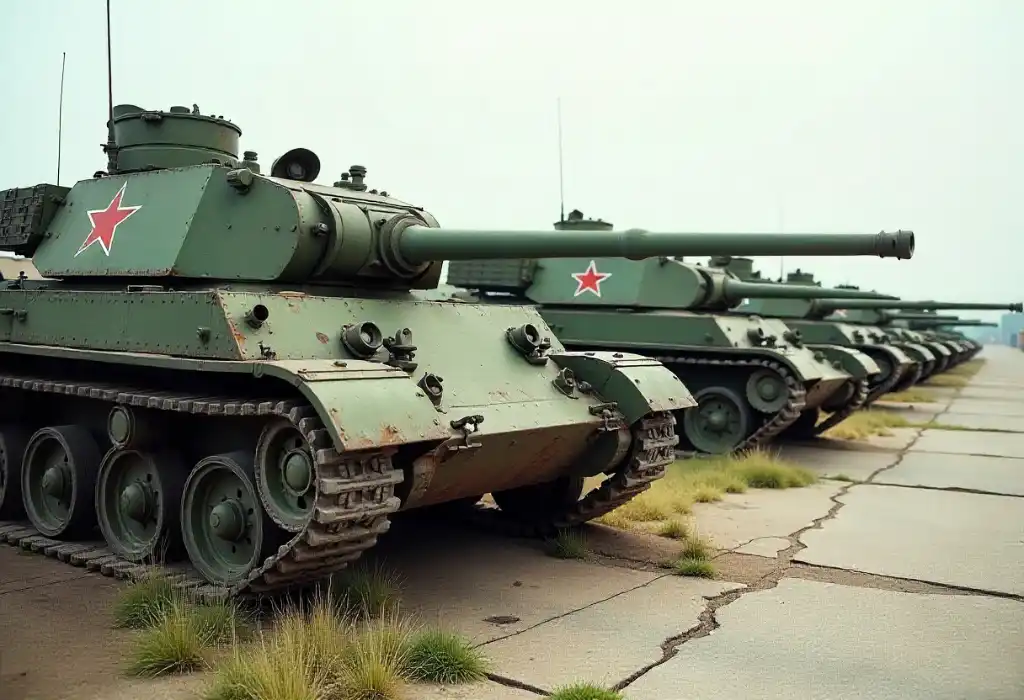
Tanks remain a vital component of modern military forces, providing unmatched firepower, protection, and mobility on the battlefield. Despite technological advancements, many nations continue to operate decades-old tanks that have been upgraded repeatedly to remain combat-effective. Instead of replacing entire fleets—which costs millions in procurement, maintenance, and logistics—militaries often modernize reliable platforms, extending their operational life well beyond their original service expectations. Below, we examine 13 of the oldest tanks still in service today, highlighting their histories, upgrades, and current deployments.
Leopard 2A4 – Germany’s Icon of Engineering Excellence
The Leopard 2A4, developed in the 1970s and entering production in 1985, epitomizes German precision and durability. Featuring improved composite armor and an internal fire-suppression system, the tank was engineered for survivability under intense combat conditions.
In 2023, Poland, Norway, and Finland transferred dozens of Leopard 2A4s to Ukraine, reinforcing its defenses against Russia’s invasion. Meanwhile, Croatia’s upgrade to the Leopard 2A8 has led to the donation of its M-84 tanks—based on the Soviet T-72—to Ukrainian forces, underlining how even older designs retain value when paired with modern upgrades.
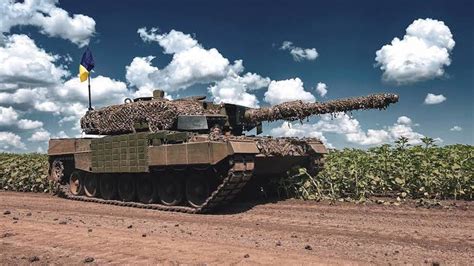
M1 Abrams – America’s Heavyweight War Machine
Since entering service in 1980, the M1 Abrams has become a global symbol of armored dominance. Its gas turbine engine enables speeds exceeding 40 mph on roads and 25 mph off-road, while its Chobham armor provides exceptional protection.
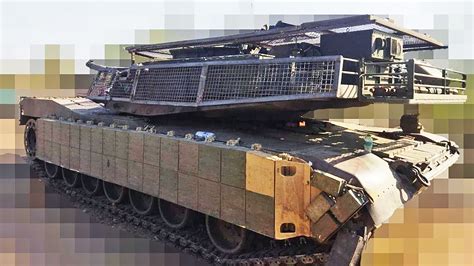
During Operation Desert Storm (1991), Abrams tanks demonstrated overwhelming firepower, cementing their reputation as a premier battle tank. Recently, the U.S. and Australia donated M1A1 models to Ukraine, though drone threats forced Ukraine to reinforce these tanks with cage screens and reactive armor to counter precision strikes on vulnerable areas.
T-72 – Soviet-Era Tank Dominating Conflicts Worldwide
Introduced in 1972, the T-72 became the workhorse of Soviet-aligned militaries. Designed to be cost-effective and easy to mass-produce, it participated in conflicts ranging from the Iran-Iraq War to the Lebanon War and numerous African civil wars.
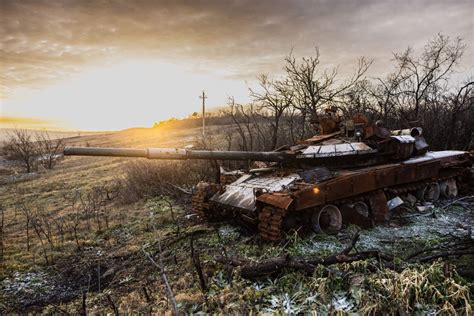
Today, the T-72 remains a critical asset for Ukraine, which operates over 300 units supplied by Poland and the Czech Republic. Russia’s heavy reliance on older T-72 models has led to significant losses, with more than 1,200 destroyed during the current war in Ukraine.
T-64 – Ukrainian Heritage and Modern Upgrades
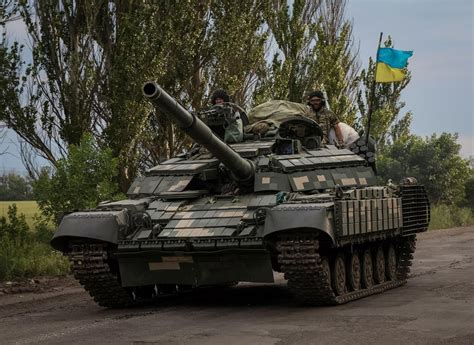
Manufactured in Kharkiv, Ukraine, when the region was part of the Soviet Union, the T-64 entered service in 1967. Although its production ceased decades ago, Ukrainian defense industries have continually upgraded T-64B variants with improved fire control systems and enhanced protection.
The 2022 full-scale invasion by Russia saw intense use of T-64s by both Ukraine and Russian-backed separatists. As of recent assessments, Ukraine has lost or had approximately 600 T-64s captured by Russian forces. Beyond Eastern Europe, Congo maintains a small fleet of T-64B1M tanks purchased from Ukraine in 2016.
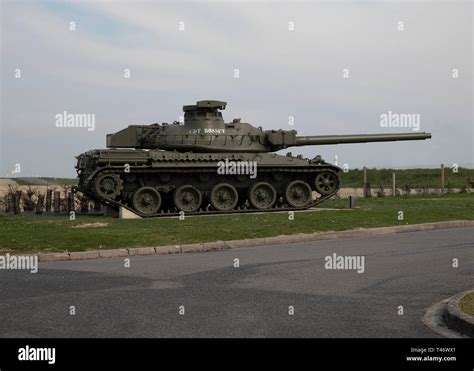
AMX-30 – France’s Agile “Glass Cannon”
The AMX-30, introduced in the 1960s, prioritized firepower and mobility over heavy armor, earning the nickname “glass cannon.” Armed with a 105 mm gun, it relied on speed to avoid incoming fire rather than absorbing it.
Though lightly protected, the AMX-30 proved effective in the Gulf War, where France and Qatar deployed it against Iraqi forces. Despite being retired in most countries, some nations continue to use modernized AMX-30 variants for training and reserve purposes.
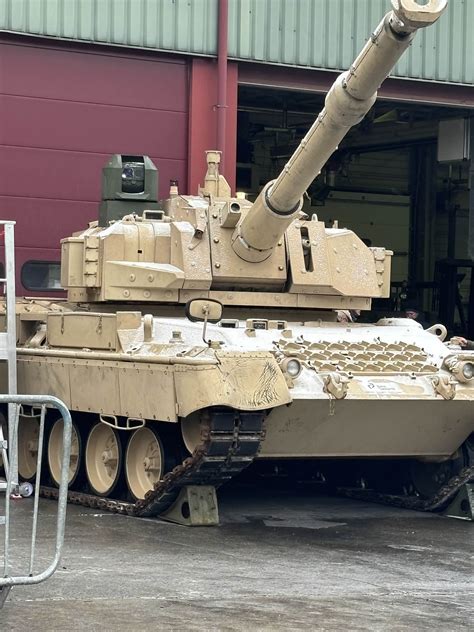
Leopard 1 – Light, Fast, and Reliable
Developed in 1965, the Leopard 1 was a revolutionary tank, combining lightweight design with a powerful 105 mm Royal Ordnance L7 gun. Despite being succeeded by the Leopard 2, its agility and firepower ensured it stayed relevant for decades.
Countries including Germany, Denmark, and the Netherlands have donated over 100 Leopard 1 tanks and variants to Ukraine. Of special note is the Leopard 1A5BE prototype, which incorporates a fully unmanned turret, merging modern automation with a proven frame.
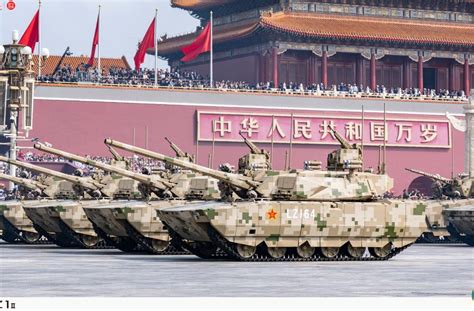
Type 59 – China’s Battle-Tested Workhorse
China’s Type 59, based on the Soviet T-54, entered service in 1959 and immediately became a cornerstone of the People’s Liberation Army. Its 100 mm rifled gun proved formidable during the Vietnam War, where it clashed with U.S.-supplied M41 Walker Bulldogs.
Though production ceased in the 1980s, 400+ Type 59s and derivatives remain active in China and are widely distributed in nations including North Korea, Pakistan, Sudan, and Iran. Bangladesh’s Type 59 Durjoy, introduced in 2015, added modern fire-control systems, explosive reactive armor, and night-fighting capability.
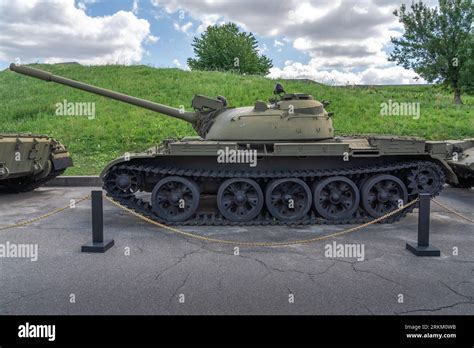
T-55 – The Foundation of Soviet Tank Design
The T-55, developed in 1956, built on the success of the T-54 series and went on to become one of the most widely used tanks in history. With thousands produced and countless variants, the T-55 saw service in conflicts across Asia, Africa, Europe, and South America.
In the ongoing war in Ukraine, both sides have deployed T-55s. While Ukraine’s units have been modernized with reactive armor and advanced targeting systems, Russia’s use of outdated, unmodified T-55s has left them vulnerable to modern anti-tank weapons.
M-47 Patton – A Cold War Relic with a Hollywood Twist
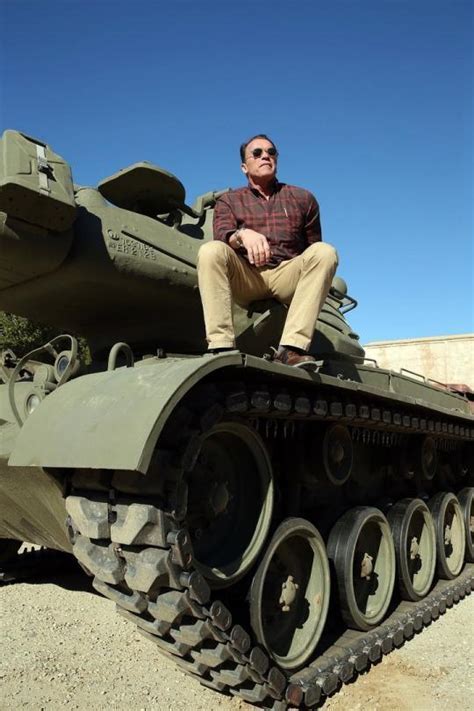
Named after the legendary General George S. Patton, the M-47 Patton entered production in 1951 but ironically never saw combat with the U.S. Army. It found use elsewhere, including Iran during the Iran-Iraq War and Turkey during its 1974 invasion of Cyprus.
Interestingly, Hollywood icon Arnold Schwarzenegger, who trained on an M-47 while in the Austrian Army, later bought his exact tank. He uses it for charity events, allowing donors to crush vehicles in a scrapyard while riding alongside him.
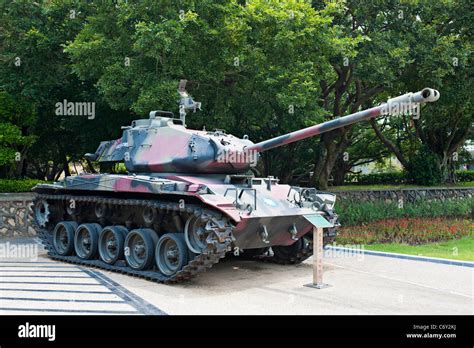
M41 Walker Bulldog – Compact but Controversial
The M41 Walker Bulldog, produced in 1951, was a light tank meant to replace the WWII-era M24 Chaffee. Though agile, it had limited interior space and was unpopular among U.S. troops. Sold to allies like South Vietnam, it was deployed in the Vietnam War but was outmatched by Soviet-supplied T-54s and AT-3 Sagger missiles.
Despite these shortcomings, the M41 remains in service today in Taiwan, the Dominican Republic, Thailand, and Uruguay, proving that even outdated designs can still fulfill niche roles.
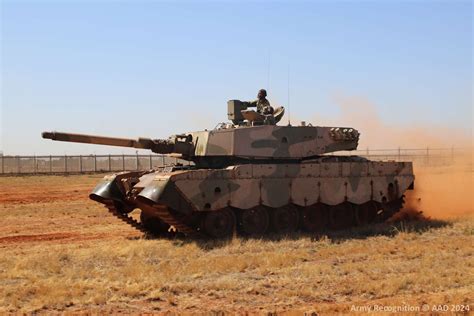
Centurion/Olifant – From British WWII Design to South African Innovation
The British Centurion tank, developed in 1945 to counter the German Tiger, arrived too late for WWII but went on to serve in Korea, Vietnam, and beyond. Its robust chassis allowed for extensive modifications, extending its utility far beyond its initial lifespan.
South Africa transformed its Centurions into the Olifant, replacing the original systems with modern engines, fire controls, and armor. Similarly, Jordan’s Temsah APC and Israel’s upgraded Centurions continue to use the legendary frame as a foundation for modern vehicles.
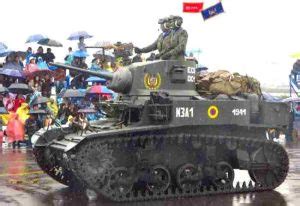
M3 Stuart – Small but Historic
The M3 Stuart, deployed in 1941, helped Allied forces regain parity with Germany’s armored forces during WWII. Equipped with multiple M1919 machine guns and a 37 mm cannon, it provided reliable infantry support.
Although replaced quickly by the M5 Stuart, many M3s were exported worldwide. Today, Paraguay still operates about a dozen M3 tanks, primarily for training purposes, making it one of the few WWII tanks still in active service.
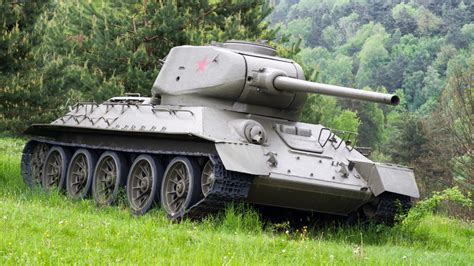
T-34 – The Oldest Tank Still on the Battlefield
No tank in history is more iconic than the T-34. Developed by the Soviet Union in the 1940s, it was instrumental in halting Operation Barbarossa, the Nazi invasion of 1941. Its sloped armor, powerful 76.2 mm gun, and superior mobility set a new standard for tank warfare.
While the T-34 was officially replaced by the T-44 after WWII, it remains in service in North Korea, Laos, and Cuba. The most recent combat use of the T-34 was recorded during the 2015 Houthi coup in Yemen, proving that this nearly 80-year-old tank still has operational relevance under certain conditions.
Data Table – Oldest Tanks Still in Service
| Tank Model | Country of Origin | Year Introduced | Current Operators |
|---|---|---|---|
| Leopard 2A4 | Germany | 1985 | Germany, Poland, Ukraine, others |
| M1 Abrams | USA | 1980 | USA, Ukraine, Australia |
| T-72 | USSR | 1972 | Russia, Ukraine, Poland, others |
| T-64 | USSR/Ukraine | 1967 | Ukraine, Congo |
| AMX-30 | France | 1960s | Qatar, France (limited) |
| Leopard 1 | Germany | 1965 | Ukraine, Denmark, Netherlands |
| Type 59 | China | 1959 | China, North Korea, Pakistan |
| T-55 | USSR | 1956 | Ukraine, Russia, Asia, Africa |
| M-47 Patton | USA | 1951 | Iran |
| M41 Walker Bulldog | USA | 1951 | Taiwan, Thailand, Uruguay |
| Centurion/Olifant | UK/South Africa | 1945 | South Africa, Jordan, Israel |
| M3 Stuart | USA | 1941 | Paraguay |
| T-34 | USSR | 1940s | North Korea, Cuba, Laos |
FAQs About the Oldest Tanks Still in Service
Why do militaries keep older tanks in active use?
Upgrading existing tanks with modern fire-control systems, reactive armor, and communications is far more cost-effective than designing and producing entirely new tanks, allowing countries to extend operational life significantly.
Are these older tanks effective in modern warfare?
Yes, with upgrades, many older tanks can remain competitive, especially in secondary roles such as infantry support, defensive operations, and reserve units. However, against cutting-edge tanks like the Leopard 2A7, they are at a disadvantage without significant modernization.
Which of these tanks has the longest continuous combat record?
The T-34 holds the record, serving from 1941 to present day in various conflicts worldwide, including WWII, the Korean War, African civil wars, and most recently in Yemen (2015).