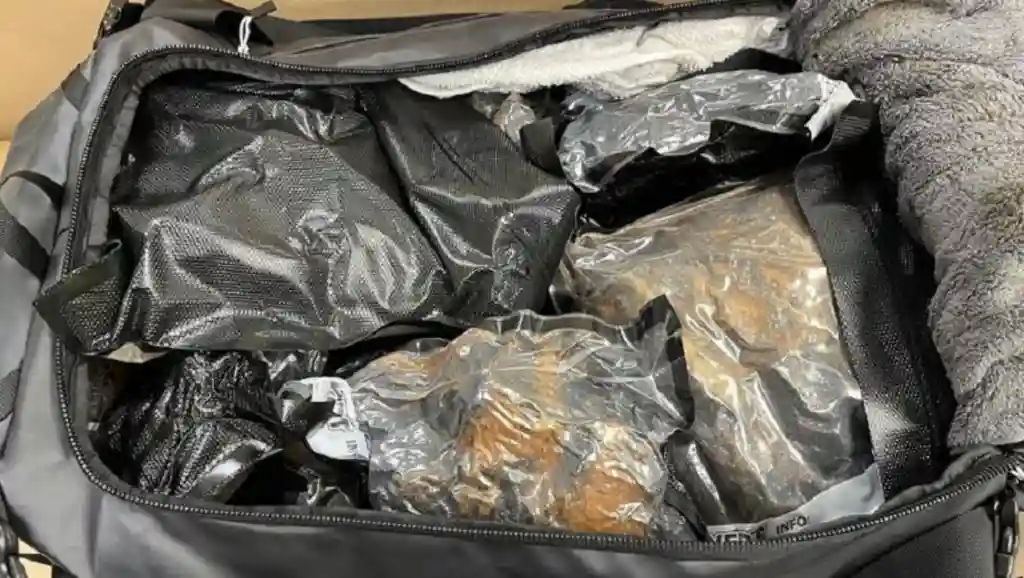
A sprawling investigation at New Zealand’s busiest international gateway has resulted in ** 20 Auckland Airport baggage handlers being arrested in what authorities describe as one of the most sophisticated drug-smuggling schemes ever uncovered in the country. The arrests emerged from Operation Matata, a multilayer customs–police initiative targeting the exploitation of airport supply chains by transnational criminal syndicates. Investigators allege that the handlers acted as trusted insiders who covertly retrieved narcotics smuggled in via unaccompanied luggage arriving on long-haul international flights.
Launched earlier this year, Operation Matata has steadily widened its focus, moving through multiple phases as intelligence revealed the scale of criminal infiltration inside ground-handling teams. During a recent public briefing, Detective Inspector Tom Gollan confirmed that the investigation has begun dismantling the airport-based arm of an international trafficking network responsible for introducing Class A drugs—including methamphetamine and cocaine—into New Zealand by manipulating baggage systems.
Authorities report that the scheme relied heavily on compromised workers with unrestricted access to secure airside zones. These individuals allegedly used their positions to intercept tagged but unclaimed luggage intentionally loaded at overseas airports and routed toward Auckland. This technique allowed traffickers to insert narcotics directly into the airport’s luggage stream with minimal inspection.
Arrests Sweep Up Gang Leadership in Fifth Phase of the Probe
The operation escalated sharply as it entered its fifth phase, culminating in the arrest of eight senior gang members, including the president of the 28 Brotherhood MC and multiple associates. These individuals now face charges covering the importation of Class A drugs, conspiracy to import, and possession with intent to supply. Investigators believe the conspiracy extended across multiple criminal groups, with intelligence pointing to additional involvement from the Head Hunters and Comancheros.
More than ** 20 airport baggage handlers** have now been directly identified as part of the syndicate, according to Dominic Adams, Investigation Manager for New Zealand Customs. Adams emphasized the importance of global law-enforcement cooperation, explaining that shared intelligence was essential in revealing how overseas suppliers coordinated with compromised airport staff. He noted that the criminal networks deliberately targeted “trusted border workers,” exploiting their routine access to secure operational areas.
‘Rip On, Rip Off’ Smuggling Method Used Across Global Routes
Investigators say traffickers relied on the widely documented “rip on, rip off” method, a smuggling practice in which unaccompanied drug-laden bags are secretly added to the cargo hold of international flights—often without passenger linkage—then discreetly retrieved by insiders at the destination. The technique effectively bypasses many conventional screening safeguards by exploiting security blind spots within luggage-handling systems.
Routes connected to Auckland from Bangkok, Santiago, Honolulu, Los Angeles, San Francisco, and New York City were among those flagged in the operation, reflecting the global reach of the supply chain feeding the New Zealand drug market. Authorities have already intercepted 631 kilograms of methamphetamine and 112 kilograms of cocaine, representing a street value exceeding NZ$220 million for the methamphetamine alone. Officials warn that the volume of drugs prevented from entering circulation represents a significant blow to nationwide distribution efforts.
Government Funding Boost Strengthens Airport Border Security
Recognizing the severity of the threat, the New Zealand government recently allocated NZ$35 million in additional funding to bolster border security capabilities. Officials believe the vulnerability lies less with the airport’s core security architecture and more with the employers embedded throughout the supply chain who failed to detect risks among their workforces. Enhanced oversight systems and new layers of monitoring are expected to be rolled out to ensure that insider threats can be more rapidly identified in the future.
The enforcement surge driven by Operation Matata has been extensive. The task force has executed over 72 search warrants, seized nearly NZ$800,000 in cash, and laid 347 charges against 43 individuals to date. Agencies are now concentrating on training commercial partners to identify signs of corruption and insider exploitation, while additional enforcement teams are being stationed across the country to harden frontline security.
Auckland Airport Expansion Highlights Urgency of Security Upgrades
The crackdown unfolds as Auckland Airport undergoes its most significant expansion since 1966, with billions being invested in a next-generation integrated terminal that will unite domestic and international operations. As the country’s foremost international entry point—handling more than 75% of all foreign arrivals—Auckland Airport plays an outsized role in the national economy and border-protection ecosystem.
In addition to being the home base of Air New Zealand, the airport hosts a dense network of international carriers including Emirates, Qatar Airways, Singapore Airlines, LATAM, United Airlines, Delta Air Lines, American Airlines, Air Canada, Korean Air, and many others. The scale and diversity of traffic increase the complexity of border enforcement, making insider-driven smuggling attempts especially difficult to detect.
The revelations uncovered by Operation Matata have triggered renewed debate over how airports worldwide can fortify themselves against infiltration attempts that bypass traditional checkpoints. Authorities maintain that more arrests and charges may follow as the investigation advances through further stages and expands beyond Auckland’s airside workforce.
The dismantling of this smuggling pipeline represents a major step toward restoring integrity within New Zealand’s border infrastructure and reflects the increasingly globalized nature of modern transnational crime networks.