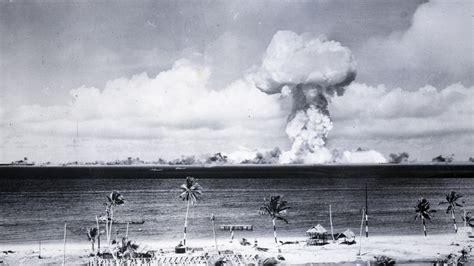
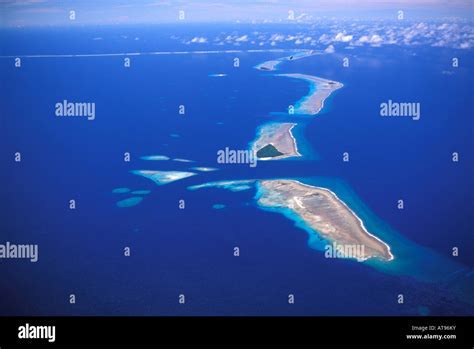
Bikini Atoll, a remote cluster of coral islands in the Marshall Islands, became one of the most haunting test beds for nuclear warfare in modern history. Between 1946 and 1958, the United States conducted 23 nuclear detonations at this location, transforming a once-pristine lagoon into a radioactive legacy site. These events, spearheaded under various military operations, were executed under the pretext of advancing defense capabilities in the atomic age. However, the scale of devastation, geopolitical tension, and long-lasting environmental impact reveal a story far more complex and sobering.
Strategic Selection of Bikini Atoll: Isolation with Intent
The U.S. military selected Bikini Atoll for its combination of remoteness, strategic proximity to bomber bases, a naturally enclosed lagoon for naval testing, and a small local population of just 167 inhabitants. These factors made the atoll an ideal testing ground, both logistically and politically. In February 1946, under the supervision of Commodore Ben H. Wyatt, the Bikinians were informed they would need to vacate their ancestral home for the “good of mankind” and to help “prevent future wars.”
The islanders’ leader, King Juda, reportedly agreed, stating: “We will go, believing that everything is in the hands of God.” Their exile, initially pitched as temporary, became a decades-long displacement.
Operation Crossroads: The Opening Salvo
The first series of nuclear tests, codenamed Operation Crossroads, began in July 1946. Two major detonations, Test Able and Test Baker, introduced a new era of naval warfare experimentation.
Test Able, conducted on July 1, 1946, was an air-dropped atomic bomb set to detonate 520 feet above sea level over a fleet of 95 target ships assembled in the lagoon. Due to a miscalculation, the bomb missed its intended target by roughly 1,500 to 2,000 feet, sinking five vessels and killing about a third of the animals placed aboard for study purposes.
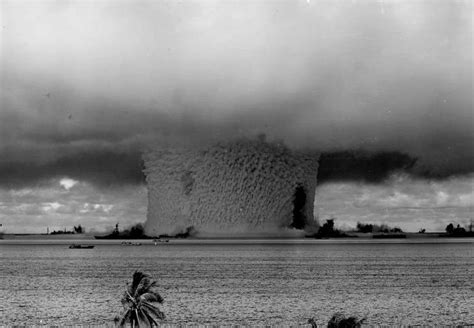
The more devastating of the two, Test Baker, detonated underwater on July 25, 1946, at a depth of 90 feet. The resulting explosion created a 30-foot-deep, 2,000-foot-wide crater, unleashed a mile-high water dome, and sent a 94-foot tsunami crashing through the lagoon. The shockwave lifted the USS Arkansas out of the water before it vanished beneath the radioactive surface. Eight ships sank, and others were coated with radioactive spray, creating complex decontamination challenges.
The Geopolitical Echo: Soviet Observers and Cold War Undertones
Far from being an isolated scientific effort, the Bikini tests played into the broader strategic narrative of the early Cold War. The Soviet Union, invited to observe, sent physicist Simon Peter Alexandrov and a geologist on behalf of Lavrentiy Beria. Their reports to Moscow stated that the tests failed to intimidate the Soviet regime. Pravda, the official newspaper of the Communist Party, dismissed the events as “common blackmail,” arguing they undermined the possibility of real U.S. interest in atomic disarmament.
These statements foreshadowed the nuclear arms race that would dominate global politics for the next four decades.
Canceled Test Charlie: Strategic Reassessment
A third test under Operation Crossroads, Test Charlie, was planned for April 1947. Designed as a deeper underwater explosion, the test was ultimately canceled due to logistical challenges and the limited supply of fissile cores—only three were available, two of which had already been used. Military leaders questioned the value of a third detonation, given that earlier results had already complicated naval decontamination procedures and offered limited new insight into survivability.
Castle Bravo: A Catastrophic Overreach
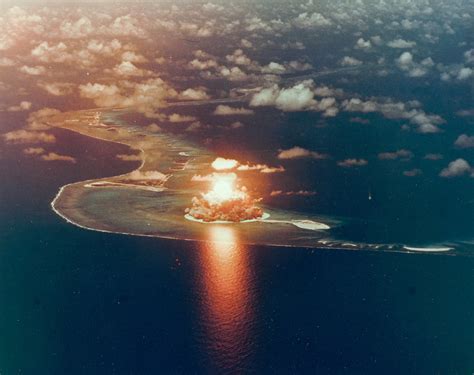
On March 1, 1954, the U.S. conducted Castle Bravo, the first deployable thermonuclear bomb test and one of the most notorious nuclear accidents in history. The device, ironically codenamed “Shrimp,” was expected to yield 5 megatons. Instead, it produced a 15-megaton explosion, the largest ever detonated by the United States.
The blast vaporized three islands, left a one-mile-wide crater in the lagoon, and hurled radioactive debris equivalent to the mass of 216 Empire State Buildings into the atmosphere. Fallout reached over 100 miles, contaminating the Japanese fishing boat Daigo Fukuryū Maru, located 80 miles away. All 23 crew members were exposed to lethal levels of radiation; Kuboyama Aikichi, the radio operator, succumbed to radiation sickness six months later.
The radioactive plume also affected the populations of Rongelap and Utirik atolls, requiring emergency evacuations. Many residents suffered long-term health consequences, including increased cancer rates and birth defects. These events escalated international criticism, especially from Japan, already traumatized by Hiroshima and Nagasaki.
Iconic Bomb Nicknames: A Dark Irony
In a macabre twist of military culture, many nuclear devices tested at Bikini bore nicknames that masked their destructive potential. Besides “Shrimp,” bombs were called “Runt I,” “Morgenstern,” and “Alarm Clock.” These codenames reflect a culture grappling with weapons of unimaginable force while attempting to maintain bureaucratic detachment. It also underscores the paradox of applying familiar, even humorous labels to devices capable of annihilating cities.
Environmental Consequences and Broken Promises
Despite U.S. assurances, the environmental toll of nuclear testing at Bikini Atoll has proven catastrophic and enduring. In the late 1960s, officials declared the atoll safe for resettlement. However, subsequent studies revealed that Cesium-137 levels in returning residents had spiked 75%, necessitating a second evacuation to Kili Island, a location with no lagoon and inadequate natural resources for subsistence.
Scientists such as Ivana Nikolic Hughes, a leading authority on nuclear contamination, assert that Bikini Atoll remains unfit for human habitation without extensive cleanup. The coral reef systems remain compromised, and soil radiation levels still exceed international safety guidelines.

UNESCO Recognition: A Grave Reminder
In 2010, UNESCO designated Bikini Atoll a World Heritage Site, not for its beauty but as a monument to the destructive legacy of nuclear weapons. The site now stands as a stark warning to humanity, symbolizing both technological triumph and moral catastrophe. It is one of the few places on Earth where the landscape itself testifies to the existential threat posed by human warfare.
Today, Bikini Atoll remains a ghostly paradise—lush, green, and deceptive in its apparent serenity. The waters may shimmer with tropical beauty, but the land tells a darker tale, one of displacement, radiation, and Cold War hubris. The haunting silence of its empty beaches whispers reminders of bombs once tested “for peace” but designed for war.