A Private Pilot’s Ambition: From Local Skies to Transatlantic Dreams
For many private pilots, flying across the United States is the peak of personal aviation freedom. But some, like a seasoned aviator with over 1,000 flight hours and a trusty Cessna 172, begin to eye something far more audacious—the dream of flying across the Atlantic Ocean. With an Instrument Rating on the horizon and a desire to explore Europe before turning 60, the question arises: Is flying a single-engine Cessna across the Atlantic even feasible?
This isn’t a whimsical fantasy. While it demands meticulous planning, ferry modifications, and risk management, such transatlantic crossings in light single-engine aircraft have been accomplished regularly—though not without challenges. For many aviators, it becomes a calculated gamble between adventure and caution, endurance and preparation.

The Reality of Transatlantic Flight in a Cessna
Crossing the Atlantic in a small aircraft like the Cessna 172, 182, 206, or 210 is not only possible—it’s been done dozens of times each year by ferry pilots. However, such missions are never taken lightly. While commercial jets cruise comfortably at FL350 over oceans, small single-engine planes fly low, slow, and are far more vulnerable to changing weather and mechanical failure.
The typical route used by general aviation pilots follows the North Atlantic Ferry Route, which includes stops in Canada, Greenland, Iceland, and Scotland. This series of legs offers manageable distances between airports, yet it still demands auxiliary fuel tanks, cold-weather survival gear, life rafts, immersion suits, and advanced navigation tools.
Aircraft Selection: 172, 182, 206, or 210?
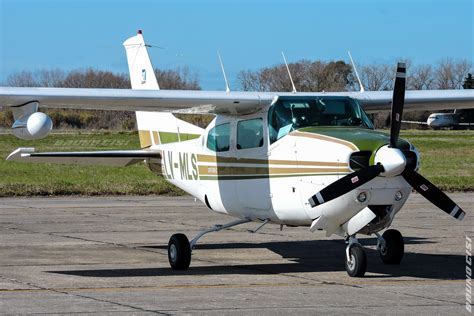
Not all Cessnas are created equal when it comes to long-range oceanic flying. The Cessna 172, while beloved by training schools and private owners, has significant limitations in speed, payload, and range. With a stock range of roughly 640 nautical miles and slow cruise speeds, it would require ferry tanks to even attempt such a voyage.
The Cessna 182 Skylane, with a greater useful load and range, offers more practical capability. Equipped with long-range tanks and IFR avionics, the 182 begins to make the trip feasible, especially if flown with an experienced co-pilot or ferry mentor. That said, its performance in heavy weather or icing conditions still raises caution.
The Cessna 206 Stationair and Cessna 210 Centurion, however, are a different category. These higher-performance singles offer more speed, payload, and fuel capacity. The 206 is well-known for its ability to carry large cargo and handle rugged operations, while the 210—with retractable gear and a more streamlined airframe—adds speed and economy to the equation.
Ferry Tank Installation: A Non-Negotiable Requirement
One of the most critical modifications for any transatlantic general aviation flight is the addition of ferry tanks. These external or internal auxiliary tanks expand the aircraft’s fuel range by hundreds of nautical miles—turning a stock aircraft into a long-range platform.
For example, a modified Cessna 210 with a ferry tank can stretch its endurance beyond 1,500 NM, enough to handle the longest leg between Goose Bay (CYYR) and Narsarsuaq (BGBW) or Reykjavík (BIRK) under VFR or IFR conditions. Installing such tanks typically requires FAA approval and coordination with a certified ferry tank specialist.
Beyond simply carrying fuel, the aircraft must also handle the additional weight and balance changes, often pushing it to or beyond maximum takeoff weight. This requires meticulous calculation and often consultation with experienced ferry pilots or engineers.
Route Considerations and Stops Along the Way
The most common route taken by pilots crossing the North Atlantic in small aircraft is often dubbed the “Blue Spruce Route.” This routing maximizes safety with the shortest overwater legs and numerous stopover points:
- Bangor, Maine (KBGR) to Goose Bay, Canada (CYYR)
- Goose Bay to Narsarsuaq, Greenland (BGBW)
- Narsarsuaq to Reykjavík, Iceland (BIRK)
- Reykjavík to Vagar, Faroe Islands (EKVG) (optional)
- Reykjavík or Vagar to Prestwick, Scotland (EGPK)
Each of these stops offers both technical fuel replenishment and a mental reset, allowing pilots to rest, evaluate weather systems, and prepare for the next leg. Flight planning must account for ETOPS limitations, alternate airports, and emergency ditching strategies.

Weather, IFR, and Survival Considerations
Weather is the single most uncontrollable variable in the equation. While modern forecasting tools and satellite data help, North Atlantic systems can shift rapidly, especially during spring and fall shoulder seasons. Therefore, IFR proficiency is essential.
A pilot nearing their Instrument Rating checkride would be strongly advised to complete their rating before such a journey. This certification will not only allow access to higher-level routing and controlled airspace but also provide crucial tools for dealing with low visibility, icing, and unforecast fog.
Equally essential is the preparation for emergency ditching scenarios. Survival suits, life rafts, satellite communication (such as Garmin InReach or Iridium GO), and ELTs are not optional—they are lifesaving necessities. Pilots must be trained in cold water survival techniques and understand hypothermia onset timelines in North Atlantic waters.
The Human Factor: Mental Stamina and Risk Management
Unlike domestic flights, a transatlantic crossing is often a solo or two-person operation over vast, desolate terrain and ocean. The psychological toll cannot be understated. Even with perfect weather and a mechanically sound aircraft, the burden of command can weigh heavily, especially over open water in a single-engine piston aircraft.
Planning must include realistic limitations, including fatigue management, decision-making under stress, and contingency planning. The involvement of an experienced ferry pilot or mentor can mitigate many risks. Some pilots even contract them to fly alongside or coach remotely.

Real-World Precedents: It’s Been Done Before
There are dozens of YouTube documentaries, including one that shows pilots flying a Cessna 210 across the Atlantic in 2017. These real-world examples showcase the extreme preparation involved—from the ferry tank installation to checking weather windows to international customs coordination.
Some aircraft ferry companies routinely deliver 172s to Europe using this same path. These flights are rarely flown in one leg and typically include extended stays during weather delays. Despite the risks, these crossings are not unheard of, and for a prepared pilot, they represent the ultimate long-distance journey.
Cost Implications and Budget Planning
A major consideration for any pilot thinking of such an endeavor is the cost. A full transatlantic trip in a piston single could run from $15,000 to $25,000 when factoring in:
- Ferry tank installation and removal
- Additional avionics or IFR upgrades
- Survival and safety gear
- Overflight and landing permits
- Fuel, lodging, customs, and logistical fees
Pilots operating on a tight budget may find Cessna 182s or early 206s more economically viable, provided they are already equipped with robust avionics and don’t require complete overhauls.
Conclusion: Not Just Possible—Rewarding
Flying a Cessna across the Atlantic is not only feasible, but it can also be transformational for the right pilot. With the proper aircraft, comprehensive planning, and realistic expectations, it evolves from a wild fantasy into an attainable, life-changing accomplishment.
While it’s not for the faint-hearted or underprepared, it is by no means an impossible task. With each stopover in Greenland’s fjords or Iceland’s volcanic coast, pilots join a special fraternity of aviators who dared to stretch the limits of what’s possible in a light aircraft.
And for those with the will, the skill, and the aircraft—it may just be the defining flight of a lifetime.