Canada’s flag carrier is preparing for one of its most ambitious international expansions in years, with seven new and returning long-haul routes scheduled to launch in June 2026. The sweeping growth plan reinforces Air Canada’s dominance in the country’s international aviation market while signaling renewed confidence in transatlantic and Asia-Pacific demand after years of fluctuating recovery trends.
The airline is expected to operate more than 80 long-haul routes during the peak summer month, representing roughly 36% of Canada’s total long-haul flight activity. While overall outbound capacity still sits slightly below the pre-pandemic highs achieved in 2018, the latest expansion marks a decisive shift toward strategic global growth, particularly across Europe and Asia.
Air Canada’s June 2026 additions are not simply routine seasonal launches. Several routes represent entirely new destinations for both the airline and the Canadian market itself, while others revive important international links that disappeared during the pandemic years. Together, they reveal how the carrier is reshaping its network to capture premium leisure traffic, diaspora demand, and connecting passengers flowing through its Toronto and Montreal hubs.
The expansion spans three major Canadian gateways — Toronto Pearson, Montréal–Trudeau, and Halifax Stanfield — while introducing destinations across China, Hungary, Portugal, France, Italy, Spain, and Belgium.
Toronto Strengthens Its Position as Air Canada’s Global Powerhouse
Toronto Pearson International Airport continues to sit at the center of Air Canada’s international ambitions. The airport already serves as the carrier’s primary intercontinental gateway, and June 2026 will see three notable additions from the Ontario hub.
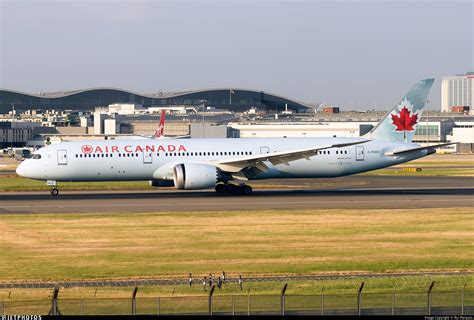
The most strategically important launch is undoubtedly the return of nonstop flights between Toronto and Shanghai Pudong. Beginning June 3, Air Canada will restore the route with four weekly year-round services aboard the Boeing 787-9 Dreamliner.
The relaunch carries enormous symbolic and commercial significance. Air Canada previously operated nonstop Toronto–Shanghai flights continuously from 2006 until the pandemic forced the route’s suspension in 2020. Over the years, the service utilized a variety of widebody aircraft including the Airbus A340-300, A340-500, Boeing 777-200LR, Boeing 777-300ER, and eventually the Boeing 787-9.
The return to Shanghai demonstrates Air Canada’s renewed confidence in Asia-Pacific demand, especially as business travel and international tourism between Canada and China gradually recover. Toronto’s large Chinese diaspora community also provides strong year-round passenger demand that few other Canadian routes can match.
Just two days later, Air Canada will launch another major addition with new flights between Toronto and Budapest. Seasonal operations will run three to five times weekly using Boeing 787-8 and 787-9 aircraft.
This route carries historical significance because it marks the first time Air Canada mainline operations will directly serve the Hungarian capital. Previously, the airline’s leisure subsidiary Rouge operated Budapest flights between 2016 and 2019, but the new service represents a far more premium and long-term commitment to the market.
The Budapest launch also arrives during a wider revival of North American connectivity to Hungary. American Airlines recently resumed Philadelphia–Budapest service, restoring important transatlantic access that had diminished after LOT Polish Airlines ended Budapest–New York flights in 2022.
Air Canada’s third Toronto addition is perhaps the most debated among aviation analysts: a new route to Ponta Delgada in the Azores.
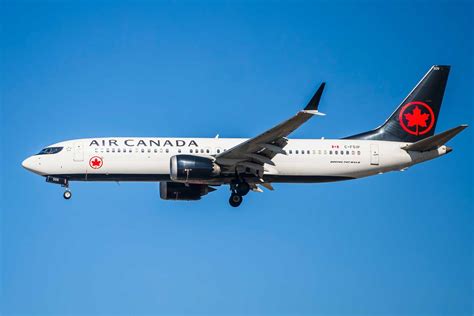
Launching June 11 with three weekly Boeing 737 MAX 8 flights, the service technically falls short of traditional long-haul distance thresholds. Yet the route remains strategically fascinating because of the competitive pressure building in the market. WestJet plans to introduce the same route just one day later, while Azores Airlines already operates the sector.
The sudden surge in capacity raises serious questions about sustainability and pricing competition. With three carriers targeting a relatively niche transatlantic leisure market simultaneously, industry observers are already watching closely to see whether all operators can maintain profitable load factors through multiple seasons.
Montreal Emerges as the Centerpiece of Air Canada’s Mediterranean Strategy
While Toronto drives Air Canada’s global scale, Montreal has increasingly evolved into the airline’s preferred launch point for culturally connected European destinations. June 2026 will reinforce that strategy with three entirely new long-haul routes from Montréal–Trudeau International Airport.
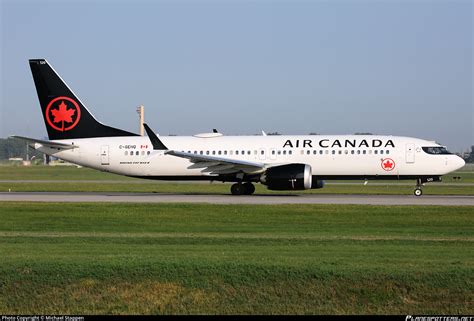
The first begins June 1 with seasonal service to Nantes, France. Flights will operate three to four times weekly using either the Airbus A321XLR or Boeing 737 MAX 8.
The route marks the first time Air Canada has ever served Nantes, creating direct competition with Air Transat on the transatlantic sector. The addition highlights Air Canada’s broader strategy of using narrowbody long-range aircraft to penetrate thinner European markets that previously could not economically support larger widebody operations.
However, the Mediterranean expansion is attracting even greater attention.
On June 4, Air Canada will launch nonstop flights from Montreal to Catania, Sicily, using Boeing 787-8 aircraft three times weekly during the summer season. The route represents a landmark moment because it introduces scheduled nonstop Canada–Sicily service under the Air Canada brand for the first time ever.
The Sicily market has rapidly transformed into one of the Mediterranean’s most competitive emerging transatlantic sectors. Delta Air Lines, Neos, and United Airlines already serve North America–Sicily routes, and Air Canada’s arrival will push total available monthly seat capacity to roughly 31,000 round-trip seats during June 2026 alone.
Demand fundamentals remain strong. Approximately 18,000 passengers traveled between Canada and Catania last year despite requiring connecting itineraries. Air Canada now hopes to capture both local Canadian traffic and connecting passengers flowing through Montreal from across North America.
The expansion continues June 17 with the launch of Montreal–Palma de Mallorca service. Operating three times weekly aboard Boeing 787-8 aircraft, the route becomes another historic first for both Air Canada and Canada’s aviation market.
Mallorca has long ranked among Europe’s most popular summer leisure destinations, yet nonstop Canadian access remained absent for decades. Air Canada’s decision to enter the market reflects growing confidence in premium leisure demand, especially among travelers seeking direct Mediterranean access without routing through traditional European hubs.
Halifax Gains Its Longest Air Canada Route Ever
Air Canada’s expansion is not limited to its largest hubs. Halifax Stanfield International Airport will also gain an important new international link when flights to Brussels begin on June 18.
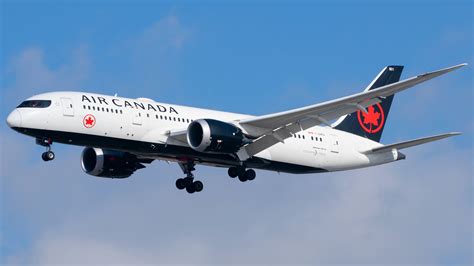
The route will operate three weekly frequencies using Boeing 737 MAX 8 aircraft throughout the peak summer season. At approximately 2,670 nautical miles, the service becomes Air Canada’s longest route ever operated from Nova Scotia.
While local Halifax–Brussels passenger demand remains relatively modest, the route’s real strategic value lies in connectivity. Brussels serves as a major Star Alliance hub, allowing passengers from Atlantic Canada to access a broad network of onward European destinations through partnership connections.
At the same time, the route strengthens Halifax’s growing role as a secondary transatlantic gateway. Air Canada has steadily expanded narrowbody international flying from Eastern Canada in recent years, leveraging lower operating costs and improved fuel efficiency offered by next-generation aircraft like the 737 MAX 8.
The Brussels launch also demonstrates how airlines increasingly prioritize network flexibility over sheer aircraft size. Rather than relying exclusively on massive widebody operations, carriers can now profitably connect smaller cities across the Atlantic using fuel-efficient narrowbody fleets.
Air Canada’s Expansion Signals a New Era of International Competition
Beyond the individual routes themselves, Air Canada’s June 2026 expansion reflects broader shifts occurring throughout global aviation. Airlines are aggressively rebuilding long-haul networks while targeting underserved leisure destinations and secondary European markets capable of generating high-yield seasonal traffic.
The strategy also highlights the growing importance of aircraft flexibility. The Boeing 787 Dreamliner family and Airbus A321XLR are enabling airlines to open routes that would have been financially risky or operationally impossible only a decade ago.
At the same time, competitive pressure across the Atlantic continues intensifying. Air Canada now faces increasing challenges not only from traditional rivals like WestJet and Air Transat, but also from aggressive US and European carriers expanding deeper into secondary North American markets.
Still, the scale of Air Canada’s latest network additions underscores the carrier’s confidence heading into summer 2026. With new destinations spanning Asia, Central Europe, the Mediterranean, and Atlantic Europe, the airline is positioning itself to capture surging international demand while strengthening Canada’s role in global aviation connectivity.