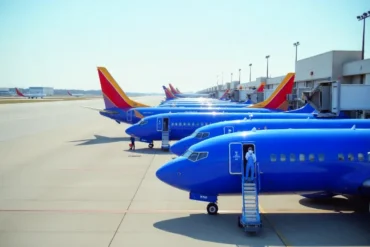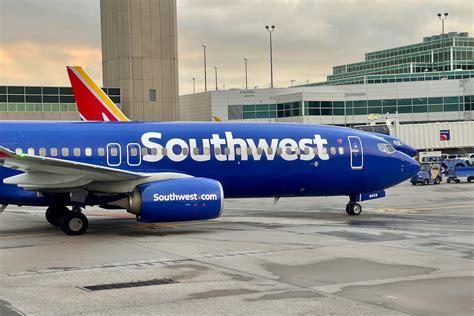
Southwest Airlines is preparing one of its most ambitious seasonal network expansions in recent years, adding 20 new routes across the United States, Mexico, Puerto Rico, and Hawaii beginning in June 2026. The move reflects the carrier’s evolving strategy as it adjusts capacity, strengthens leisure-focused demand, and deepens its presence in several strategically important airports.
Despite trimming parts of its broader network over the past year, Southwest is still operating at enormous scale. The airline is expected to average more than 4,100 daily flights during June 2026, reinforcing its status as one of America’s largest domestic carriers. The latest additions show how the airline is prioritizing profitable leisure markets, underserved city pairs, and seasonal travel demand while continuing to reshape its post-pandemic network strategy.
The expansion is divided into two launch waves scheduled for June 4 and June 6. Together, they will introduce a mix of daily and weekly services connecting major metropolitan areas with beach destinations, tourism hotspots, and fast-growing secondary cities.
After examining Southwest’s updated network schedule, it becomes clear that the airline is focusing less on aggressive frequency growth and more on precision expansion. Instead of flooding markets with dozens of daily flights, Southwest is carefully targeting routes where demand patterns support sustainable seasonal service.
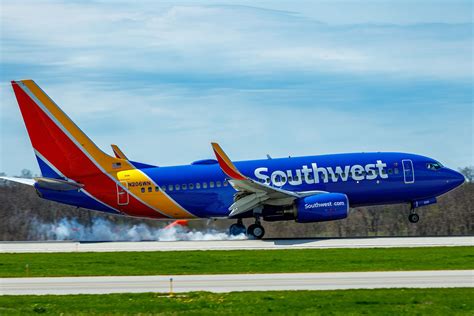
Southwest’s June 4 Launches Focus on High-Demand Leisure and Business Markets
The first wave of route launches arrives on Thursday, June 4, with seven new nonstop services entering the network. These routes combine business-oriented city pairs with international leisure destinations and long-haul domestic flights.
The new June 4 routes include:
- Austin to Cincinnati
- Austin to Seattle
- Boston to Kansas City
- Boston to San Diego
- Las Vegas to Cancun
- Las Vegas to Los Cabos
- Ontario, California to Honolulu
Several of these routes mark the return of previously discontinued Southwest services. Austin-Seattle was last operated between 2015 and 2018, while Boston-Kansas City disappeared from the network in 2019. Their return highlights renewed confidence in cross-country business and leisure demand.
Among the most closely watched additions is the launch of nonstop flights between Las Vegas and Cancun. This route is particularly significant because no airline currently serves the market nonstop. JetBlue previously operated the route before withdrawing in 2022, leaving a gap Southwest now appears eager to fill.
Southwest’s position at Las Vegas gives the airline a substantial competitive advantage. Harry Reid International Airport remains one of the carrier’s largest operational bases, allowing it to feed passengers from dozens of domestic connecting cities directly into Cancun-bound flights.
The airline will initially operate Las Vegas-Cancun up to five times weekly. Flight timings are structured to maximize connectivity throughout Southwest’s western network while still offering practical arrival times for leisure travelers heading to Mexico’s Caribbean coast.
The launch of Ontario-Honolulu service also reflects Southwest’s continued commitment to Hawaii expansion. Since first entering the Hawaiian market, the airline has steadily built California-Hawaii connectivity, especially from secondary Southern California airports where competition is less intense than at Los Angeles International Airport.
June 6 Expansion Adds 13 More Seasonal and Underserved Routes
Just two days later, Southwest will introduce 13 additional routes on Saturday, June 6. Most of these flights will operate weekly, emphasizing their role as targeted seasonal leisure services rather than year-round business corridors.
The June 6 additions include:
- Baltimore to Oklahoma City
- Baltimore to Pensacola
- Dallas Love Field to Hartford
- Denver to Destin-Fort Walton Beach
- Indianapolis to San Juan
- Kansas City to Norfolk
- Kansas City to Savannah
- Houston Hobby to Myrtle Beach
- Long Beach to Bozeman
- Orlando to Little Rock
- Orlando to Wichita
- Pittsburgh to Destin-Fort Walton Beach
- Tampa to Knoxville
Many of these markets stand out because they have never seen nonstop service before. Dallas Love Field-Hartford, Kansas City-Norfolk, Kansas City-Savannah, and Houston Hobby-Myrtle Beach are especially notable examples of previously unserved city pairs.
Southwest appears increasingly willing to experiment with niche nonstop opportunities that larger legacy carriers have historically ignored. While airlines like American, Delta, and United continue focusing heavily on fortress hubs, Southwest is capitalizing on secondary-city connectivity where competition remains limited.
The Houston Hobby-Myrtle Beach route perfectly illustrates this strategy. No carrier currently operates nonstop flights between the Houston metropolitan area and Myrtle Beach, giving Southwest a potentially valuable first-mover advantage in a leisure market with strong summer demand.
Similarly, Kansas City’s new links to Norfolk and Savannah strengthen Southwest’s position as a connector between mid-sized American cities that often lack convenient nonstop service.
The Indianapolis-San Juan route adds another Caribbean leisure option while reinforcing Puerto Rico’s growing role within Southwest’s network. Demand for Caribbean destinations has remained exceptionally strong since travel rebounded, and airlines continue increasing capacity to beach-focused markets.
Denver, Las Vegas, and Baltimore Remain Southwest’s Largest Strongholds
Even with the addition of 20 new routes, Southwest’s operational footprint remains concentrated around several major airports that continue functioning as the backbone of its network.
Denver International Airport remains the airline’s largest base by a considerable margin. Southwest is expected to average roughly 543 daily aircraft movements there during June 2026. Las Vegas follows with approximately 489 daily movements, while Chicago Midway, Baltimore/Washington International, and Dallas Love Field round out the top five.
Denver’s dominance is particularly impressive given the intense competition Southwest faces from both United Airlines and Frontier Airlines. Despite operating at one of America’s most competitive airports, Southwest still controls more than a quarter of all services there.
The airline is also refining its broader airport strategy. Chicago O’Hare and Washington Dulles are disappearing from Southwest’s June schedule entirely as the carrier consolidates operations around stronger legacy positions at Chicago Midway and Baltimore.
At the same time, Southwest is adding new destinations including Anchorage, Knoxville, St. Maarten, St. Thomas, and Santa Rosa. These additions reveal a network increasingly shaped around leisure demand, tourism flows, and point-to-point connectivity rather than traditional hub-and-spoke expansion.
Southwest’s Expansion Reflects a New Era of Precision Growth
Southwest’s June 2026 expansion is not simply about adding flights. It represents a broader transformation in how the airline approaches growth, profitability, and competitive positioning.
Rather than chasing sheer scale, Southwest is selectively targeting routes with strong seasonal potential, limited nonstop competition, and favorable operational economics. The strategy allows the carrier to maintain flexibility while continuing to expand into profitable leisure-heavy markets.
For travelers, the result is a substantial increase in nonstop options across the United States and beyond. For competitors, it is another reminder that Southwest remains highly aggressive in identifying overlooked opportunities inside America’s evolving aviation landscape.