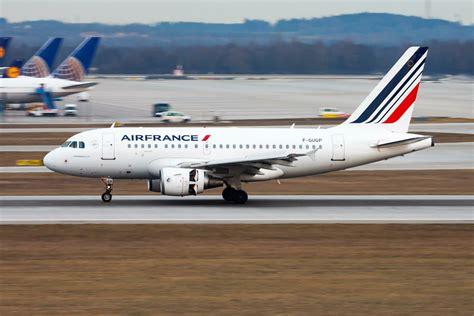
On a routine descent into Paris Charles de Gaulle Airport, an unexpected confrontation aboard an Air France flight has erupted into a worldwide firestorm, igniting discussions about passenger rights, crew authority, aviation law, and the volatile role of social media in modern air travel. What began with a simple request for water has transformed into a landmark moment for the airline industry, with ripple effects still being felt.
A Routine Flight Turns into a Legal and Social Storm
The flight, identified only as an Air France service inbound to Paris, took an unexpected turn during its final descent. A female passenger, identified online by the handle Celrants, requested water just as the cabin crew had buckled into their seats. Regulations globally dictate that during final approach—a time universally recognized as one of the most danger-prone phases of flight—all service must cease and cabin crew must be strapped in for safety.
What appeared to be a straightforward denial for safety reasons rapidly evolved into a heated exchange. The passenger, either unaware of the regulation or unwilling to accept it, reportedly became increasingly agitated.
Safety vs. Service: The Unseen Battle
Aviation protocol strictly prioritizes passenger and crew safety over comfort during specific phases of flight. The final approach and landing window is especially sensitive, with regulatory bodies like EASA (European Union Aviation Safety Agency) and ICAO (International Civil Aviation Organization) mandating that flight attendants must be fully secured in their jump seats. This leaves no margin for service-related tasks—whether a glass of water or any other request.
However, the disconnect between passengers’ expectations and aviation safety procedures remains profound. Many travelers interpret service denials as dismissiveness or neglect, not understanding the critical safety rationale behind such actions.
The Privacy Violation that Shifted the Narrative
Matters intensified when the passenger retaliated by photographing the flight attendant involved in the altercation. In France, this act violates the country’s stringent privacy protection law known as Le droit à l’image, which prohibits taking and sharing identifiable images of individuals without explicit consent—even in public or semi-public spaces like airplane cabins.
Upon being asked to delete the photos, the passenger refused. This not only escalated the confrontation but shifted it from a civil dispute to a legal breach. By the time the aircraft touched down, French authorities had already been alerted.
Arrest Upon Arrival: Police Intervene
As the aircraft taxied to the gate at CDG, it was met by armed French police who boarded the plane and detained the woman immediately. The swift, decisive response shocked fellow passengers and underscored how quickly inflight confrontations—especially those involving legal violations—can spiral out of control.
Videos of the confrontation, filmed by bystanders, quickly made their way online, lending even more visibility to the incident.
Social Media Turns Incident into Global Debate
Once off the aircraft, the detained passenger posted several videos to TikTok, alleging racism, discrimination, and abuse of power. Her narrative gained traction rapidly, with clips drawing hundreds of thousands of views.
While supporters sympathized with her version of events, aviation professionals and legal experts began dissecting the deeper layers of the incident—examining airline policies, crew rights, passenger conduct, and cultural misunderstandings in an era of constant digital exposure.
Cultural Clashes at 35,000 Feet
One of the more nuanced discussions triggered by the incident involves the cultural gap between traveler expectations and local legal frameworks. In some regions—such as North America or parts of Asia—recording altercations with service personnel is often considered a legitimate form of documentation. In France, however, such behavior is strictly curtailed.
French privacy laws not only protect individuals in their personal lives but extend robust protections into public domains, including any identifiable imagery in shared spaces. The European Union’s GDPR further bolsters these protections.
Industry Response: Airlines Caught in the Crossfire
This incident lays bare the tightrope airlines must walk between operational enforcement and emotional intelligence. Cabin crew are trained to prioritize safety, but in today’s climate, every interaction can be scrutinized online within seconds.
Airlines are increasingly expected to provide their crews with training in conflict de-escalation, cross-cultural awareness, and real-time social media risk management. Yet, as experts emphasize, safety cannot be compromised, no matter how seemingly minor the trigger.
Crew Protocols Under the Microscope
Flight attendants undergo rigorous training not only in hospitality but also in emergency response, medical scenarios, and cabin safety enforcement. During final descent, they are responsible for observing passengers, securing cabin equipment, and ensuring compliance—tasks that demand full attention and physical readiness.
Granting a passenger’s request at that time, no matter how benign, risks undermining the chain of non-negotiable safety priorities. Crew cannot legally or operationally override those rules.
The Importance of Passenger Education
Perhaps the most revealing takeaway is the widespread lack of public awareness about aviation protocols. Passengers often see airline rules as arbitrary rather than life-preserving.
There is a growing call within the industry for more proactive communication—before and during flights—to explain why certain actions, like halting service during descent or restricting inflight photography, are mandatory. Brief, multilingual video messages or interactive app content could help bridge this critical knowledge gap.
The Legal Dimensions of Inflight Conduct
This episode also shines a spotlight on the legal ramifications of inflight behavior. Disobeying crew instructions is not only disruptive but can be classified as a criminal offense under aviation law. Adding unauthorized photography or video—especially in jurisdictions with rigid privacy protections—compounds the seriousness.
Under French law, the refusal to delete photos constitutes deliberate noncompliance, which can justify detention, fines, or legal prosecution. For airlines, this becomes a reputational minefield, especially if the public perceives the enforcement as excessive.
A Case Study in Modern Airline Policy Challenges
The Air France water request dispute has already been cited in internal airline discussions across Europe, North America, and Asia. Airlines are grappling with questions such as:
- Should they revise policies to address the rise in viral confrontations?
- Can crew be given more discretion without compromising safety?
- How do they defend privacy rights while maintaining passenger trust?
These debates are shaping the future of airline training programs, protocol revisions, and PR strategies in an era where every moment in the cabin could become a headline.
Reputational Fallout and Operational Burdens
The aftermath of such an incident is never isolated. Airlines must manage:
- Internal investigations
- Legal consultations
- Public statements
- Crew mental health support
- Social media containment
This places extraordinary stress on airline operations, especially during high-traffic seasons. Air France, while standing by its crew, now faces scrutiny that extends well beyond the original flight.
The New Reality of Flying in a Digital Age
The skies today are no longer insulated spaces. Each flight now floats in the overlapping airspace of aviation regulation, cultural nuance, and digital transparency. The Air France incident is not just about water or privacy—it’s a flashpoint symbolizing the challenges of traveling in a world where every action can be filmed, judged, and amplified in real time.
For passengers, the lesson is clear: flying comes with obligations as well as rights. For airlines, the takeaway is equally urgent: adapt policies to a hyperconnected reality without compromising core values of safety and legality.
As international aviation authorities quietly review how to adapt to such crises, one undeniable truth emerges—the cabin is now both a legal space and a global stage.
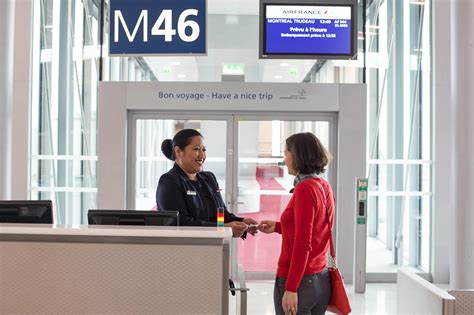
The ripple effect of what happened aboard that flight to Paris is far from over. It’s a story that has stirred emotions, challenged assumptions, and ultimately reshaped how we think about power, privacy, and accountability at 30,000 feet.