The global aviation industry is undergoing a rapid metamorphosis, led by some of its most iconic carriers embracing artificial intelligence (AI) to revolutionize operations, enhance efficiency, and deliver unprecedented levels of customer satisfaction. Among the vanguard of this digital transformation are Air New Zealand, Delta Air Lines, Singapore Airlines, and Qantas Airways, each strategically integrating OpenAI’s cutting-edge tools into their operational and service ecosystems. Their shared goal: to reimagine air travel through intelligent automation, real-time analytics, and generative AI technologies that streamline both front-end and back-end processes.
Air New Zealand: Transforming Internal Efficiency with AI-Driven Tools
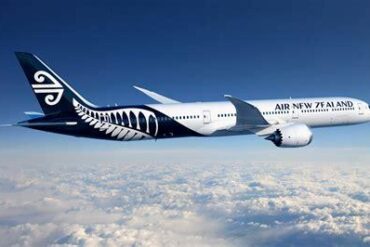
In a landmark move for New Zealand’s aviation sector, Air New Zealand has become a pioneering force in corporate AI deployment by partnering with OpenAI. This collaboration centers on integrating ChatGPT Enterprise, an advanced language model engineered to deliver secure, enterprise-grade intelligence, across the airline’s corporate operations. Through this initiative, the airline aims to enhance decision-making, improve communication, and significantly increase productivity.
The crown jewel of this partnership is “Companion AI,” a proprietary tool deployed to over 3,500 corporate employees, allowing them to automate repetitive tasks, derive insights from data, and make smarter, faster decisions. Supplementing this rollout is an impressive suite of over 1,500 custom GPTs, tailored specifically to Air New Zealand’s workflows. These AI tools are meticulously integrated into areas such as route planning, maintenance scheduling, and HR functions.
Air New Zealand’s use of AI extends well beyond the back office. The airline is embedding AI into customer-facing systems as well, including self-service kiosks, real-time baggage tracking, and personalized in-app travel updates. Additionally, AI helps analyze data from aircraft systems to enhance maintenance protocols, bolstering safety while reducing downtime. The strategic application of AI not only positions Air New Zealand as a regional leader in tech adoption but also lays a scalable foundation for future growth and resilience.
Delta Air Lines: Engineering Personalization and Predictive Operations
Delta Air Lines, a titan of American aviation, has emerged as one of the most aggressive adopters of AI technologies. Focused equally on operational optimization and customer personalization, Delta has embedded AI throughout its digital infrastructure. Central to this initiative is Delta’s use of AI to power dynamic pricing models, which continuously assess market conditions, customer behavior, and inventory to offer real-time, personalized fares.
Delta’s embrace of AI also encompasses flight operations. Advanced machine learning algorithms now predict delays with striking accuracy, optimize routing to avoid congestion, and analyze fuel consumption for sustainability gains. These models work in tandem with cloud-based systems that provide scalable access to Delta’s trove of operational data, enabling real-time decisions across its vast network.
From the passenger’s perspective, AI takes the form of digital concierges and intelligent booking systems, which allow travelers to interact naturally via voice or text with AI assistants for flight updates, rebooking, and service requests. These systems are integrated seamlessly with Delta’s mobile app and website, offering a consistent, always-on experience. The airline’s foray into AI isn’t just about automation—it’s about creating a bespoke travel experience for every passenger.
Singapore Airlines: Redefining Customer Service through AI Integration
Renowned globally for its exceptional service, Singapore Airlines is using AI to reinforce its reputation by bringing unmatched personalization to customer interactions. Its collaboration with Salesforce has enabled the carrier to harness AI-powered insights for case management, predictive servicing, and tailored communication. This intelligent system ensures that agents are equipped with the most relevant data at the right time, leading to faster resolution and higher satisfaction.
Beyond customer service, Singapore Airlines is applying AI to software development cycles, reducing time-to-market for new features, and allowing faster response to emerging traveler needs. Agile development, supercharged by AI tools, means new features—from biometric boarding to in-flight personalization—can be rapidly designed, tested, and deployed.
Travelers are benefitting from AI across their entire journey. From AI-guided check-in systems to real-time notifications about gate changes or baggage status, the integration is subtle but deeply impactful. AI also enhances in-flight services by adjusting offerings based on passenger preferences and historical behavior, building a richer, more enjoyable onboard experience. This deep personalization, powered by machine learning, is central to Singapore Airlines’ goal of making every journey uniquely satisfying.
Qantas Airways: Aligning Sustainability and Operational Excellence with AI
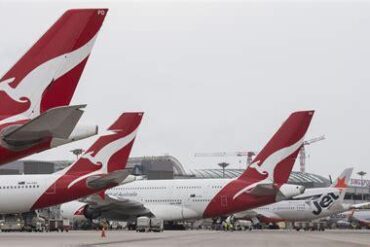
Australia’s Qantas Airways has strategically turned to AI not just to streamline operations, but to advance its ambitious sustainability goals. At the core of this initiative is Constellation, an AI-powered flight planning platform that uses real-time weather, traffic, and aircraft performance data to chart the most fuel-efficient routes. By reducing unnecessary fuel burn, Qantas is able to minimize both costs and its carbon footprint—a win-win for the airline and the environment.
AI’s reach within Qantas also touches disruption management. The airline uses machine learning models to forecast potential operational bottlenecks, from staffing issues to weather delays, and dynamically adjusts schedules and resources in response. This capability has significantly enhanced on-time performance and crew utilization, while improving the airline’s responsiveness to unexpected events.
On the customer side, Qantas is deploying AI chatbots and digital concierges, capable of handling everything from itinerary updates to in-flight entertainment queries. These AI agents are available 24/7, significantly reducing wait times and empowering customers to manage their travel autonomously. The integration of AI into the Qantas app and customer service systems reflects a broader strategy: to use technology not just for automation, but for augmenting the human touch in travel.
AI in Aviation: A Strategic Imperative, Not a Trend
The integration of AI by Air New Zealand, Delta, Singapore Airlines, and Qantas represents more than isolated technological upgrades—it signals a paradigm shift in how airlines view digital transformation. As air travel rebounds and evolves in a post-pandemic world, AI has become an operational necessity, enabling carriers to handle rising complexity while delivering higher value to both customers and shareholders.
AI is no longer a speculative technology but an industry-standard tool for achieving scalability, resilience, and personalization. From optimizing fuel usage and predicting maintenance to providing hyper-personalized recommendations and intelligent customer service, the scope of AI applications is vast and still growing. Airlines embracing this shift are gaining a distinct competitive advantage in an increasingly crowded and demanding global market.
What distinguishes the efforts of these four carriers is not just their investment in AI, but their strategic alignment of AI capabilities with broader business goals—be it operational efficiency, customer satisfaction, sustainability, or innovation. Their collaboration with OpenAI and other tech leaders signifies an intent to not just adopt AI tools, but to co-create the future of intelligent aviation.
Looking Ahead: A Sky Rewritten by Algorithms
The trajectory of AI in aviation is clear: intelligent systems will increasingly drive everything from real-time logistics to revenue management and customer interaction. As OpenAI and other providers continue to develop more powerful models, airlines will be able to tap into deep learning frameworks that can simulate complex decision trees, understand natural language, and respond with human-like intuition.
In the coming years, we can expect airlines to evolve into data-centric, tech-first enterprises. The frontier is no longer just airspace, but code space—where the mastery of algorithms determines who leads and who lags. With Air New Zealand, Delta, Singapore Airlines, and Qantas leading the charge, the aviation industry is not just flying higher; it’s thinking smarter.
AI is, unmistakably, the co-pilot of the future.