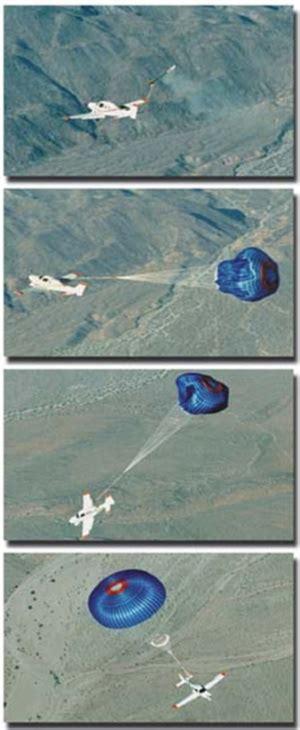
How Ballistic Recovery Systems Work
The ABRS comprises a parachute and a rocket that deploys it, typically housed in the rear section of the aircraft. A cable connects this container to a handle above the pilot’s head. When the handle is pulled, the rocket breaks through a fragile part of the fuselage, accelerating at around 50 meters per second. As the parachute deploys, it inflates and creates drag, slowing the aircraft’s descent. The effectiveness of the parachute depends on factors like the aircraft’s weight and speed at the time of deployment. The aircraft then descends at a rate of about 1,000 to 1,500 feet per minute, nose slightly lower than the tail. Currently, these systems are primarily installed in light aircraft weighing up to 3,500 kg, such as:
-
Cessna 162
-
Cessna 172 Skyhawk
-
Cessna 182 Skylane
-
Cirrus SR-20 (the first with an ABRS)
-
Cirrus SR-22
-
Symphony SA-160
-
Cobra Quicksilver Light Sport Type Aircraft
-
Over 500 different Ultra Light designs
-
300+ Para Gliders, Hang Gliders, and Gliders
Phraseology
According to the UK CAA CAP 413 (RTF Manual), pilots should include the phrase “Ballistic recovery system deployed” in emergency messages when time allows.
Safety Issues
ABRS units contain explosives, which can pose risks for rescue crews. They cannot be disarmed safely before rescuing occupants, leading to potential delays or dangers during recovery efforts. Some risk factors include:
-
Lack of records for aircraft equipped with ABRS, making it hard to identify them.
-
Explosives may detonate if exposed to heat from a fire.
-
Aging explosives can become unstable, especially at high temperatures.
-
Friction or impact can trigger an explosion.
-
Using water as an extinguisher can be dangerous due to chemical reactions.
Mitigations
To reduce risks associated with armed ABRS, several measures can be taken:
-
Clearly identify aircraft equipped with ABRS.
-
Maintain a registry of all equipped aircraft.
-
Add heat markers to rockets and include their inspection in checklists.
-
Verify the residual life of the system as part of regular maintenance.
-
Include a cutout system to separate the igniter from the rocket, reducing accidental deployment risks.
-
Clearly mark hangars housing equipped aircraft to enhance safety.
-
Provide relevant training for pilots and rescue crews.
Guidance in Case of Fire
This guidance does not replace local procedures. In case of a fire involving an ABRS-equipped aircraft:
-
If in a hangar and temperatures are below 90 degrees Celsius, check heat indicators to confirm safety.
-
If temperatures exceed 90 degrees, keep a safe distance, cordon off the area, and call an explosives specialist.
-
If an aircraft catches fire, cool it from a safe distance.
-
If an aircraft is involved in an accident but not on fire, block the release cable near the igniter.
-
Use a safety cover to contain any potential explosions during wreckage recovery, and always involve a disposal squad.