The modern airline industry is built on razor-thin margins, intricate pricing strategies, and a relentless pursuit of ancillary revenue. Among the most quietly lucrative streams is onboard alcohol sales—an offering that has evolved from a complimentary luxury into a high-margin retail operation at 35,000 feet. Yet beneath this polished revenue layer lies a growing operational contradiction: the same alcohol that boosts profits is increasingly fueling a surge in disruptive passenger behavior, reshaping the financial and safety calculus of global aviation.
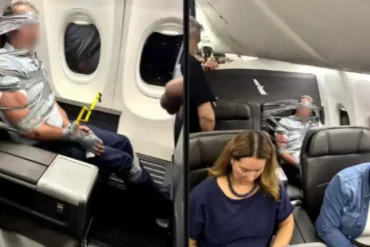
This tension is no longer theoretical. Across continents, airlines are confronting a measurable escalation in alcohol-related incidents, from verbal abuse to physical altercations and costly flight diversions. What was once dismissed as isolated “air rage” episodes has matured into a systemic issue with direct implications for profitability, workforce stability, and brand reputation.
At its core, the airline industry’s “drunk passenger crisis” is not simply about behavior—it is about economics. Airlines are now forced to weigh the immediate financial gains from alcohol sales against the cascading costs of disruption, delay, and reputational damage. The result is a complex, high-stakes balancing act that is beginning to reshape policy, enforcement, and the passenger experience itself.
The Economics of Alcohol at 35,000 Feet
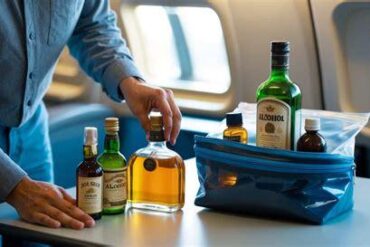
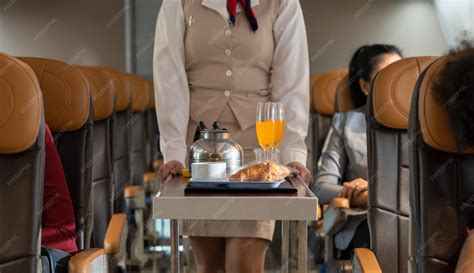
Alcohol sales onboard aircraft are deceptively simple. A miniature bottle that costs an airline a fraction of its retail price can be sold at a markup exceeding 300%. Multiplied across hundreds of passengers per flight and thousands of flights per day, this creates a consistent, high-margin revenue stream that airlines are reluctant to disrupt.
In an industry where ticket prices are often aggressively competitive, ancillary revenues—ranging from baggage fees to seat selection—have become essential. Alcohol fits neatly into this ecosystem. It requires minimal storage space, has a long shelf life, and taps into passenger psychology: the desire to relax, celebrate, or cope with the stress of flying.
However, this revenue stream operates under a fragile assumption—that consumption remains controlled. Once that assumption breaks, the financial equation begins to unravel rapidly.
When Profit Turns into Liability
The tipping point occurs when alcohol consumption translates into disruptive behavior. According to industry data, intoxication is now among the most common triggers of onboard incidents, often intertwined with non-compliance and verbal aggression. The numbers are not marginal—they are accelerating.
An incident rate of one unruly passenger per roughly 480 flights may seem statistically small, but in absolute terms, it represents thousands of disruptions annually. More striking is the role alcohol plays: it is implicated in up to 75% of these cases. This transforms alcohol from a revenue driver into a risk multiplier.
The financial consequences escalate quickly. A single diversion—when a flight must land unexpectedly to remove a disruptive passenger—can cost between $13,000 and over $100,000. These costs include fuel dumping, landing fees, crew overtime, passenger compensation, and downstream operational disruption. Crucially, none of these costs are recoverable through alcohol sales.
Understanding Air Rage: Physiology Meets Environment
To grasp why alcohol becomes so problematic in flight, it is necessary to examine the unique environment of an aircraft cabin. At cruising altitude, cabin pressure is equivalent to being at approximately 6,000 to 8,000 feet above sea level. This reduced oxygen environment amplifies the effects of alcohol, meaning passengers may become intoxicated faster than they would on the ground.
Compounding this is the cabin’s low humidity, which accelerates dehydration—a condition known to increase irritability and impair cognitive function. The result is a physiological cocktail that lowers inhibitions, heightens emotional responses, and reduces self-control.
In this context, even moderate alcohol consumption can escalate into unpredictable behavior. The confined nature of an aircraft cabin, combined with the inability to “leave the situation,” further intensifies conflicts. What might be a minor disagreement on the ground can evolve into a full-scale disruption in the air.
The Pre-Flight Problem Airlines Cannot Control
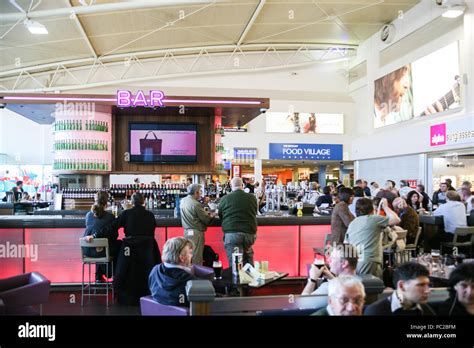
Ironically, airlines often do not capture the full revenue potential of alcohol consumption. A significant portion of intoxicated passengers board flights already impaired, having consumed alcohol in airport terminals where regulations are often more relaxed.
Unlike city bars, airport establishments frequently operate with extended or even round-the-clock hours. The transient nature of passengers reduces accountability—customers are unlikely to return, and enforcement of responsible drinking becomes inconsistent. For airlines, this creates a paradox: they bear the consequences of intoxication without benefiting from the associated sales.
This disconnect highlights a structural gap in the aviation ecosystem. Responsibility for alcohol-related behavior is fragmented between airports, retailers, and airlines, yet the operational burden falls disproportionately on carriers and their crew.
The Human Cost: Cabin Crew Under Pressure
Beyond financial losses, the impact on cabin crew is profound. Flight attendants are not only service providers but also frontline safety professionals responsible for managing conflicts in a confined and high-stakes environment.
Surveys reveal that over half of cabin crew members have experienced or witnessed abuse linked to intoxicated passengers. These incidents range from verbal harassment to physical and even sexual assault. The psychological toll is significant, contributing to stress, burnout, and in some cases, departure from the profession altogether.
This has direct economic implications. Training new crew members is costly and time-consuming. High turnover disrupts operational consistency and increases recruitment expenses. In this sense, alcohol-related incidents indirectly erode profitability by destabilizing one of the airline’s most critical human resources.
Passenger Experience and Brand Erosion
For the majority of passengers, flying is already a stressful experience. Adding the presence of a disruptive, intoxicated individual can transform a routine journey into an ordeal. The ripple effects are substantial: dissatisfaction, complaints, negative reviews, and ultimately, reduced brand loyalty.
Airlines operate in a reputation-driven market. A single viral incident—captured on smartphones and shared globally—can inflict disproportionate damage on brand perception. The narrative shifts quickly from isolated misconduct to perceived systemic failure.
This reputational risk is difficult to quantify but impossible to ignore. In an era where customer experience is a key differentiator, the presence of uncontrolled in-flight behavior undermines the very product airlines are trying to sell: safe, reliable, and comfortable travel.
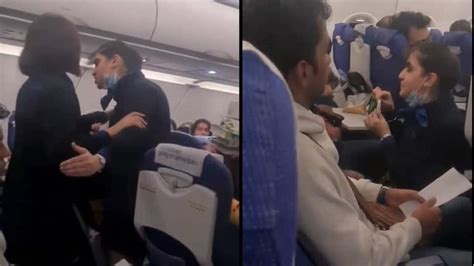
Regulatory Pushback and the Rise of Zero Tolerance
Recognizing the growing severity of the issue, aviation authorities have begun to implement stricter enforcement measures. Regulatory bodies have introduced zero-tolerance policies, imposing significant fines and legal consequences on disruptive passengers.
These penalties serve a dual purpose: deterrence and cost recovery. In some jurisdictions, passengers responsible for diversions may be held financially liable for the associated costs—a figure that can reach tens of thousands of dollars. In extreme cases, penalties include imprisonment.
While these measures signal a firm stance, enforcement remains complex. Incidents occur mid-flight, often across international jurisdictions, complicating legal proceedings. Nevertheless, the message is clear: the industry is shifting toward accountability.
The Case for Restriction: Should Airlines Limit Alcohol?
The question facing airlines is no longer whether alcohol contributes to disruption—it is whether the revenue justifies the risk. Some carriers and regions have already experimented with restrictions, including limiting the number of drinks served, banning the consumption of personal alcohol, or suspending sales entirely on certain routes.
However, a blanket ban is unlikely in the near term. Alcohol remains a valuable revenue stream and a component of the premium travel experience, particularly in business and first class. The challenge lies in implementing targeted controls without alienating customers.
Potential strategies include enhanced crew training, improved identification of intoxicated passengers, and closer collaboration with airport authorities. Technology may also play a role, from data-driven risk assessment to real-time incident reporting.
Dry Airlines: A Glimpse into an Alternative Model
Interestingly, some airlines operate entirely without alcohol, offering a natural experiment in risk mitigation. Carriers in regions where alcohol consumption is culturally or legally restricted demonstrate that a viable, alcohol-free model is possible.
These airlines focus on alternative service offerings, emphasizing hospitality, cuisine, and non-alcoholic beverages. While their operating context differs significantly from Western markets, they provide insight into how removing alcohol can eliminate a major source of disruption.
However, replicating this model globally would require a fundamental shift in passenger expectations—one that airlines may be reluctant to initiate without clear economic incentives.

The Revenue Paradox: A Tipping Point Approaches
The airline industry now stands at a critical juncture. Alcohol sales continue to generate meaningful revenue, but the associated risks are escalating in both frequency and cost. The balance is becoming increasingly delicate.
At some point, the cumulative impact of diversions, crew turnover, legal exposure, and brand damage may outweigh the profits derived from onboard alcohol. When that tipping point is reached, airlines will be forced to rethink their approach fundamentally.
This is not merely an operational adjustment—it is a strategic decision that touches every aspect of the business, from pricing models to customer experience design.
Conclusion: Redefining Value in the Skies
The “drunk passenger crisis” is often framed as a behavioral issue, but its roots are deeply economic. It exposes the hidden trade-offs embedded within airline revenue strategies and challenges the assumption that all ancillary income is inherently beneficial.
As the industry evolves, airlines must redefine what constitutes value. Is it the immediate profit from a drink sold at altitude, or the long-term stability of operations, workforce, and customer trust?
The answer will shape the future of air travel. What is clear is that the status quo is no longer sustainable. The skies may remain open, but the tolerance for risk—both human and financial—is rapidly closing.