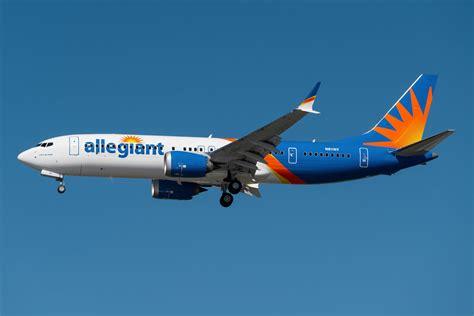
Allegiant Air has cemented its status as one of America’s most dynamic low-cost carriers by reporting an impressive 9.2% year-over-year surge in passenger traffic for May 2025. The announcement, made public on July 6, underscores the airline’s expanding footprint in the domestic travel market and highlights the broader resurgence of the U.S. leisure travel sector.
In May 2025 alone, Allegiant Air transported approximately 1.55 million scheduled service passengers, a significant leap from the 1.41 million passengers recorded during the same period in 2024. This growth reflects not only Allegiant’s strategic network expansion but also the enduring demand for affordable air travel to popular U.S. vacation destinations.

Allegiant’s Aggressive Expansion Meets Soaring Demand
A closer examination of Allegiant’s May 2025 operational statistics reveals robust growth across several critical performance indicators. The airline’s Revenue Passenger Miles (RPMs)—a metric tracking the total miles traveled by paying passengers—rose by 10.2%, reaching 1.39 billion RPMs. This uptick is particularly telling, as it illustrates not only higher passenger volumes but also an increase in average travel distances, reflecting Allegiant’s success in connecting underserved cities with prominent vacation hotspots.
This passenger growth is part of a broader expansion strategy that has seen Allegiant amplify its Available Seat Miles (ASMs) by 16.3%, totaling 1.73 billion ASMs in May 2025. ASMs serve as a barometer of the airline’s seating capacity, and Allegiant’s sharp increase signals its commitment to meeting the escalating appetite for domestic leisure travel.
Load Factor Challenges Amid Rapid Network Growth
Despite these positive figures, Allegiant reported a 4.5 percentage point decline in load factor, settling at 80.3% for May 2025. The load factor, which represents the percentage of available seating occupied by paying passengers, remains healthy by industry standards. However, the decrease suggests that Allegiant’s swift capacity expansion may have temporarily outpaced demand in select markets.
Industry analysts view this as a natural consequence of rapid network scaling, especially as airlines across the U.S. work to align operations with evolving travel patterns post-pandemic. Allegiant’s leadership remains confident that as new routes mature and seasonal travel peaks, load factors will stabilize.

Flight Departures and Network Reach Continue Upward Trajectory
Another notable highlight from Allegiant’s May 2025 performance is the 16.2% increase in flight departures, with the airline operating 11,174 flights during the month. This operational scaling reflects Allegiant’s focus on serving high-demand leisure destinations and maintaining flexibility within its route network.
Allegiant’s business model prioritizes connecting smaller regional airports to major tourist hubs, a strategy that has resonated with cost-conscious travelers eager to avoid congested major airports while accessing renowned vacation spots. Core destinations in Allegiant’s network include Las Vegas, Orlando, Florida, and other year-round tourist magnets, underscoring the airline’s dedication to leisure-focused travel.
Short-Haul Efficiency Defines Allegiant’s Route Strategy
The average stage length for Allegiant’s flights in May 2025 was 884 miles, consistent with its focus on short-to-medium-haul domestic routes. This targeted approach enables Allegiant to efficiently serve markets often neglected by legacy carriers, providing affordable options for travelers from underserved cities.
Allegiant’s strategy has proven especially relevant as inflationary pressures and economic uncertainty push consumers to seek value-driven travel alternatives. By offering low-cost, no-frills service, Allegiant caters directly to budget-conscious passengers without sacrificing access to in-demand leisure destinations.
Contract Flights Fuel Additional Passenger Growth
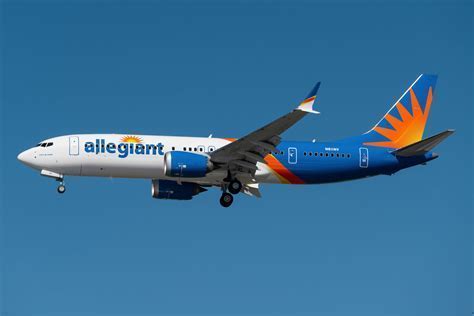
Beyond its scheduled services, Allegiant’s fixed-fee contract flight operations have contributed to its expanding passenger base. In total, the airline transported 1.56 million passengers across both scheduled and contract flights, marking a 9.4% year-over-year increase.
This dual-service model enhances Allegiant’s market versatility, enabling it to cater to both leisure travelers and contracted clients, such as tour operators and charter services. The airline’s total system ASMs grew by 16.5%, while overall network departures climbed by 16.7%, reinforcing Allegiant’s momentum across all service categories.
Sustaining Growth Amid Competitive U.S. Airline Landscape
Allegiant’s recent performance underscores its strategic positioning within the competitive U.S. airline market. Its continued focus on leisure routes, particularly those linking secondary airports to major vacation hubs, provides a clear differentiation from traditional network carriers.
However, sustaining this growth requires careful capacity management and operational agility. The temporary dip in load factor serves as a reminder that aggressive expansion must be balanced with demand forecasting to avoid underutilized capacity. Allegiant’s leadership is expected to fine-tune its network and adjust flight schedules to ensure efficiency without compromising its growth trajectory.
Leisure Travel Boom Drives Industry-Wide Optimism
Allegiant’s impressive May 2025 results arrive against the backdrop of a broader U.S. leisure travel boom. With domestic air travel rebounding to near pre-pandemic levels, airlines catering to vacation travelers have experienced unprecedented demand.
Popular destinations such as Florida, Nevada, and California continue to draw significant passenger volumes, aided by Allegiant’s competitively priced offerings. Travelers increasingly seek accessible, affordable ways to reach these destinations, and Allegiant’s point-to-point model provides an attractive solution.
Moreover, the airline’s emphasis on serving underserved markets enhances travel accessibility for regions often overlooked by larger carriers, further fueling the resurgence in domestic tourism.
Looking Ahead: Allegiant’s Growth Blueprint
As summer 2025 unfolds, Allegiant is poised to leverage its recent momentum. The airline is expected to announce new routes, additional aircraft acquisitions, and further expansions into high-demand leisure markets. This approach aligns with its proven business model focused on scalability and operational efficiency.
Analysts predict that Allegiant’s ability to maintain low operating costs while strategically expanding its network will be pivotal to its sustained success. By carefully monitoring market demand and optimizing its route offerings, Allegiant can capitalize on the ongoing travel resurgence while addressing the temporary challenges associated with rapid capacity growth.
Industry observers will also watch closely to see how Allegiant navigates competitive pressures, rising fuel costs, and evolving traveler expectations in the months ahead. Nonetheless, the airline’s May 2025 performance positions it favorably to continue thriving in an increasingly dynamic U.S. air travel environment.

Conclusion: A Strong Foundation for Future Success
Allegiant Air’s 9.2% increase in passenger traffic, coupled with substantial growth in RPMs, ASMs, and flight departures, reflects both the airline’s operational prowess and the broader resurgence of American leisure travel. While challenges related to load factor optimization remain, the airline’s strategic network design, focus on underserved markets, and commitment to affordability provide a resilient foundation for future growth.
As travelers continue to prioritize value-driven vacation options, Allegiant’s unique position within the market ensures that it will remain a key player in shaping the next chapter of U.S. air travel.