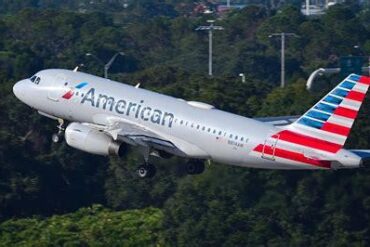
American Airlines and Boeing have completed the first landing gear exchange on a Boeing 737 MAX, marking an important expansion of Boeing’s established Landing Gear Exchange Program to one of the manufacturer’s most numerous modern narrowbody families. Rather than waiting for an individual landing gear assembly to undergo a full overhaul, American received a serviceable replacement unit and returned the removed gear to Boeing for refurbishment.
How the 737 MAX Landing Gear Exchange Works
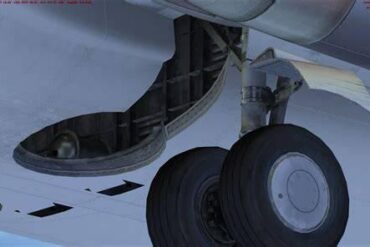
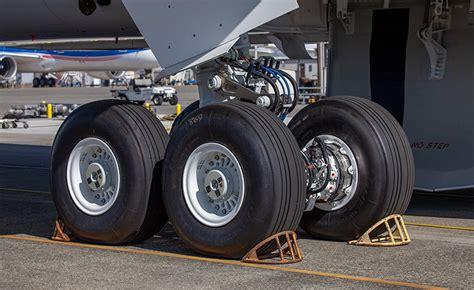
The program is designed around a simple principle: airlines exchange used landing gear for overhauled, ready-to-install assemblies. Participating carriers receive main and nose landing gear with installation kits, allowing their mechanics to remove existing gear and install the replacement. Boeing then takes the unserviced components for refurbishment at an MRO facility.
For American Airlines, the first 737 MAX exchange showed why the model can appeal to a large fleet operator. The carrier did not have to keep an expensive new gear set or overhaul components in storage. The replacement was ready for installation while Boeing handled refurbishment of the removed gear.
The biggest operational benefit is potentially reduced aircraft-on-ground time. Landing gear maintenance is significant because the equipment is structurally critical and its removal, overhaul, inspection, and installation require specialized work. Separating airline installation from Boeing’s overhaul process can help an aircraft return to service more predictably.
Boeing Expands Support Across the 737 MAX Fleet
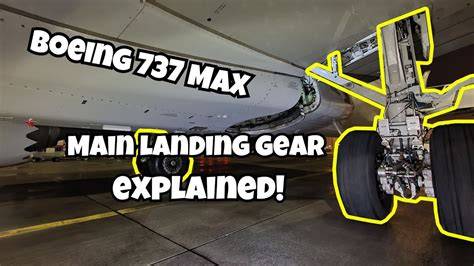
Boeing says the American Airlines milestone validated its end-to-end approach, with the manufacturer managing the overhaul while airline mechanics perform installation. Airlines can reserve forward-exchange slots, giving maintenance planners visibility over when replacement landing gear will be available. That predictability is valuable for carriers managing large fleets with tightly scheduled rotations.
The timing matters because the 737 MAX fleet is entering a mature phase of its service life. The first 737 MAX was delivered to an airline in May 2017, meaning the earliest aircraft are now approaching the period when major landing gear refurbishment becomes increasingly relevant. Boeing therefore has an opportunity to establish the exchange process before a large wave of MAX aircraft requires similar work.
For Boeing Global Services, the program also creates a recurring aftermarket relationship with airlines. Instead of selling an isolated replacement component, Boeing can remain involved through the overhaul cycle, inventory planning, installation support, and future exchanges. William Ampofo, senior vice president of Parts & Distribution and Supply Chain at Boeing Global Services, described the milestone as evidence that the program can deliver predictable, safe, and cost-effective results.
Landing Gear Exchange Already Proven on Other Boeing Jets
The 737 MAX is not the first Boeing family to benefit from this strategy. Boeing has long offered landing gear exchange support for the 737, 777, 747, and 787 families, giving the company experience in coordinating component refurbishment with airline maintenance operations.
The 787-8 provides one of the clearest examples of the program’s scale. Boeing completed its 100th 787-8 landing gear exchange delivery earlier this year, while also working to extend the approach to the 787-9. Industry reporting has identified roughly 10 to 12 years as a useful period for landing gear exchanges, although timing depends on utilization and operating conditions.
That experience matters because the 787-9 fleet is also entering a substantial maintenance window. Of approximately 730 aircraft in service, around half are at least eight years old, creating a large potential market for future landing gear exchanges. Boeing’s ability to coordinate work across global MRO partners will therefore become increasingly important as demand grows.
Why American’s First 737 MAX Exchange Matters
The first American Airlines 737 MAX exchange is ultimately about more than one aircraft. It represents a shift toward predictable component support as the MAX fleet ages and its maintenance requirements become more complex. Large operators need replacement parts available when scheduled work begins, rather than discovering that an overhaul has become a lengthy supply-chain event.
If additional airlines adopt the exchange model, Boeing could turn landing gear refurbishment into a standardized, fleet-wide service rather than a series of individual maintenance projects. For American Airlines and other MAX operators, the attraction is clear: less inventory pressure, shorter potential ground time, and greater maintenance predictability as a modern generation of Boeing narrowbodies continues accumulating flight cycles.